


Expert insights from Mr. Bhavesh Gala on the Indian paper price outlook, energy costs, export trends, and trade diversion amid the Israel–Iran conflict
Join WhatsApp Group, Telegram & YouTube Channel, No Spamming
 Join WhatsApp Group
 Join Telegram Channel
 Join YouTube Channel
 Join Job Channel (View | Submit Jobs)
 Join Buy Sell Channel (Free to Submit)
 Paper News Headlines Channel (Free to read)
Expert insights from Mr. Bhavesh Gala on the Indian paper price outlook, energy costs, export trends, and trade diversion amid the Israel–Iran conflict
- Prices of all the products in India may go up by 10 to 15 % across the board but will not sustain after April if the war continues as weak local and print export demands
- MIP (Minimum Import Price) will be extended further for a short period say another 6 months to support the domestic industry
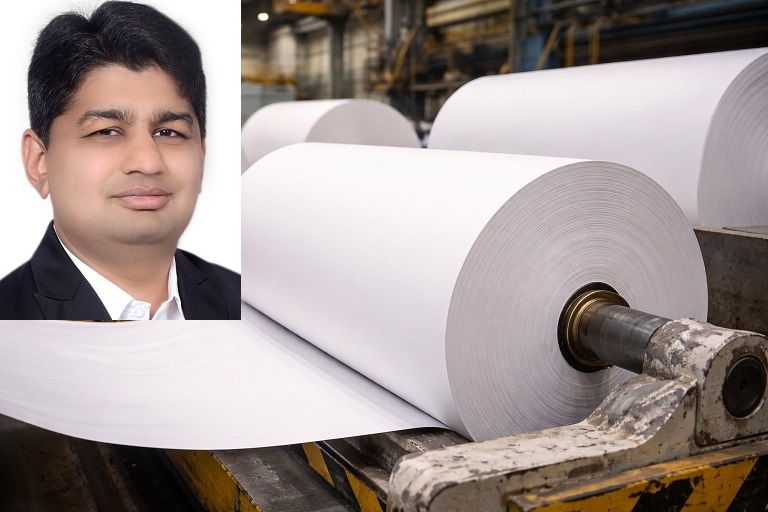
The ongoing West Asia crisis may impact India’s paper industry through higher energy prices, rising ocean freight rates, and disruptions in the import of key raw materials such as recovered paper, pulp, and coal. The article below is written by Mr. Bhavesh Gala, Managing Director of Infinity Industries Pvt. Ltd. Mr. Gala has an experience of working in Paper Trade for more than 30 years and is the second generation of Family Business. here is his opinion:
The Pulp and Paper Times

Israel–Iran Conflict Sends Shockwaves Through Indian Paper and Printing Industry
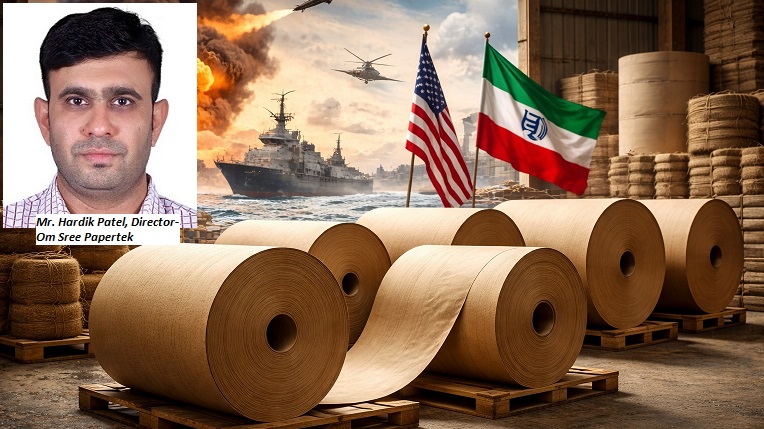
The escalating conflict between Israel and Iran has begun to cast a long shadow over global trade, with the Indian paper and printing industry increasingly feeling the indirect fallout. While India has limited direct paper trade with the two nations, the disruption of energy markets, shipping corridors, and global logistics networks is creating fresh challenges for an industry already navigating tight margins and volatile input costs.
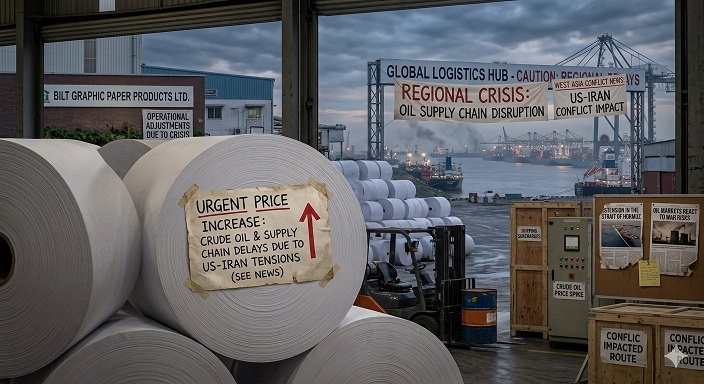
At the heart of the disruption lies West Asia’s strategic importance to global energy and maritime trade. Heightened tensions in the region have led to instability in the Strait of Hormuz and the Red Sea—two critical shipping routes that carry a substantial share of global oil, LNG, and container traffic. As security risks rise, shipping companies have been forced to reroute vessels, increase war risk premiums, and factor in longer transit times, all of which translate into higher costs for import dependent industries like paper.
Energy Costs Add Pressure on Paper Mills
Paper manufacturing is among the most energy intensive industrial processes, with fuel and power accounting for a significant portion of production costs. The recent surge in crude oil and LNG prices following the conflict has therefore had an immediate impact on Indian paper mills. Rising costs of coal, furnace oil, and gas are squeezing operating margins, particularly for small and medium sized mills with limited pricing flexibility.

For integrated paper producers and recycled fibre based mills alike, energy inflation is compounding existing cost pressures from chemicals, spares, and maintenance. Industry observers warn that if energy volatility persists, price corrections in finished paper grades may become unavoidable in the domestic market.
Imported Raw Materials Become Costlier
India remains heavily dependent on imported recovered paper and wood pulp, primarily sourced from the US, Europe, and other global suppliers. Disruptions in Middle Eastern shipping lanes have pushed up ocean freight rates and insurance costs, significantly increasing the landed cost of these raw materials.

Longer transit routes—often diverted around the Cape of Good Hope—are also tying up working capital for traders and mills, while port congestion and container shortages add further uncertainty. Even short term volatility in freight markets can have a disproportionate impact on mills operating on thin margins, making procurement planning increasingly complex.
Export Markets Face Uncertainty
West Asia is a key export destination for Indian paper and paperboard, particularly for writing and printing paper, kraft paper, and packaging grades. Any slowdown in trade flows to the region poses a dual risk: delayed shipments and potential payment challenges.
Higher freight costs are eroding export competitiveness, while prolonged instability could dampen demand in key Gulf markets. Industry leaders caution that if disruptions continue, a meaningful share of India’s paper export revenues could come under pressure in the current financial year.
Risk of Trade Diversion Into India
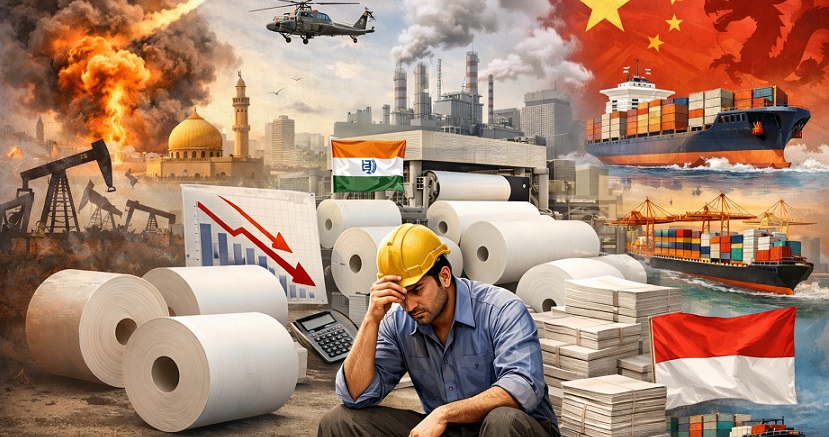
An emerging concern for domestic manufacturers is the possibility of trade diversion. Export oriented paper producers in countries such as China and Indonesia, which also rely heavily on West Asian markets, may redirect surplus paper into India if their traditional export routes weaken.

Such diversion could intensify competition in the domestic market, exert downward pressure on prices, and challenge Indian mills already grappling with rising input costs. Industry associations have flagged the need for close monitoring to prevent market distortion from low priced imports.
Printing Industry Feels the Ripple Effects
The printing industry, closely linked to paper price stability, is also beginning to feel the strain. Commercial printers, publishers, and packaging converters are facing higher paper prices, rising logistics costs, and uncertainty in the supply of specialty grades and consumables.
With many print contracts fixed in advance, printers often have limited ability to pass on sudden cost increases, leaving margins vulnerable. Packaging and publishing segments, in particular, are watching developments closely as cost volatility threatens planning and profitability.
Outlook: Caution Amid Volatility
While India’s long term demand fundamentals for paper and print remain strong, the Israel–Iran conflict highlights how geopolitical shocks can quickly ripple through global supply chains. For the Indian paper and printing industry, the coming months are likely to be marked by heightened caution, cost management, and a renewed focus on sourcing flexibility. The scenario is volatile and risky for everyone.
Prices of all the products in India may go up by 10 to 15 % across the board but will not sustain after April if the war continues as weak local and print export demands. Possibility of heavy dumping of Imported material from China and Indonesia at competitive rate.
To my understanding the MIP (Minimum Import Price) will be extended further for a short period say another 6 months to support the domestic industry but may not help as earlier due to weak local demand.
As history suggests, geopolitical conflicts may be temporary, but their economic aftershocks often linger—testing the resilience and adaptability of industry players across the value chain.
Web Title: Expert insights from Mr. Bhavesh Gala on the Indian paper price outlook, energy costs, export trends, and trade diversion amid the Israel–Iran conflict
More News From india

{{ item.Title }}