Join Groups & Channels, No Spamming









Morbi paper mills see full-capacity operations as ceramic industry revives; Kraft paper exports to China spike, Prices strengthen; Janmashtami shutdown ahead
The BE and caustic soda plant marks a key milestone for Mohit Paper Mills, enabling full utilization of installed capacity and enhancing overall production efficiency
Expert Views on the paper market scenario, How the West Asia Crisis Helped the Industry, MIP for WPP, Anti-Subsidy implementation, and paper price trends
Pudumjee Paper intends to develop new varieties addressing applications for stronger paper bags and cupcakes; Plans 68,000 MT Mahad Specialty Paper Facility within 5 years
India Paper Industry at an Inflection Point: War, Costs, and Capacity; Demand growth expected at 5–7% in FY26
“Surging exports of paper will most certainly keep the domestic prices quite high”: Mr. A. Annamalai, Director – RFC
The Status of the Global Container board Industry, Recycled Paper Demand and Supply and its impact on the Indian Industry
Akshay Jain, director of Silverton Pulp & Paper, says it's time to promote agro residue as a raw material to lessen the scarcity of fibre
Advantageously located, a new paper mill is all set to roll kraft paper in Madhya Pradesh
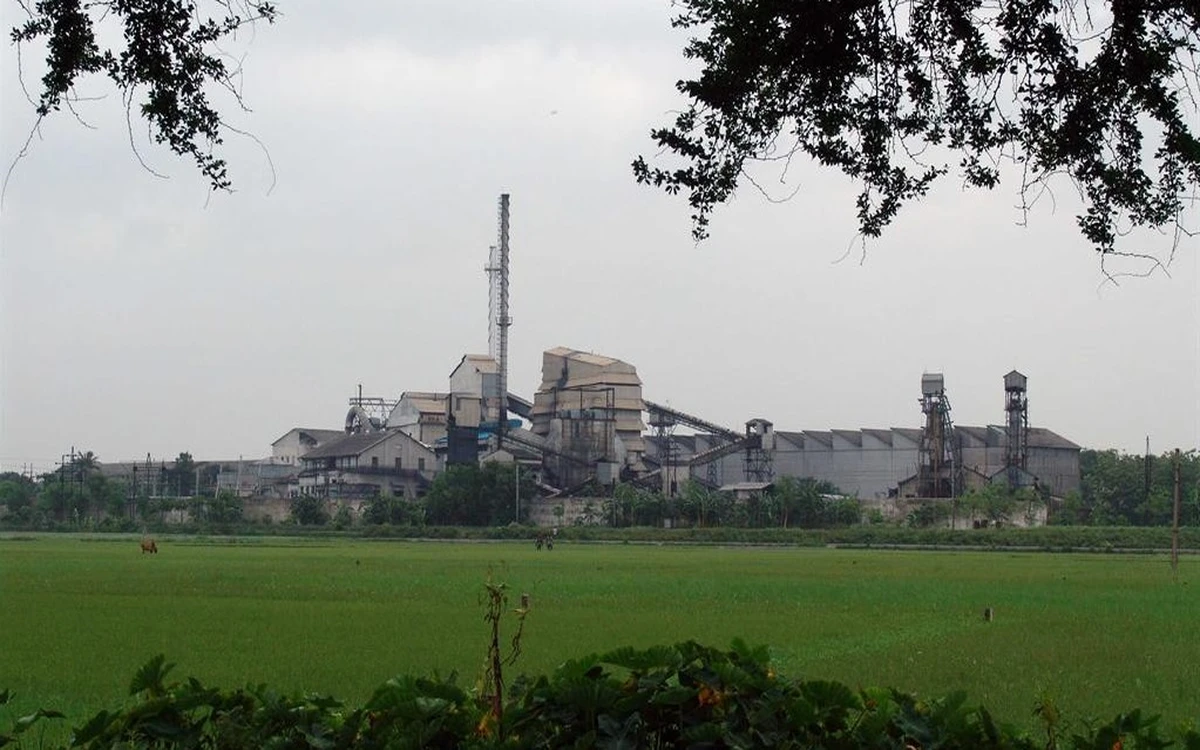
Several agile interventions helped ITC-PSPD fortify its clear leadership of the Value Added Paperboards (VAP) segment
Indian paper industry is entering a sensitive phase, with coal and starch availability emerging as critical concerns; Price Hikes Indicated
Paper and Packaging Board Market May Face Cost Pressures Through March 2027; FPTA Advises Traders
Overall Increase in Kraft Paper Prices Could Reach 35%; Industry Calls for 20% Box Price Increase, Voluntary Shutdown Proposed
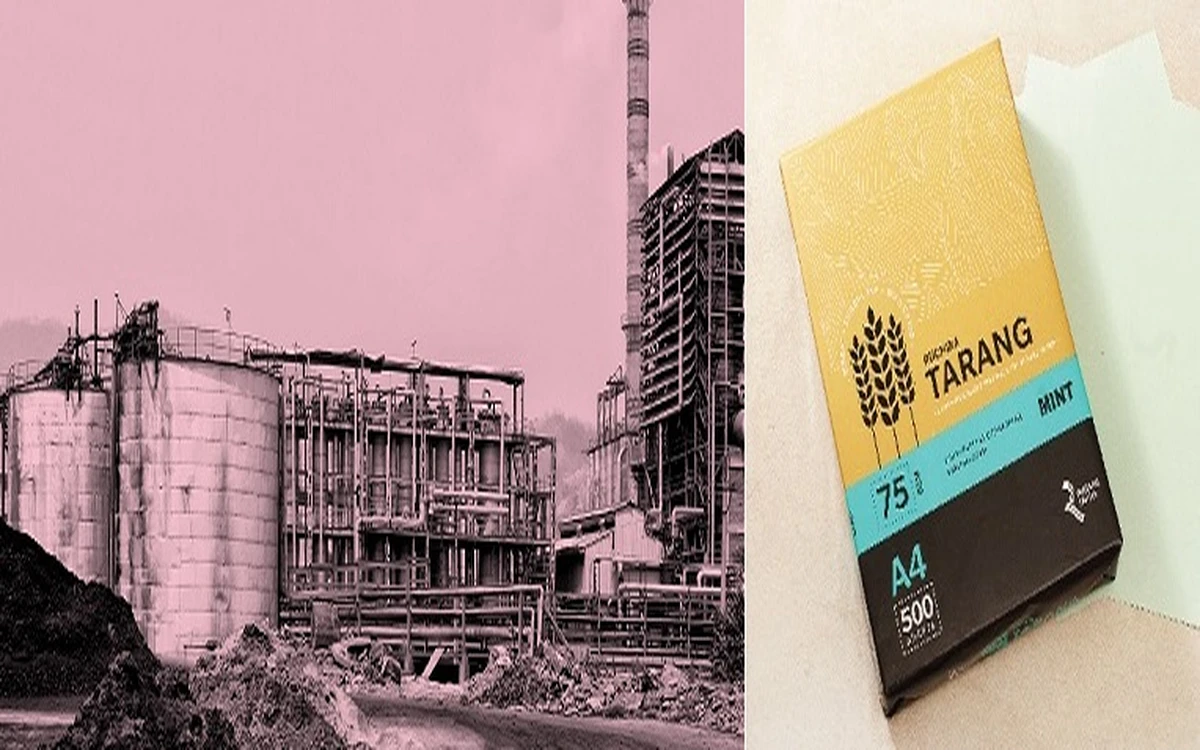
Ruchira Papers Invests a Sizeable Capex of Rs. 235–240 Crore Towards Writing & Printing Paper Capacity Expansion
Paper mills inflated the basic ex-mill price of paper post GST 2.0, AINMA seeks action against Anti-Profiteering
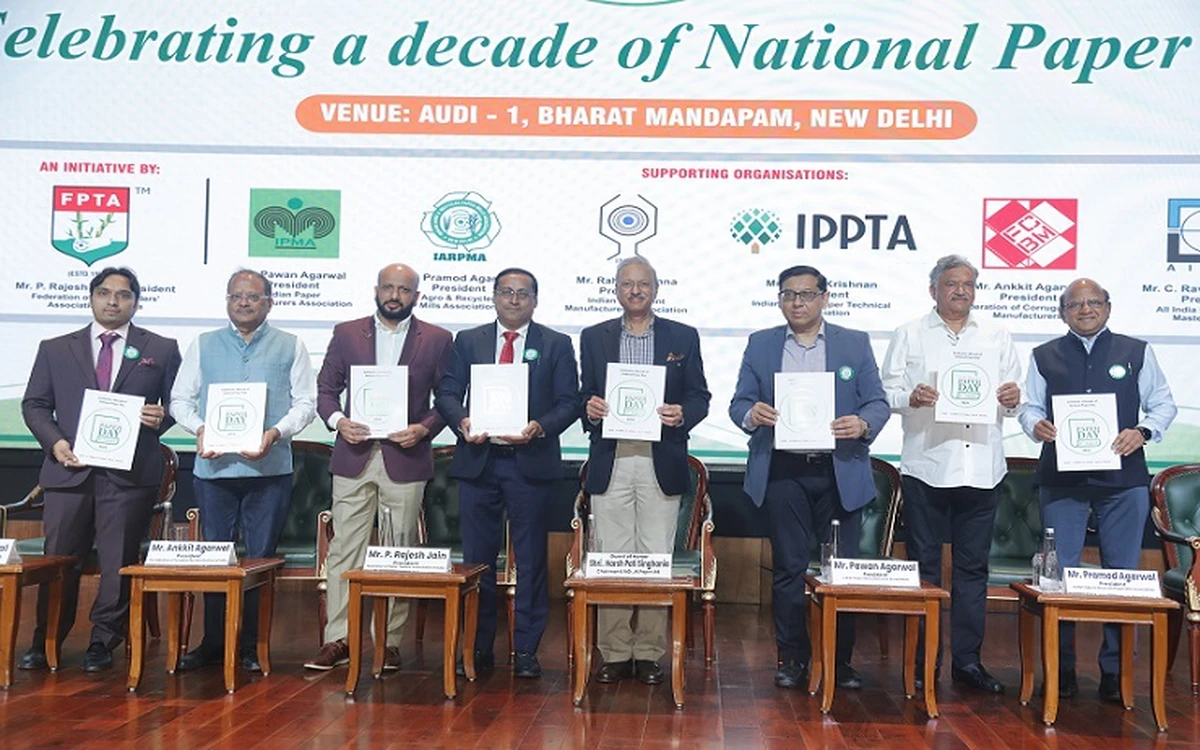
Seven Leading Associations Unite to Celebrate National Paper Day, Highlighting Paper's Sustainability and Circular Economy Advantage
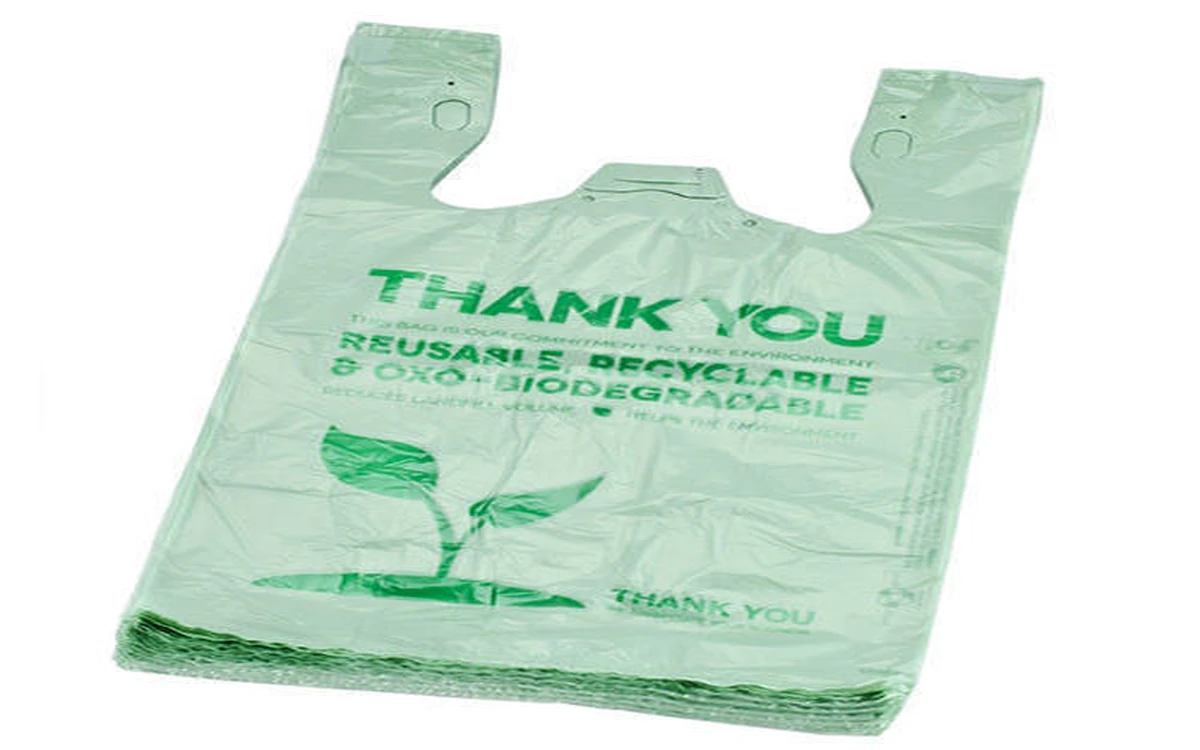
Scientists from IIT-Guwahati develop India's first biodegradable plastic
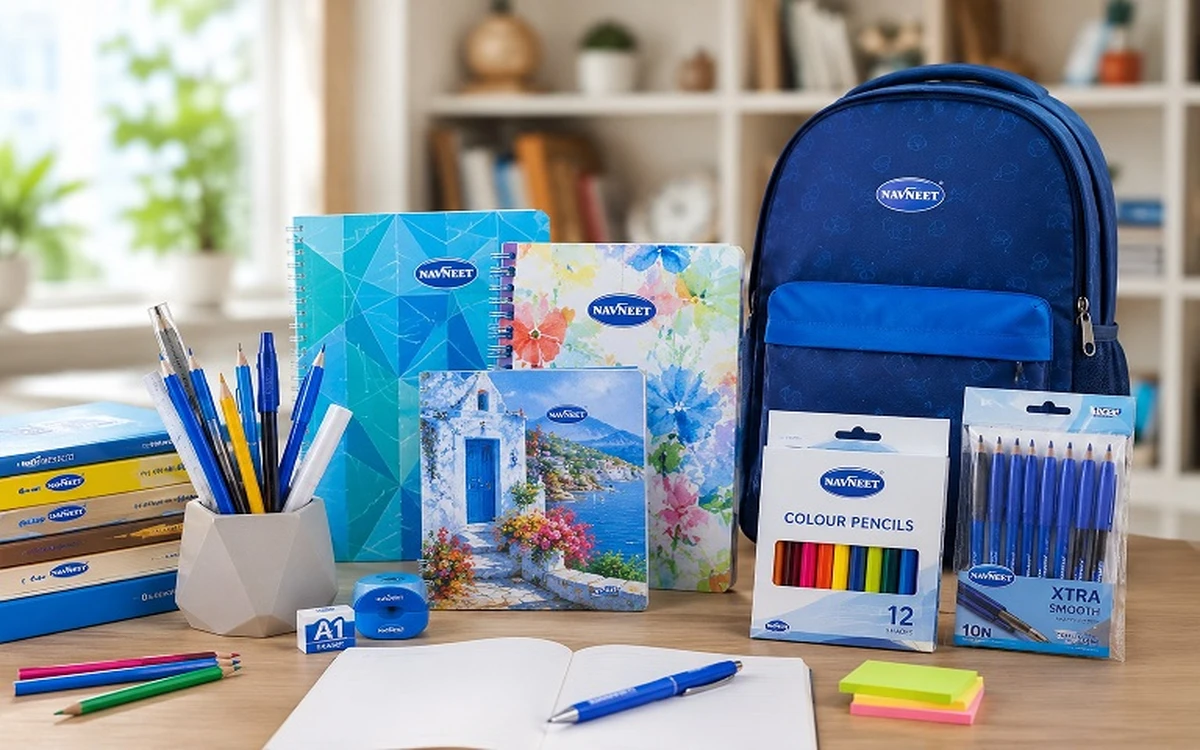
Navneet Education focuses on brand building, curriculum-led growth, and export recovery; expects stationery margins to improve in FY27

It is estimated that USD10B to USD20B worth of single-use plastic packaging will convert to molded fiber, ZUME
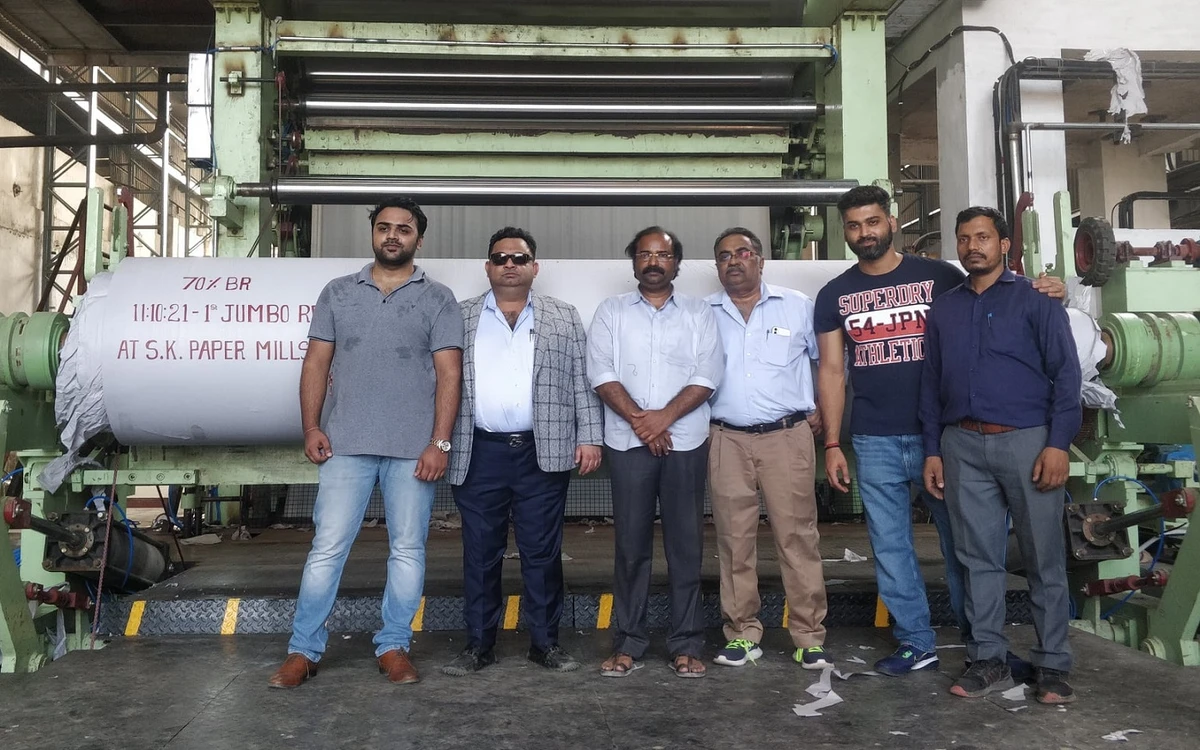
Muzaffarnagar gets a new capacity of Tissue Paper and MG Poster paper
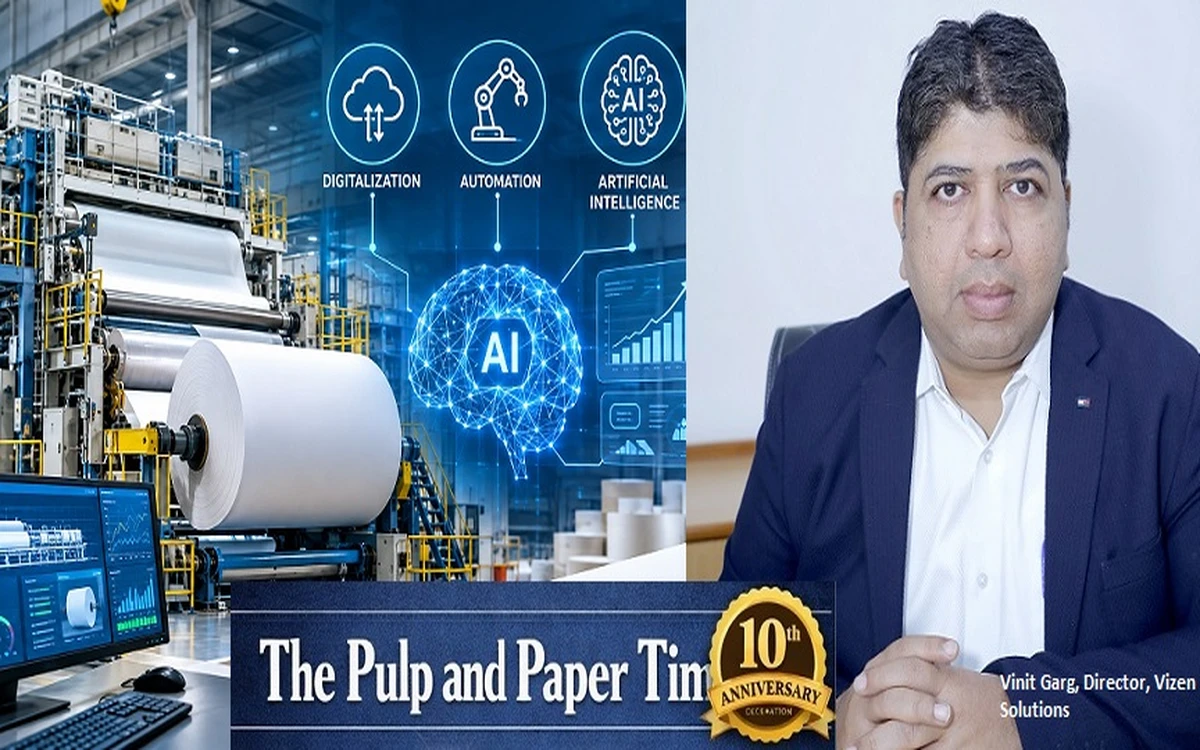
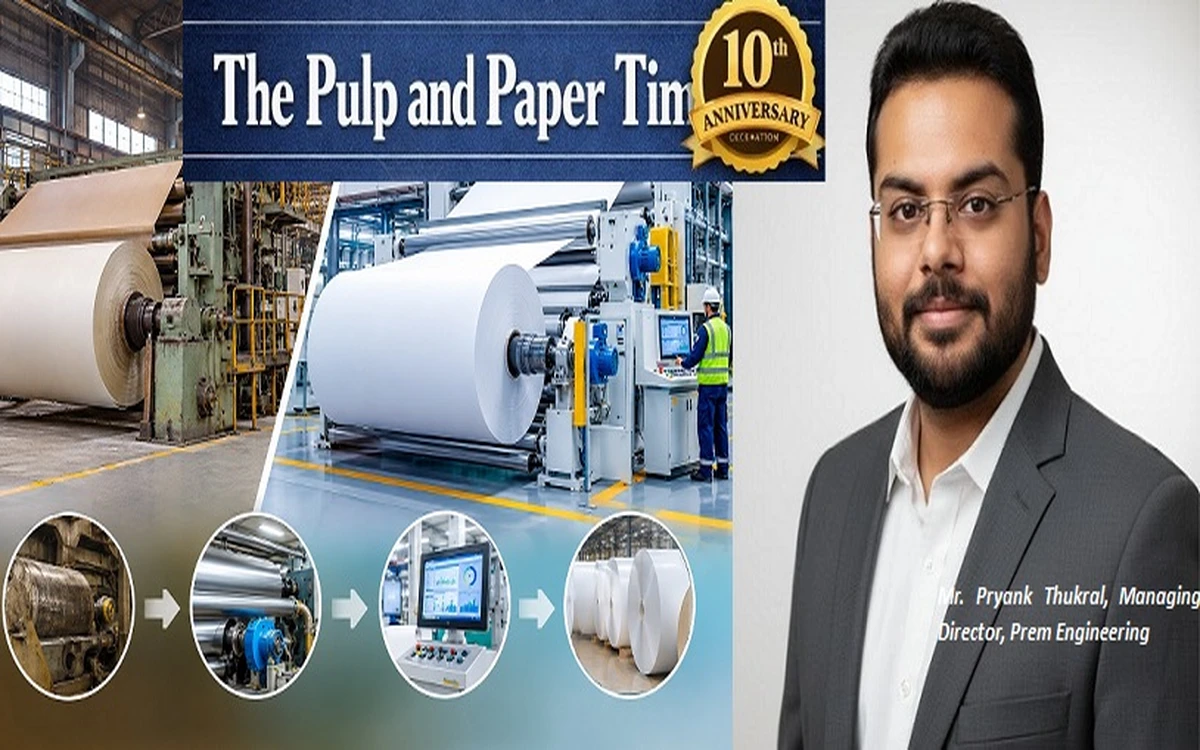
“The integration of digitalization, automation, and Artificial Intelligence (AI) is no longer a futuristic concept—it is the baseline for competitiveness in 2036” - Vinit Garg, Director, Vizen Solutions
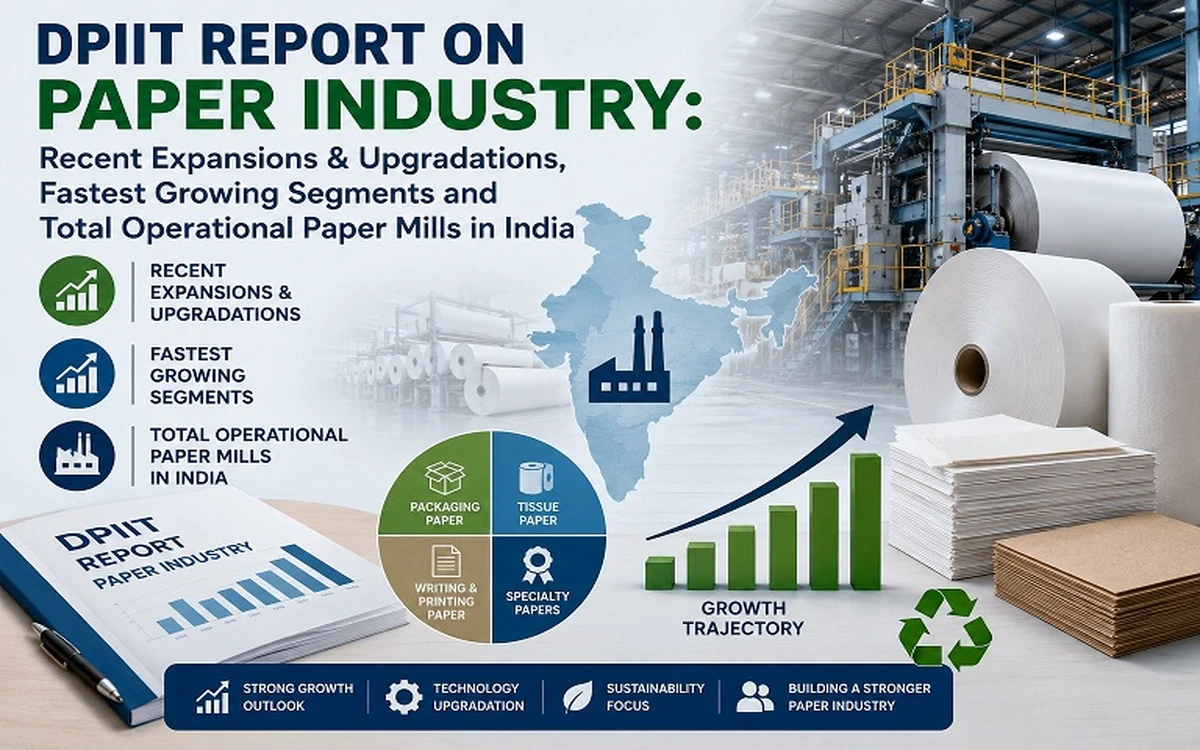
DPIIT Report on the Paper Industry: Recent Expansions & Upgrades, Fastest-Growing Segments, and Total Operational Paper Mills in India
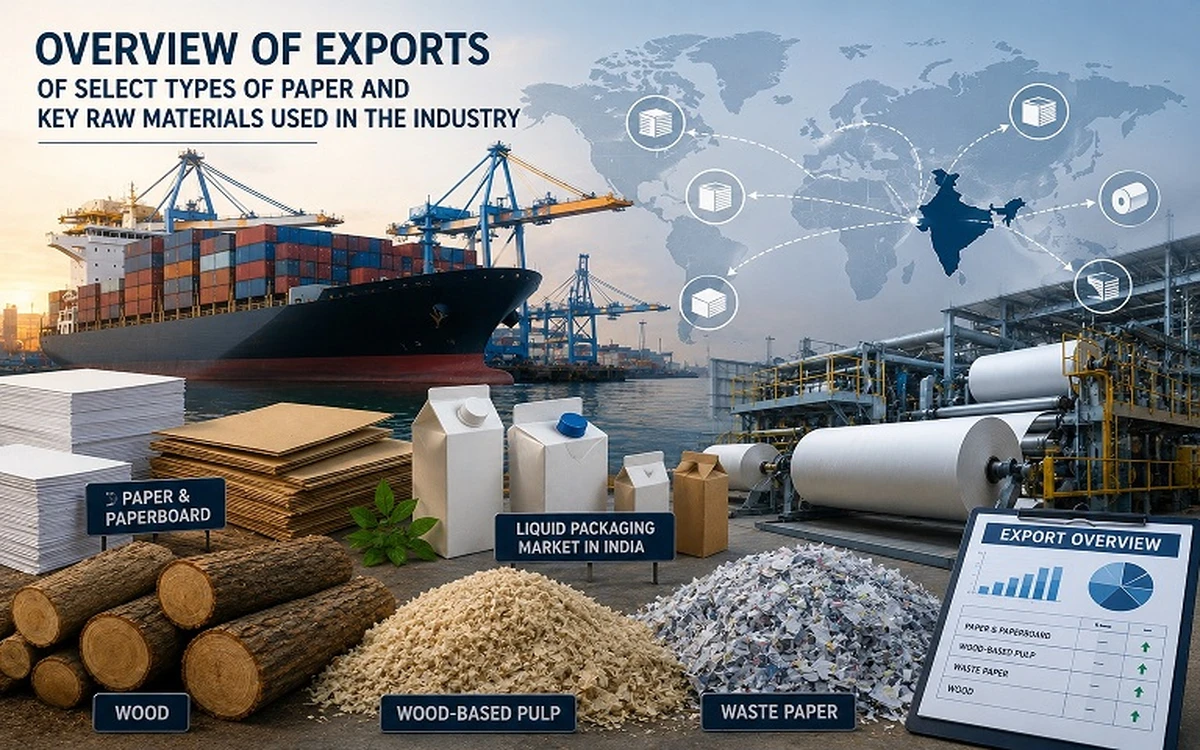
Overview of exports of select type of paper and key raw material used in the industry by Crisil Intelligence

Margin pressure pushes Pulp & Paper Packaging sector toward AI-Driven cost optimization, Cutting costs by 8–20%
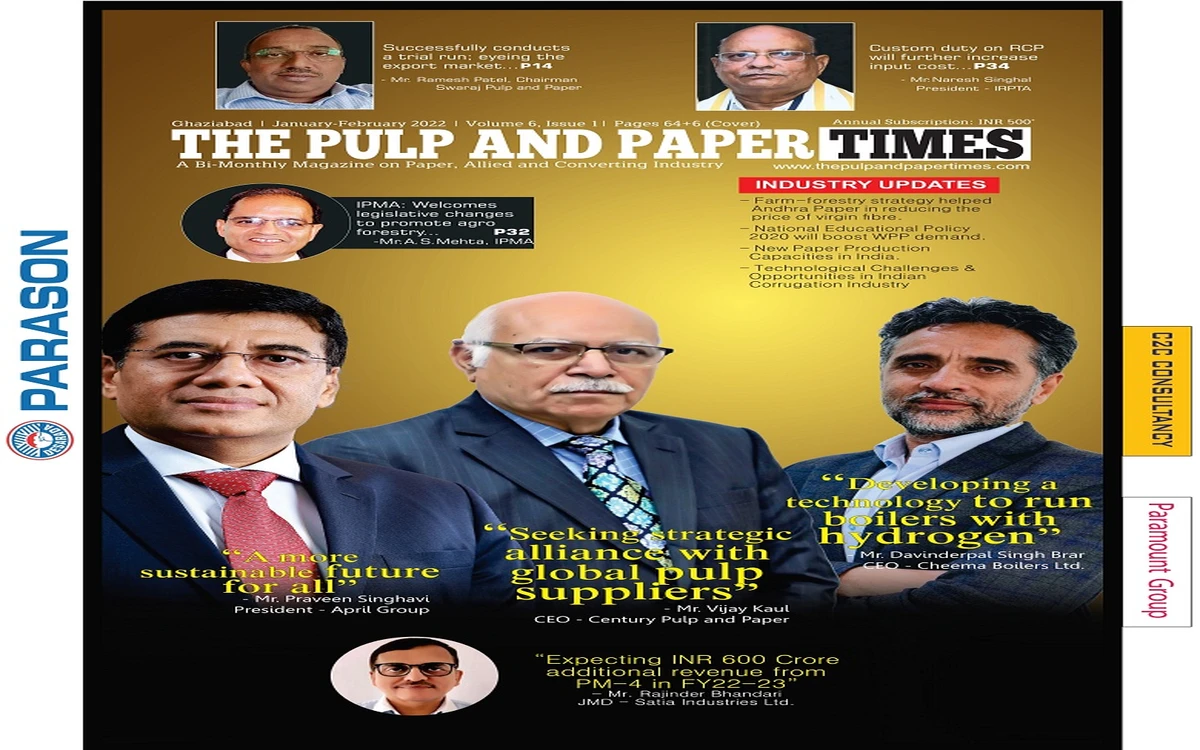
The Pulp and Paper Times Magazine : Volume 6, Issue 1
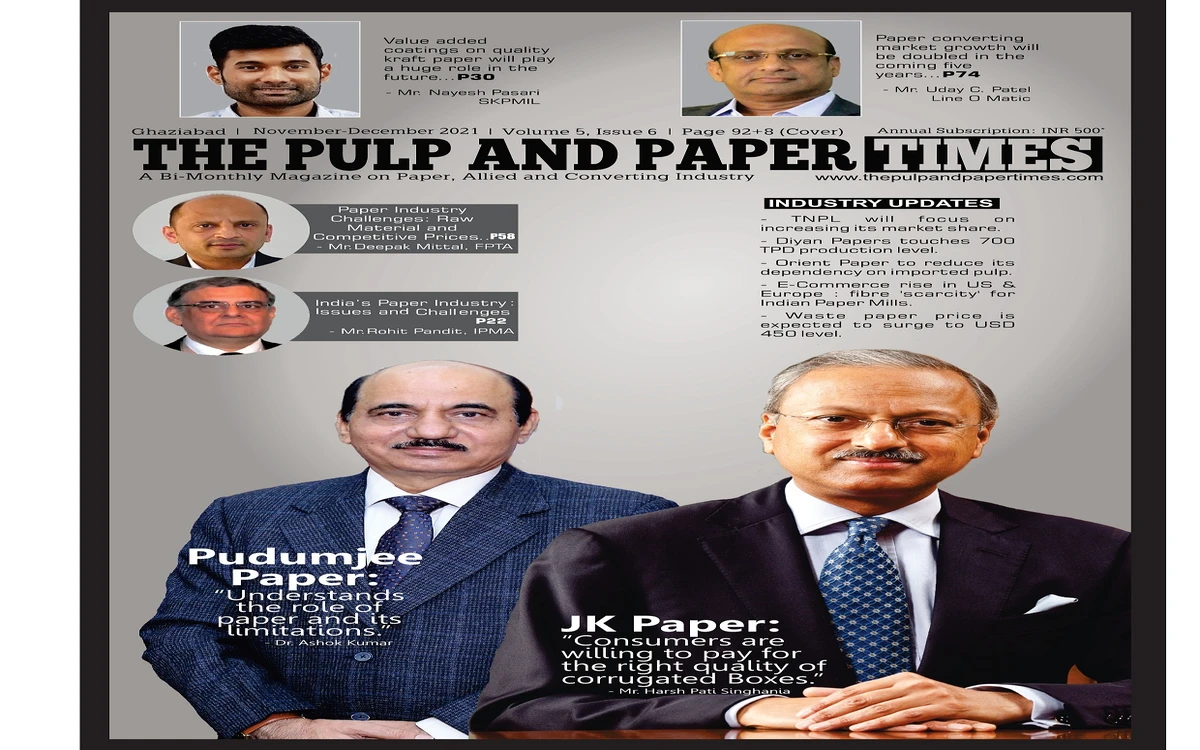
The Pulp and Paper Times Magazine : Volume 5, Issue 6
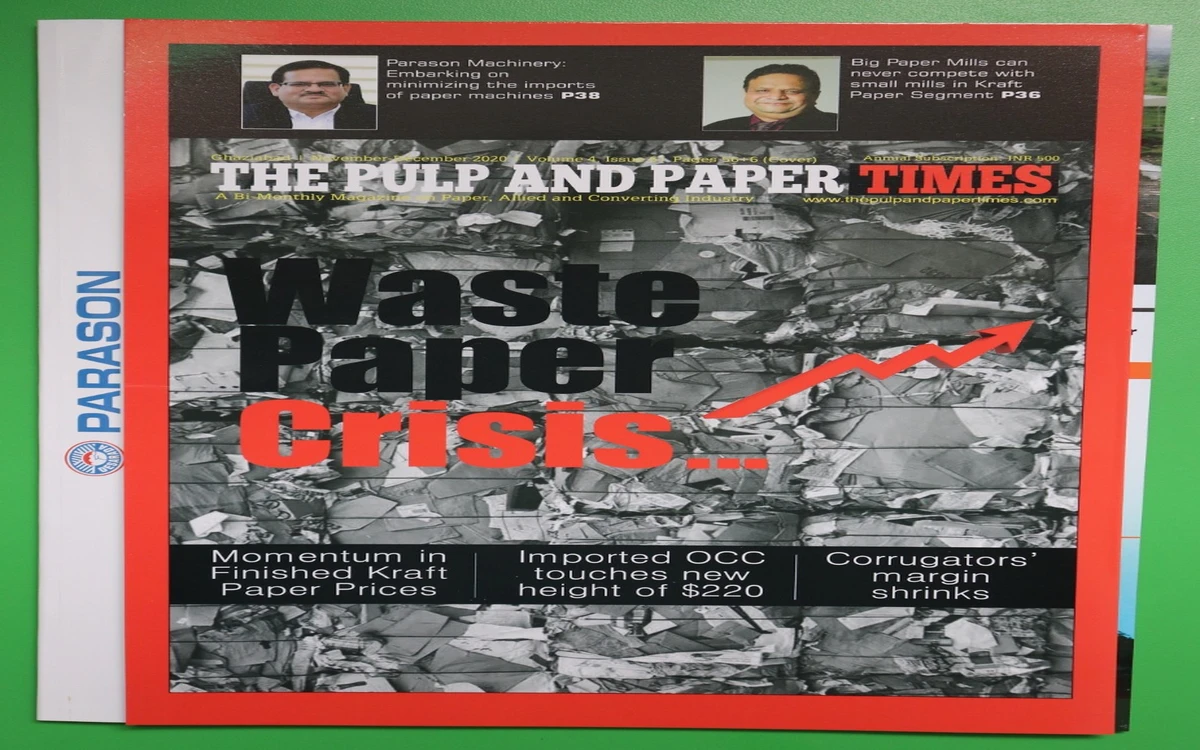
The Pulp and Paper Times: Volume 4, Issue 6
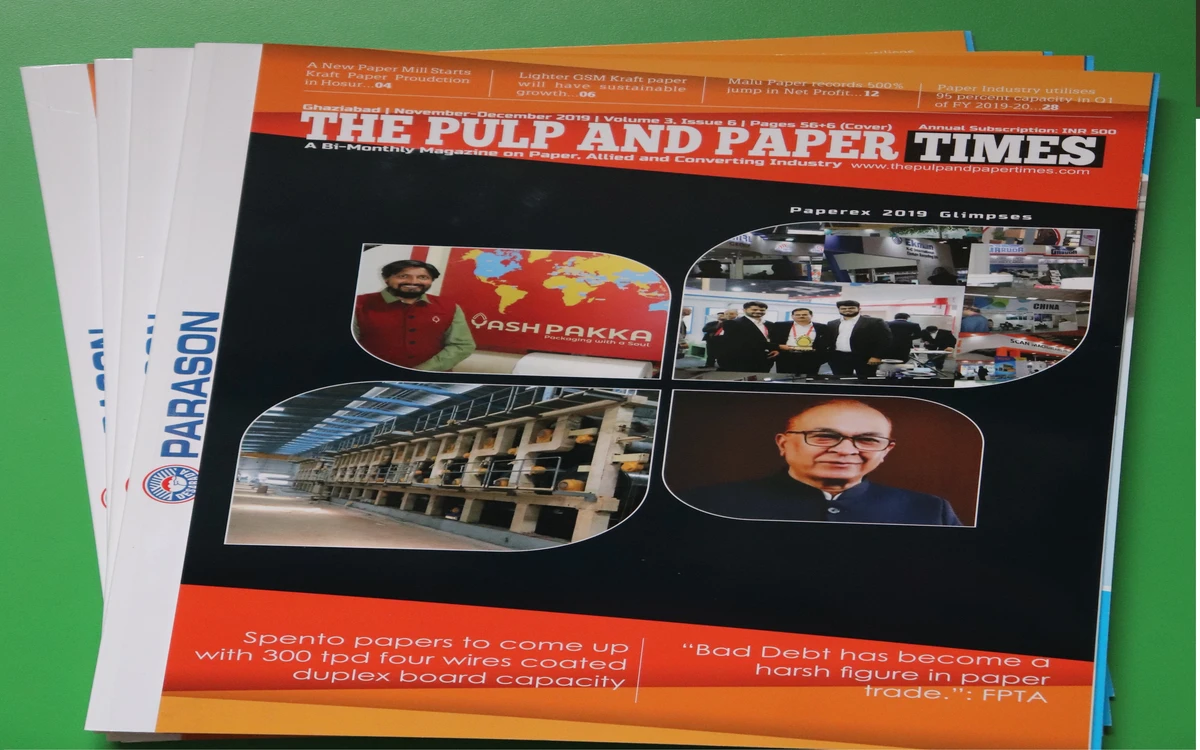
The Pulp and Paper Times : Volume 3, Issue 6
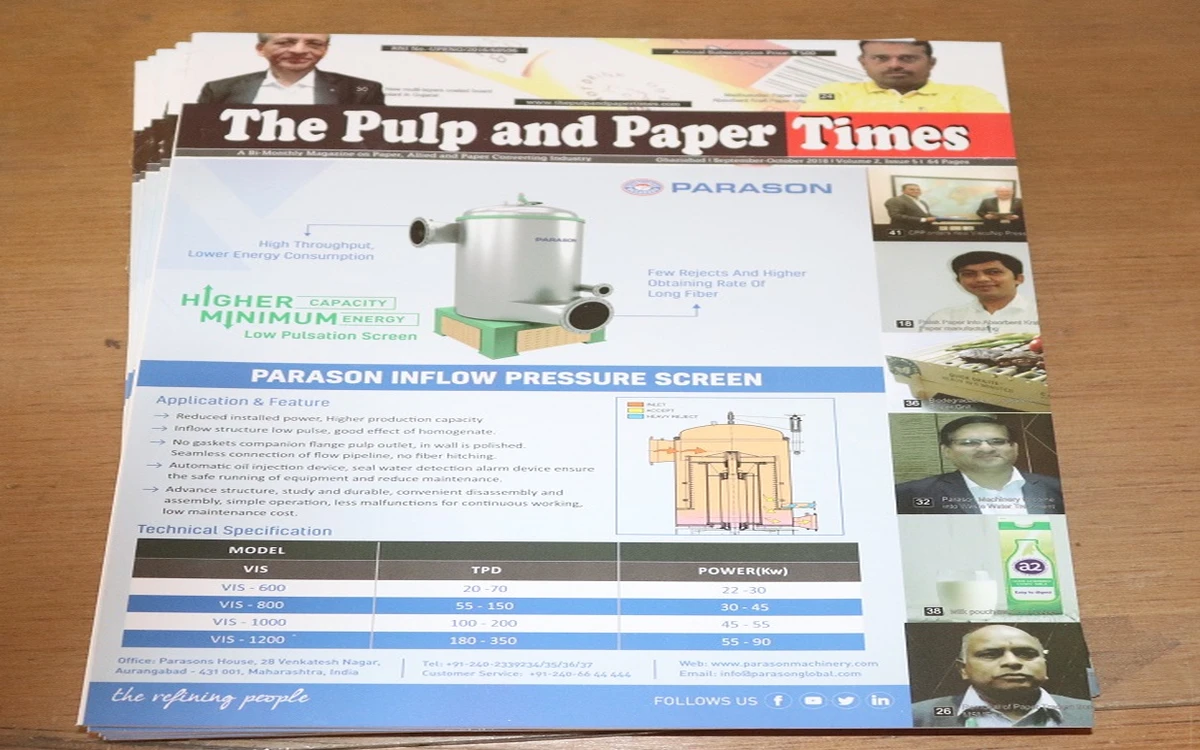
The Pulp and Paper Times: Volume 2 Issue 5
The Pulp and Paper Times, Volume 1, Issue 3
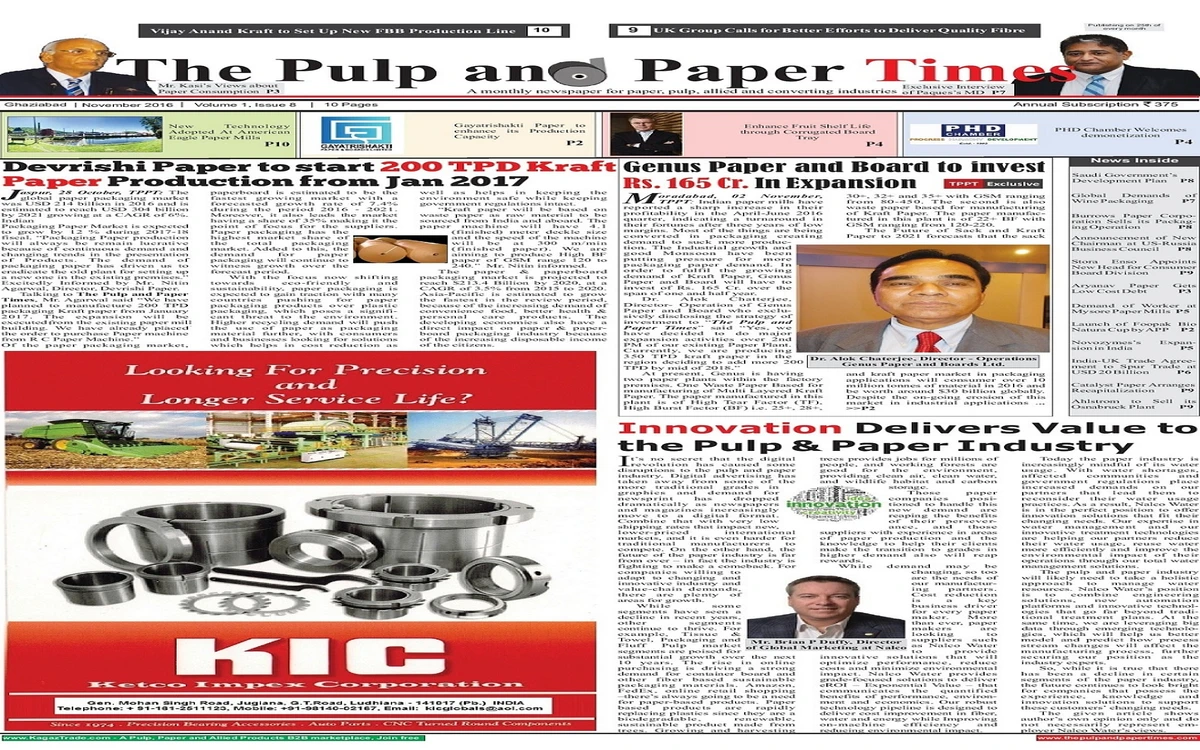
The Pulp and Paper Times, November 2016 Issue
“FCBM urges brands to recognize the value addition by corrugators and ensure equitable pricing,” says Mr. T. M. Raghavan of FCBM
Key Points of the Interview:
“High capital costs, lack of skilled manpower, and uncertain ROI deter medium-scale players from adopting full automation”
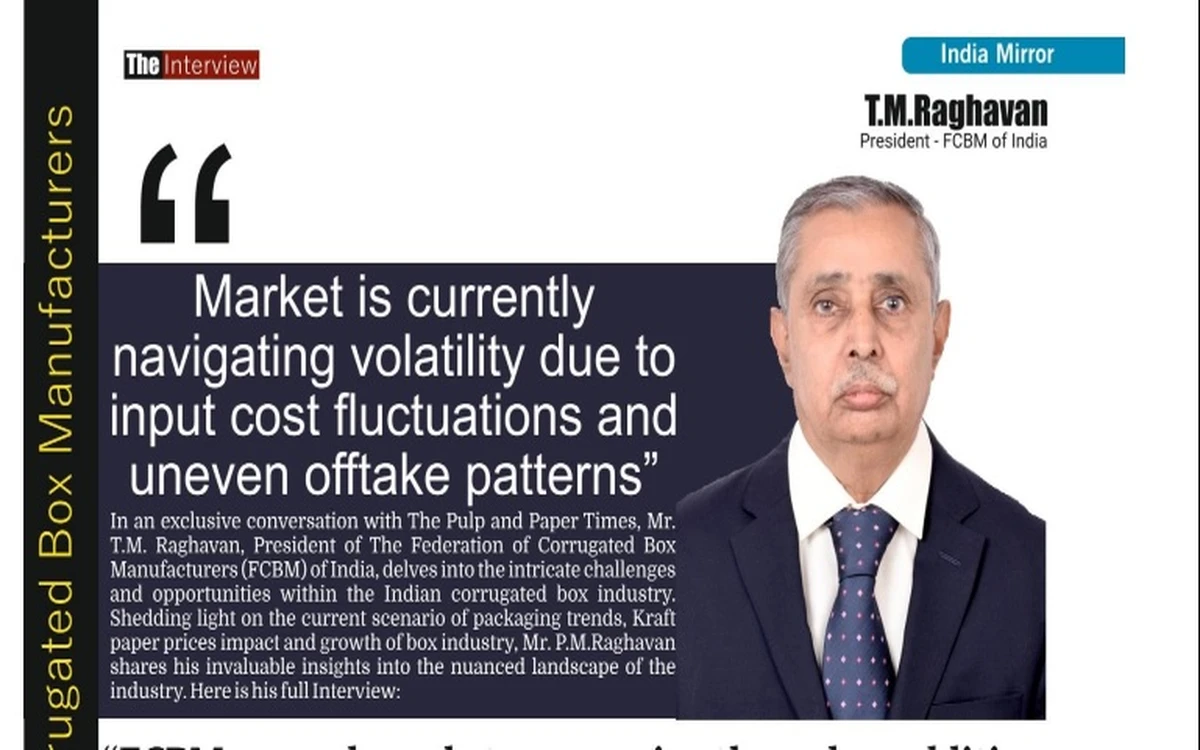
“Market is currently navigating volatility due to input cost fluctuations and uneven offtake patterns”
“We support fair trade practices and urge Paper mills to align pricing with market realities”
“FCBM urges brands to recognize the value addition by corrugators and ensure equitable pricing”
In an exclusive conversation with The Pulp and Paper Times, Mr. T.M. Raghavan, President of The Federation of Corrugated Box Manufacturers (FCBM) of India, delves into the intricate challenges and opportunities within the Indian corrugated box industry. Shedding light on the current scenario of packaging trends, Kraft paper prices impact and growth of box industry, Mr. Raghavan shares his invaluable insights into the nuanced landscape of the industry. Here is his full Interview:
The Pulp and Paper Times | October 2025
Q: Please give us a brief introduction of The Federation of Corrugated Box Manufacturers (FCBM)
The Federation of Corrugated Box Manufacturers of India (FCBM) is the apex body representing over 10,000 corrugated box manufacturers across the country. Established in 1971, FCBM serves as a unified platform for advocacy, innovation, and industry development. Our members range from small and medium enterprises to large-scale automated units, contributing significantly to India’s packaging ecosystem and employment generation.
Q: How do you see the demand perspective of corrugated boxes in the market? What is FCBM’s quick review for the present state of the market?

The corrugated packaging sector continues to witness robust demand, driven by wide spectrum of users including E-commerce, FMCG, pharmaceuticals, and agriculture. However, the market is currently navigating volatility due to input cost fluctuations and uneven offtake patterns. FCBM’s quick review suggests cautious optimism—demand is steady and growing at healthy clip, but pricing pressures and supply chain disruptions require strategic adaptation.
Q: GST on Boxes, cartons, cases of paper or paperboard (both corrugated & non-corrugated) — cut from 12% to 5%, do you think that benefit should pass on to the end consumer? Also the price of kraft paper will also be impacted due to slab change?
Through The recent GST rate reduction from 12% to 5% on corrugated and non-corrugated paperboard boxes is a welcome move. It aligns with the broader GST 2.0 reforms aimed at easing the burden on MSMEs and promoting sustainable packaging. This should give boost of adaption of corrugated boxes for packaging & transportation of Fresh Fruits & vegetables assisting the farmers in reducing wastage, better market reach & price realization. FCBM believes that this benefit will be passed on to the end consumer, enhancing affordability and boosting consumption.

However, the impact on kraft paper GST rate increase to 18% will create inverted duty structure, resulting in accumulation of ITC. This will put tremendous working capital pressure on industry which is already having very high demand of working capital. Ideally The GST Committee must consider bringing down the rate for Kraft paper, which is exclusively used by packaging industry with almost Zero market sales. This will not affect net revenue as GST on Kraft paper ITC or buyers. Such a move will restore status quo. Govt has promised quick refund of Excess ITC but that still involves locking in scarce funds for 3-4 months.
Through this medium we urge the Govt to bring down GST on Kraft paper to 5%.
Q: Paper mills are more interested in forward integration by setting up corrugation units in order to increase their margins and consumption of paper, big paper mills are acquiring corrugation plants all across India. Don’t you think that the future picture of the box industry will be changed? How does FCBM review this move, especially when the majority of the corrugated box manufacturers are small and medium entrepreneurs?
In evolved markets integrated operation a norm. The trend of paper mills acquiring corrugation units reflects a strategic shift toward vertical integration. While this may improve margins and ensure captive consumption, FCBM remains concerned about the implications for SME corrugators. We advocate for a level playing field, where collaboration—not consolidation—drives industry growth. The future picture will indeed change, and FCBM is committed to safeguarding the interests of small and medium manufacturers through policy engagement and capacity-building. One issue is while paper mills have long been accustomed to market operations, Corrugated boxes is more of marketing & personal contact selling.
Q: How do you evaluate the perception of new-age consumers about compostable and sustainable packaging? Does the packaging keep an ‘edge’ on the Products?
New-age consumers increasingly value sustainability. Compostable and recyclable packaging not only enhances brand perception but also influences purchasing decisions. Corrugated boxes, being biodegradable and recyclable, offer a distinct edge. Packaging today is not just functional—it’s a statement of values. FCBM encourages innovation in design and material science to meet evolving consumer expectations.

Q: With demand fluctuating sharply due to shifts from traditional trade to quick commerce, e-commerce, and modern formats, how can corrugated box makers adapt to such unpredictable offtake patterns?
Corrugated box makers must embrace agility—modular production lines, digital forecasting tools, and flexible inventory models are key. FCBM is working with technology partners to help members transition toward demand-responsive manufacturing, especially in the face of quick commerce and modern retail formats.
Q: Packaging and Corrugation associations often blamed the paper mills for an arbitrary price hike in paper prices. What is FCBM stand on paper prices, despite that overcapacity and export decline in Kraft paper segment has kept the price of paper at a reasonable level.
While overcapacity and export decline in the kraft paper segment have stabilized prices, arbitrary hikes remain a concern. FCBM advocates for transparent pricing mechanisms and regular dialogue between paper mills and corrugators. We support fair trade practices and urge mills to align pricing with market realities.

While on market conditions, mills must be receptive of lingering quality issues plaguing the functioning of boxes on packaging lines, & in customer perception. Corrugated industry works on wafer thin margin and even a small rejection by customer can wipe out entire profits.
Q: Does the excess capacity issue come up in the corrugation industry also?
Excess capacity has been long standing bane of industry, especially where automation has scaled rapidly. Low entry threshold lures many gullible to invest in new plants. To build volumes prices are driven down, leading to losses. FCBM is conducting a regional capacity audit to assess utilization rates and guide future investments. Balanced growth is essential to avoid price wars and ensure long-term viability.
Q: After the ban on single use plastic, there has been penetration of several alternatives of plastic packing, such bio-degradable and Compostable plastics and wood-based packaging which are competent to carry weight like corrugated box. How do you foresee the future of alternatives Vs corrugated box?
Corrugated boxes remain unmatched in scalability, cost-efficiency, and recyclability. While biodegradable plastics and wood-based packaging are gaining traction, still they cannot compete with corrugated in Transport package segment which for large portion of total market. FCBM sees these alternatives as complementary rather than competitive. The future lies in hybrid solutions that combining strength, sustainability, and affordability.
Q: Automation in corrugation lines is expensive. What is stopping medium-scale players from adopting high-speed, fully automated plants? Please shed light on the new developments of corrugation automation?
High capital costs, lack of skilled manpower, and uncertain ROI deter medium-scale players from adopting full automation. However, modular automation—such as robotic stacking, inline printing, and digital die-cutting—is gaining ground. FCBM is facilitating technology transfer and financing options to democratize automation.
Q: Can you shed light on the export growth of the corrugation segment in FY 24–25 and the current FY? Don’t you think tariff barriers across the region could impact the expected growth?
FY 2024–25 saw modest growth in corrugated box exports, driven by demand from Southeast Asia and Africa. However, tariff barriers and logistics costs remain challenges. FCBM is engaging with trade bodies to advocate for favourable export policies and regional trade agreements.
Q: Doesn’t FCBM think that people are willing to pay 1–7% more for sustainable packaging that aligns with their values? Are the end-user companies or brands passing on the benefit of this premium charge in packaging to box makers?
Consumers are indeed willing to pay a premium for eco-friendly packaging. However, this premium is not always passed down to box makers. FCBM urges brands to recognize the value addition by corrugators and ensure equitable pricing. Sustainability must be a shared responsibility across the value chain.
Q: India is lagging behind in the use of products constructed of corrugated material. How does FCBM want to encourage "corrugation formation" in Indian society, which might create a significant new source of income for corrugators as well?
Corrugated material has immense potential in furniture, interior design, and temporary structures. FCBM is launching a “Corrugation for Life” campaign to showcase innovative applications and create new income streams for manufacturers. We aim to collaborate with design institutes and architects to mainstream corrugated construction.
Q: Any message or comment you want to give to Indian Paper Manufacturers?
We urge paper manufacturers to adopt a partnership mindset—transparent pricing, quality consistency, and collaborative innovation are the need of the hour. Together, we can build a resilient packaging ecosystem that supports MSMEs, promotes sustainability, and drives national growth and leads to a win win situation.

1 days ago
Total Views : 3653
3 days ago
Total Views : 1951
last week
Total Views : 2859
last week
Total Views : 2608
last week
Total Views : 799
last week
Total Views : 1357
2 weeks ago
Total Views : 3959
2 weeks ago
Total Views : 2824
2 weeks ago
Total Views : 827
2 weeks ago
Total Views : 3688