

Paper mills in Morbi face a 50% drop in demand amid the ceramic industry closure; kraft paper prices may see intense price-cutting competition
Join WhatsApp Group, Telegram & YouTube Channel, No Spamming
 Join WhatsApp Group
 Join Telegram Channel
 Join YouTube Channel
 Join Job Channel (View | Submit Jobs)
 Join Buy Sell Channel (Free to Submit)
 Paper News Headlines Channel (Free to read)
Paper mills in Morbi face a 50% drop in demand amid the ceramic industry closure; kraft paper prices may see intense price-cutting competition
- West Asia Conflict Hits Morbi Industries: Ceramic Shutdown Puts Pressure on Paper Mills
The Pulp and Paper Times
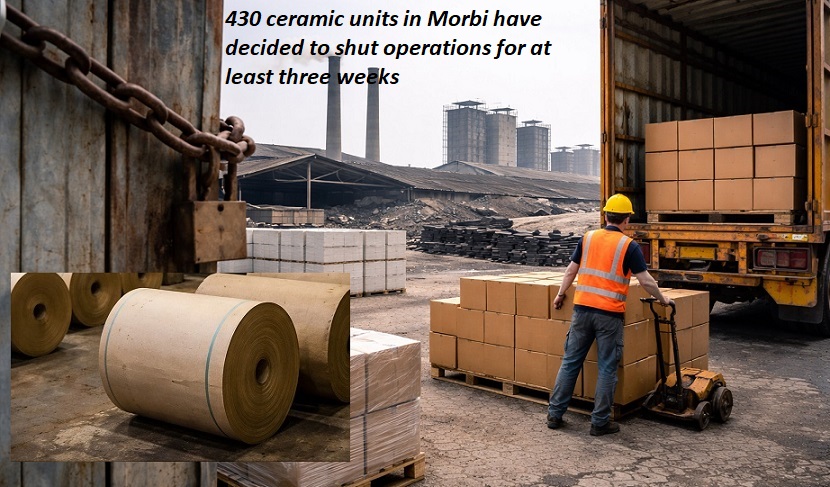
The ongoing conflict in West Asia has started affecting industries in India, with Gujarat’s Morbi region facing a major disruption. Around 430 ceramic units in Morbi have decided to shut operations for at least three weeks due to a shortage of gas, which is a key fuel used in the manufacturing process. The situation was confirmed on March 18, 2026, by industry representatives.

Morbi is known as one of India’s largest ceramic manufacturing hubs, and the sudden shutdown is expected to have a ripple effect on related industries—especially the paper sector. The ceramic industry is a major consumer of kraft paper, which is used for packaging tiles and other ceramic products. With ceramic production halted, the demand for paper has dropped sharply.
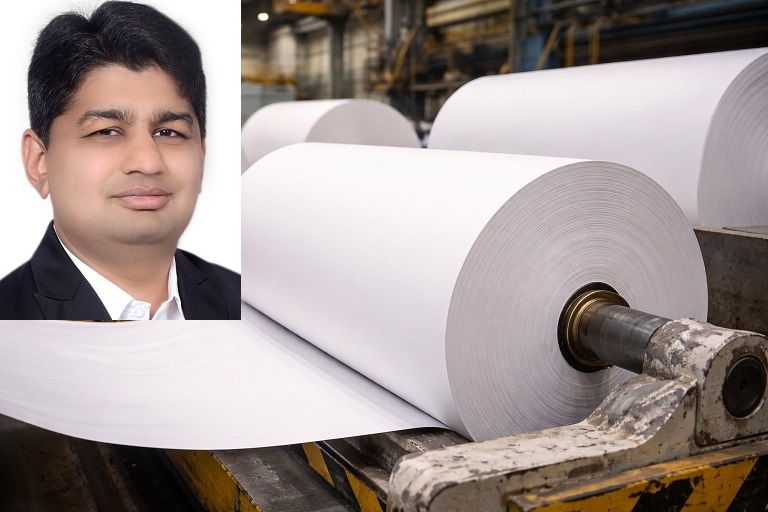
Speaking to The Pulp and Paper Times, Mr. Shailesh Patel, President of the Morbi Paper Mills Association, explained the seriousness of the situation. He said that nearly 50% of the kraft paper produced in Morbi is supplied to the ceramic industry. Since ceramic units are closed for about 25 days, this demand has almost disappeared overnight.

There are a total of 53 paper mills in operation in Morbi (Gujarat), out of which 20 paper mills are directly impacted due to the closure of the ceramic industry, as they were supplying fluting media and 16 BF kraft paper for boxes.
He further explained that ceramics are mainly sold in boxes made from kraft paper. With half of the market gone, paper mills are expected to operate at lower capacity. “If 50% of the market is gone, paper mills will have to operate in an on-and-off mode,” he said.
Morbi currently has around 53 paper mills, and according to Mr. Patel, all of them are dependent on the ceramic industry in some way. However, the level of impact varies. Mills producing higher burst factor (BF) grades such as 24, 28, or 35 BF may see a smaller impact of around 10–15%, as they cater to a more diversified market. On the other hand, mills producing lower grades like 12 BF fluting media are expected to be hit the hardest, as nearly 80% of their production goes to the ceramic sector.

Mr. Patel, whose own mill produces 16 BF paper, said that his business could lose up to 50% of its demand during this period. This sharp decline raises an important question: can paper mills remain profitable while operating at lower capacity?
According to him, the answer is no. Running mills at reduced capacity will likely result in losses. In such situations, mills tend to reduce their prices to sell their products, leading to intense competition in the market. “It becomes a neck-to-neck price-cutting competition,” he said. “Everyone keeps lowering prices just to sell their goods, even if it means operating at a loss.”
He also pointed out that this price war creates a difficult situation for all players. If one mill reduces prices, others are forced to follow. Even if a mill decides to stop production temporarily to avoid losses, it risks losing market share as competitors continue selling at lower rates. As a result, most mills are compelled to keep running despite low profitability.

Looking ahead, Mr. Patel warned that if the conflict continues for another 15–20 days or longer, the impact on Morbi could become even more severe. The ceramic industry, which is the backbone of the region’s economy, relies heavily on gas for firing kilns. Without a stable gas supply, production cannot resume.
He explained that much of the gas supply for ceramics comes from Gulf countries. Due to the ongoing conflict, supply routes have been disrupted, creating uncertainty. Although the government has indicated that it may provide up to 80% of the required gas, there is still no clarity on pricing or consistent availability.

Another concern is the rising cost of imported waste paper, which is a key raw material for paper production. Mr. Patel said that prices could increase by Rs. 4–5 per kg in the near future. However, even if costs rise, mills may not be able to pass on the full increase to customers due to weak demand.
He highlighted that paper mills need to maintain a conversion cost of around Rs. 12 per kg over the cost of waste paper to remain viable and cover expenses such as bank interest. But in a competitive market, some mills may start selling at a conversion cost as low as Rs. 9 per kg, which is unsustainable.
The situation is further complicated by issues in the global waste paper supply chain. Due to the conflict, shipping companies are imposing heavy surcharges, ranging from $2,000 to $2,500 per container. This is mainly due to increased risks, lack of insurance coverage, and safety concerns in the region.
To put this into perspective, a 40-foot container typically carries around 24 tonnes of waste paper valued at about $3,600 (at $150 per tonne). Adding a surcharge of $2,500 significantly increases the cost, pushing up the price of waste paper by Rs. 7–8 per kg. This sharp increase adds further pressure on paper mills already struggling with low demand.
Mr. Patel also emphasized that imported waste paper is essential for maintaining the quality of finished paper. Domestic waste paper alone cannot meet the required standards. Therefore, despite higher costs, imports cannot be avoided, which will eventually lead to an increase in paper prices.
Interestingly, the situation is different in other parts of Gujarat. Paper mills in cities like Ahmedabad are currently seeing steady demand. This is because many buyers are placing advance orders, fearing future shortages of raw materials due to the ongoing conflict. Mills are also importing waste paper in advance to secure their supply.

In contrast, Morbi’s paper mills are facing a unique challenge. Since ceramic factories are closed, there is no immediate demand for packaging materials. Even if paper is produced, there are no buyers willing to stock it.
Adding another perspective, Mr. Dinesh Haripara, Vice President of the Morbi Paper Mills Association, shared his views on price trends. He said that if the conflict continues for another month, prices of kraft paper in the range of 18 BF to 35 BF may increase by Rs. 2–3 per kg in the next 10 to 15 days.
He also noted that duplex paper mills have already increased their prices due to a rise in the cost of imported chemicals, indicating that input cost pressures are building across the paper industry.
In conclusion, the West Asia conflict has created a challenging situation for Morbi’s industrial ecosystem. The shutdown of ceramic units has directly reduced demand for paper, while rising raw material and logistics costs are squeezing margins. If the situation continues, both industries may face prolonged disruptions, impacting production, pricing, and overall profitability.
Web Title: Paper mills in Morbi face a 50% drop in demand amid the ceramic industry closure; kraft paper prices may see intense price-cutting competition
More News From india
{{ item.Title }}