Join Groups & Channels, No Spamming









Morbi paper mills see full-capacity operations as ceramic industry revives; Kraft paper exports to China spike, Prices strengthen; Janmashtami shutdown ahead
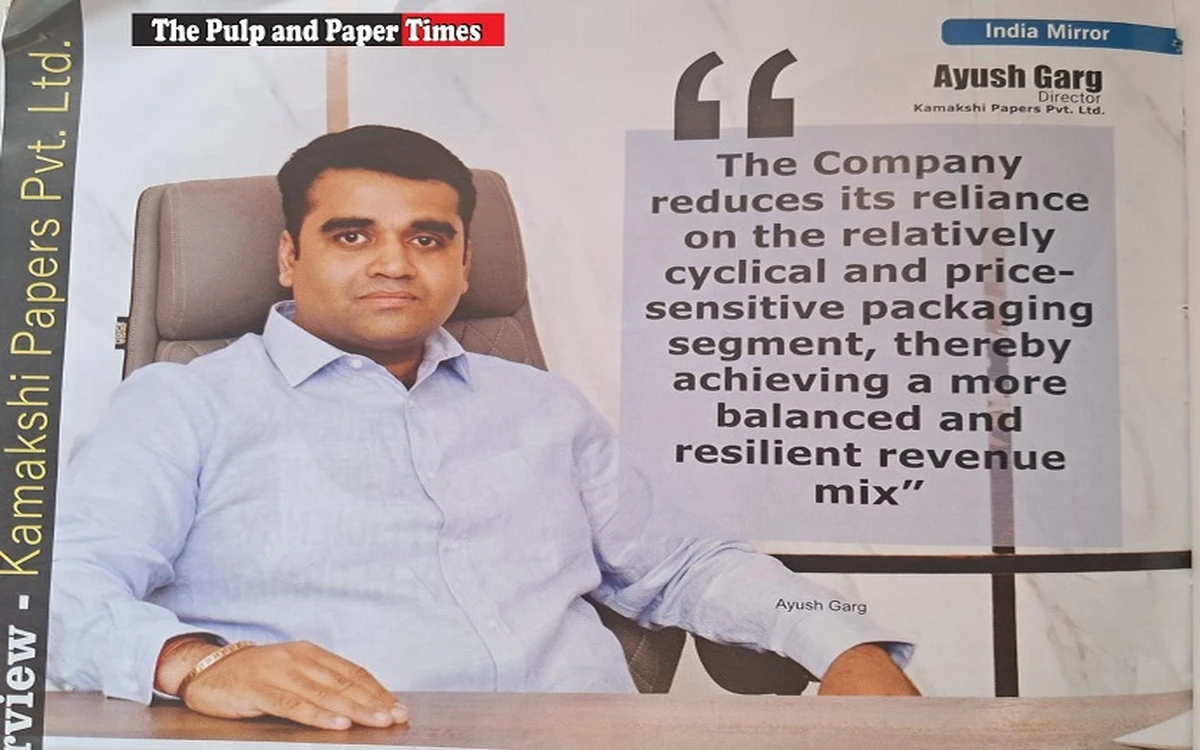
The BE and caustic soda plant marks a key milestone for Mohit Paper Mills, enabling full utilization of installed capacity and enhancing overall production efficiency
Expert Views on the paper market scenario, How the West Asia Crisis Helped the Industry, MIP for WPP, Anti-Subsidy implementation, and paper price trends
Pudumjee Paper intends to develop new varieties addressing applications for stronger paper bags and cupcakes; Plans 68,000 MT Mahad Specialty Paper Facility within 5 years
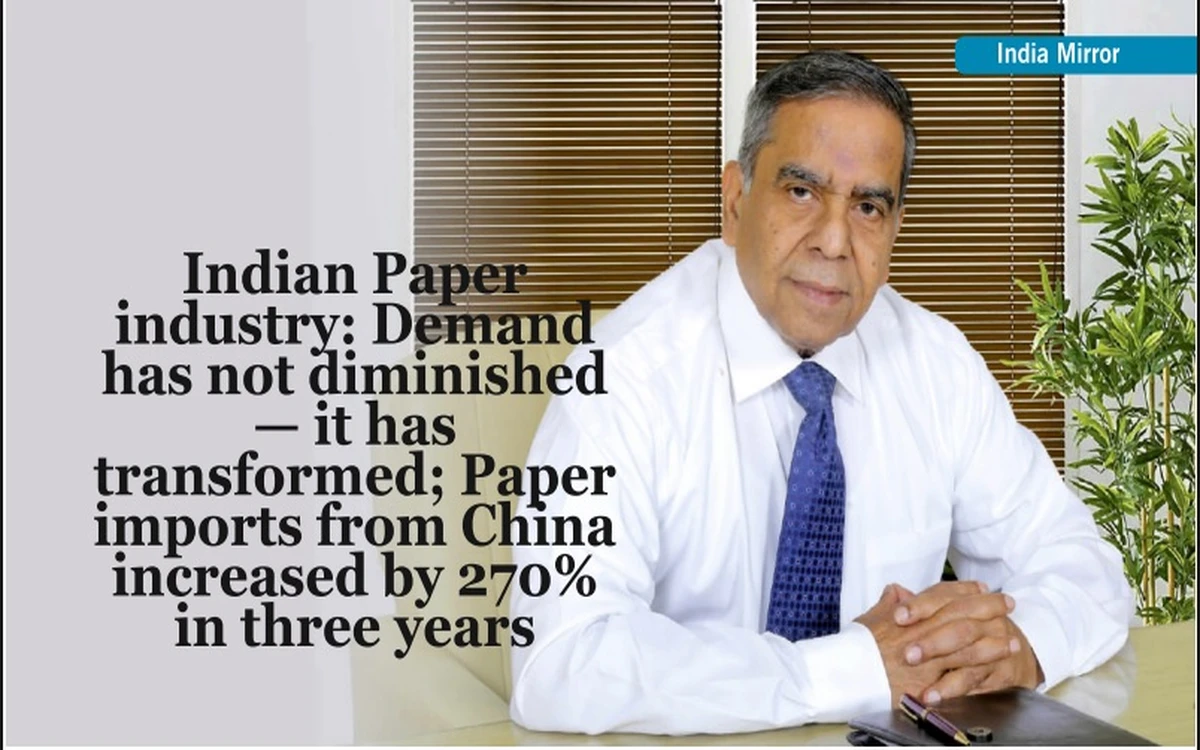
India Paper Industry at an Inflection Point: War, Costs, and Capacity; Demand growth expected at 5–7% in FY26
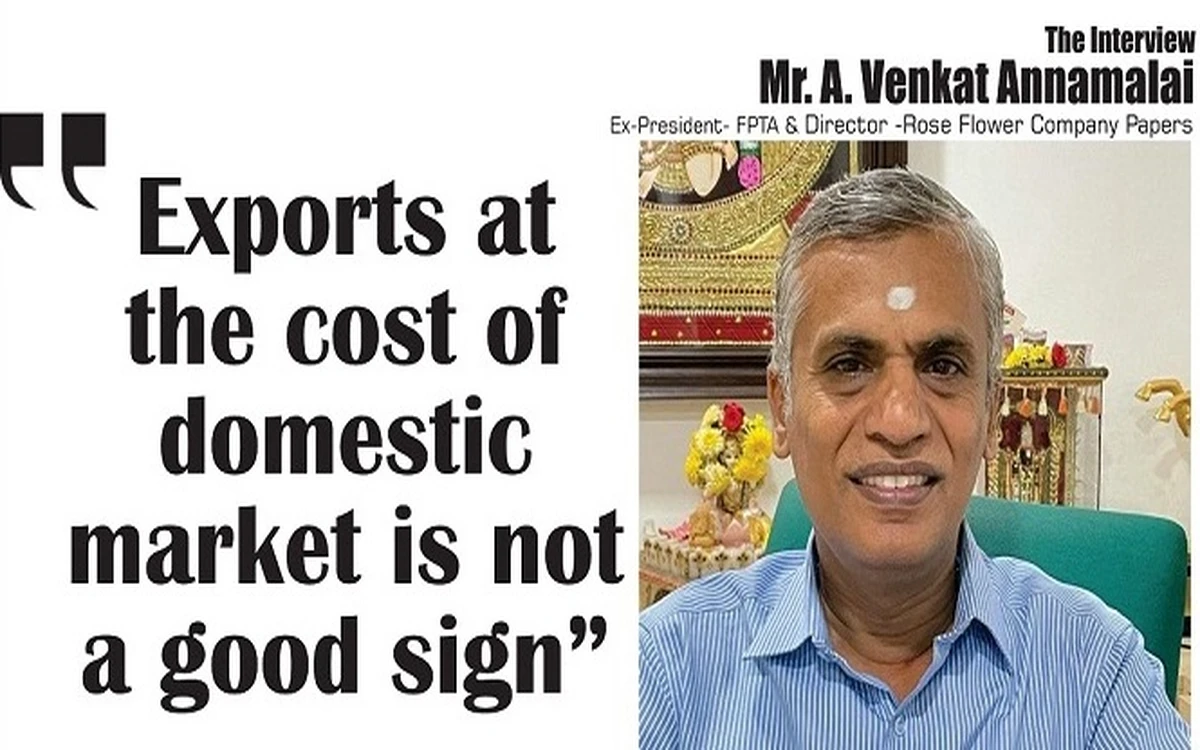
“Surging exports of paper will most certainly keep the domestic prices quite high”: Mr. A. Annamalai, Director – RFC
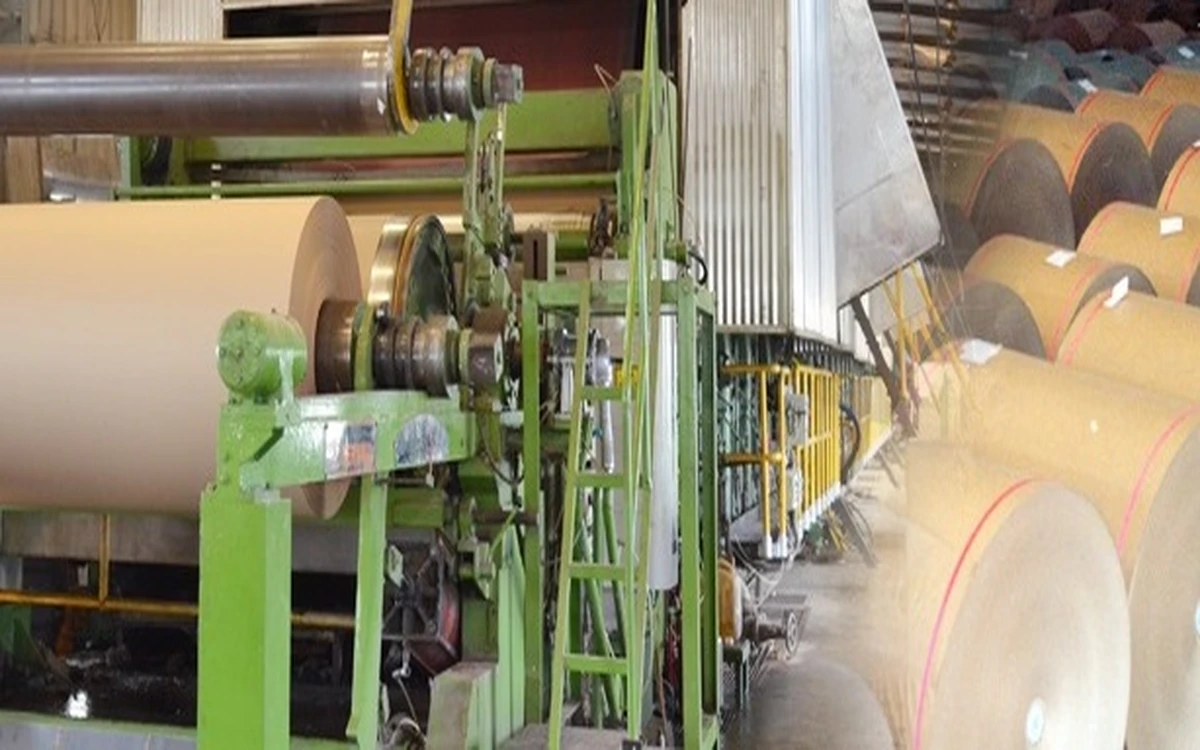
The Status of the Global Container board Industry, Recycled Paper Demand and Supply and its impact on the Indian Industry

Akshay Jain, director of Silverton Pulp & Paper, says it's time to promote agro residue as a raw material to lessen the scarcity of fibre
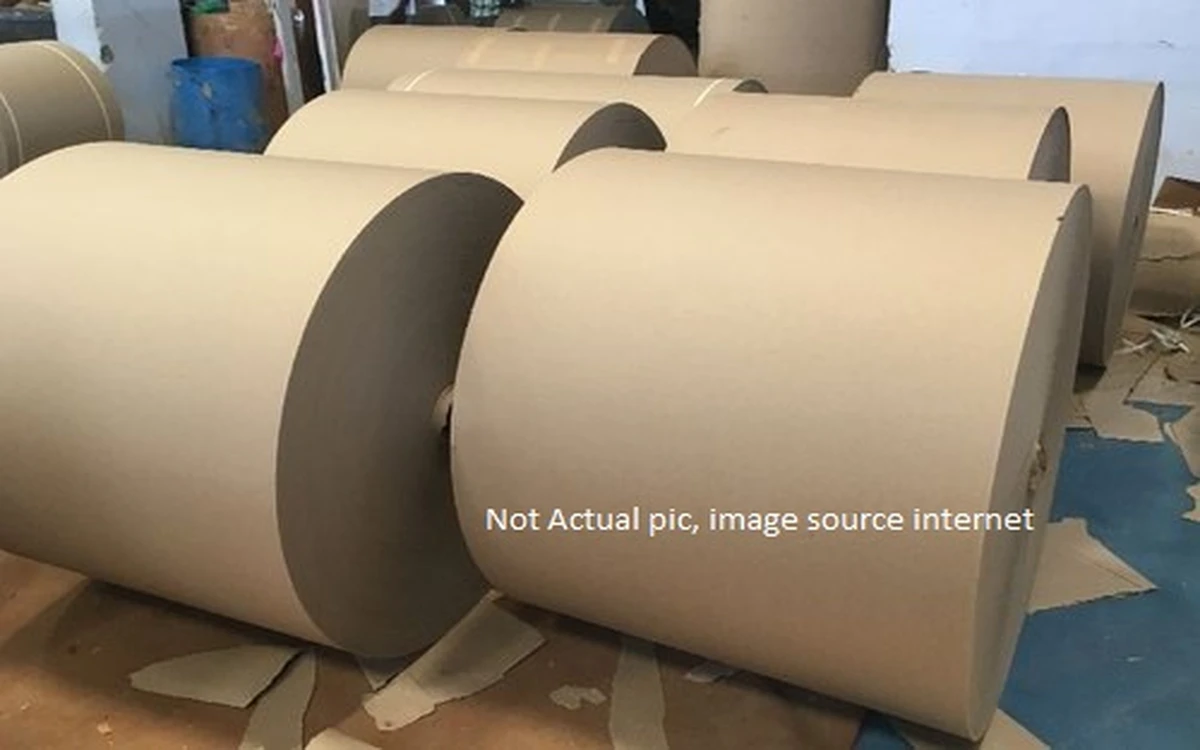
Advantageously located, a new paper mill is all set to roll kraft paper in Madhya Pradesh
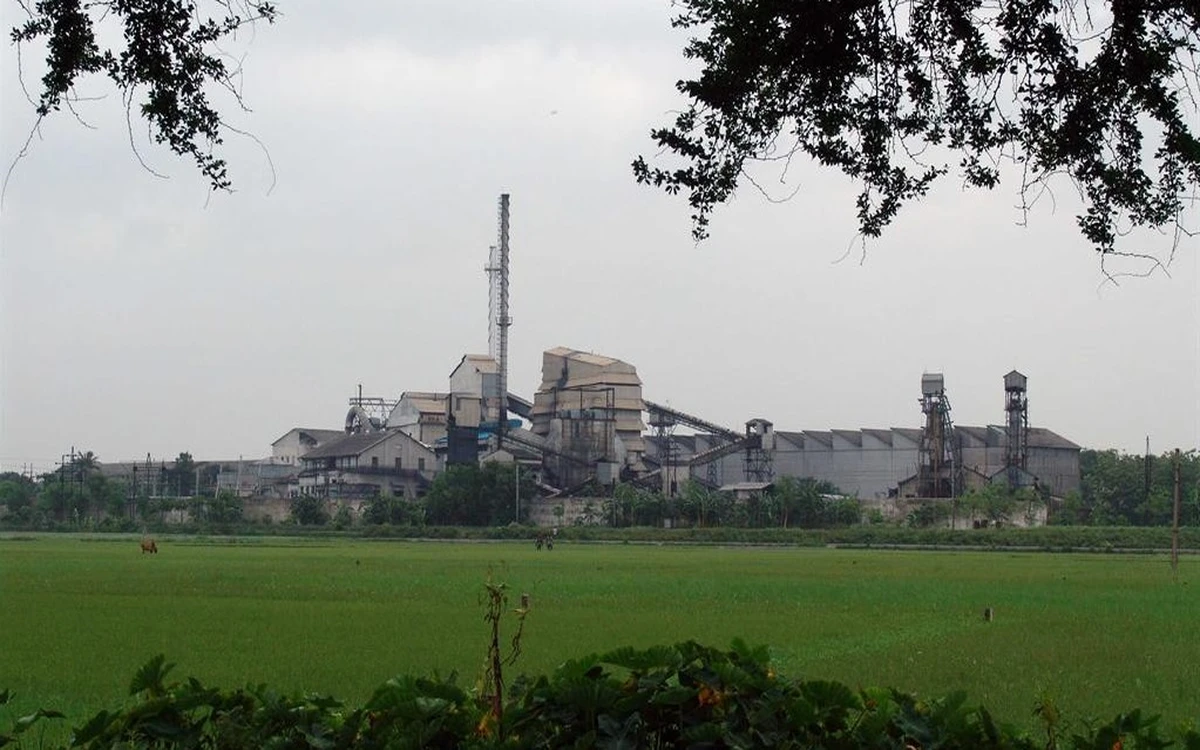
Several agile interventions helped ITC-PSPD fortify its clear leadership of the Value Added Paperboards (VAP) segment
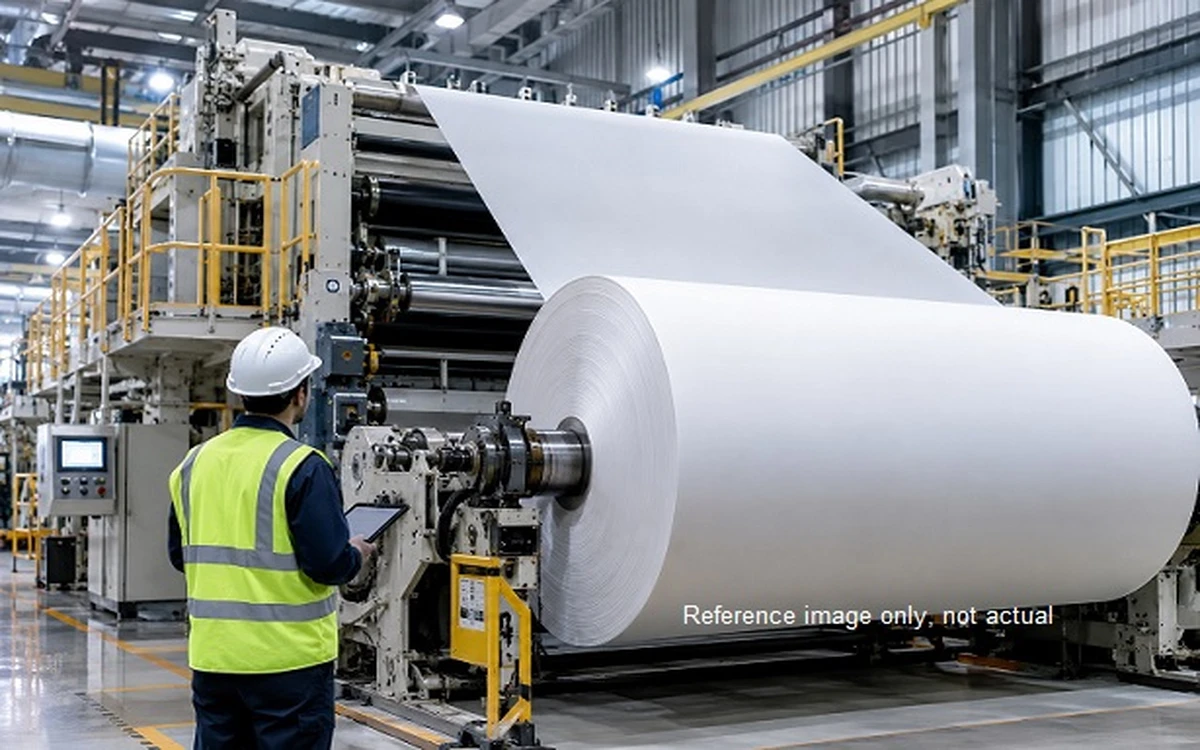
Pakka Advances PM4 Development; flexC Base Paper Trials Underway in Europe, with a Distributor Soft Launch Expected
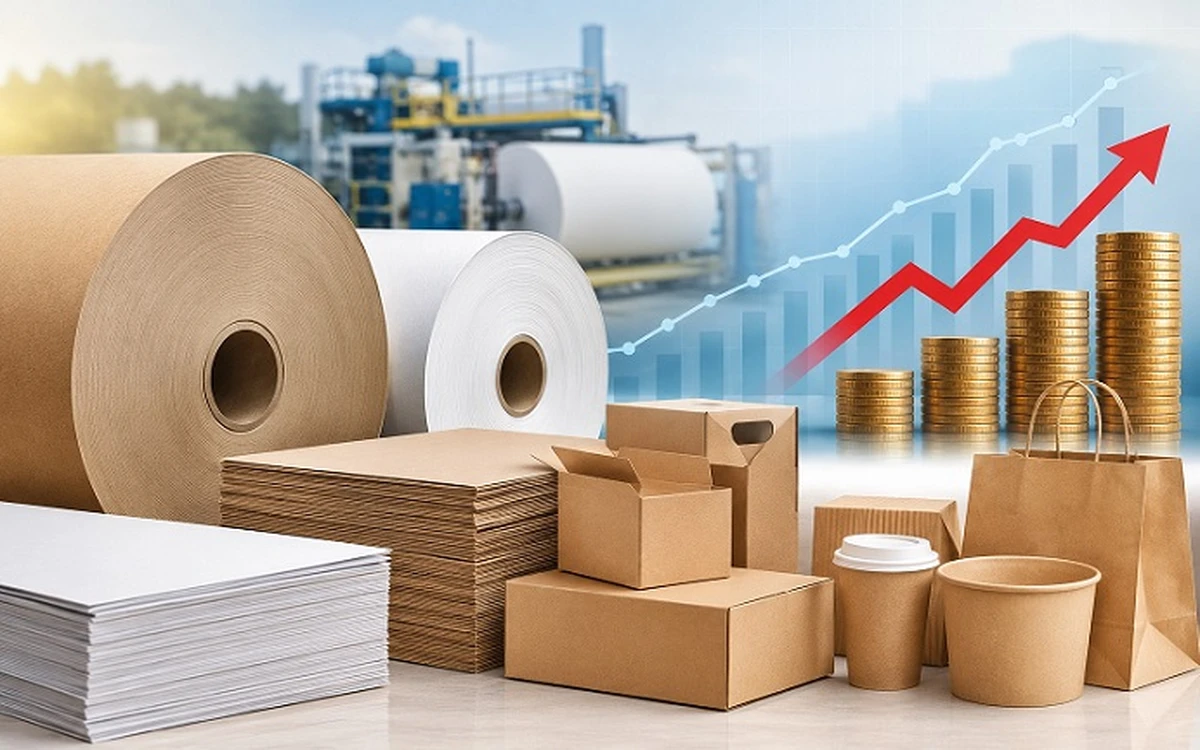
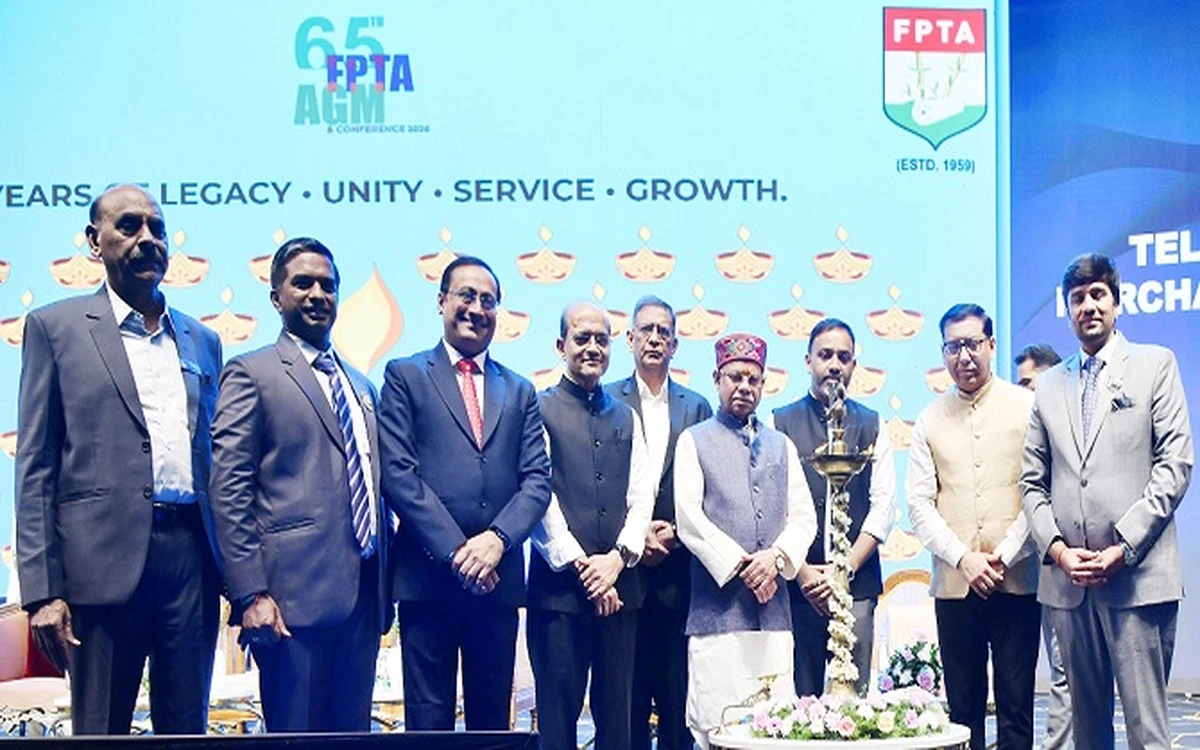
Paper and Packaging Board Market May Face Cost Pressures Through March 2027; FPTA Advises Traders
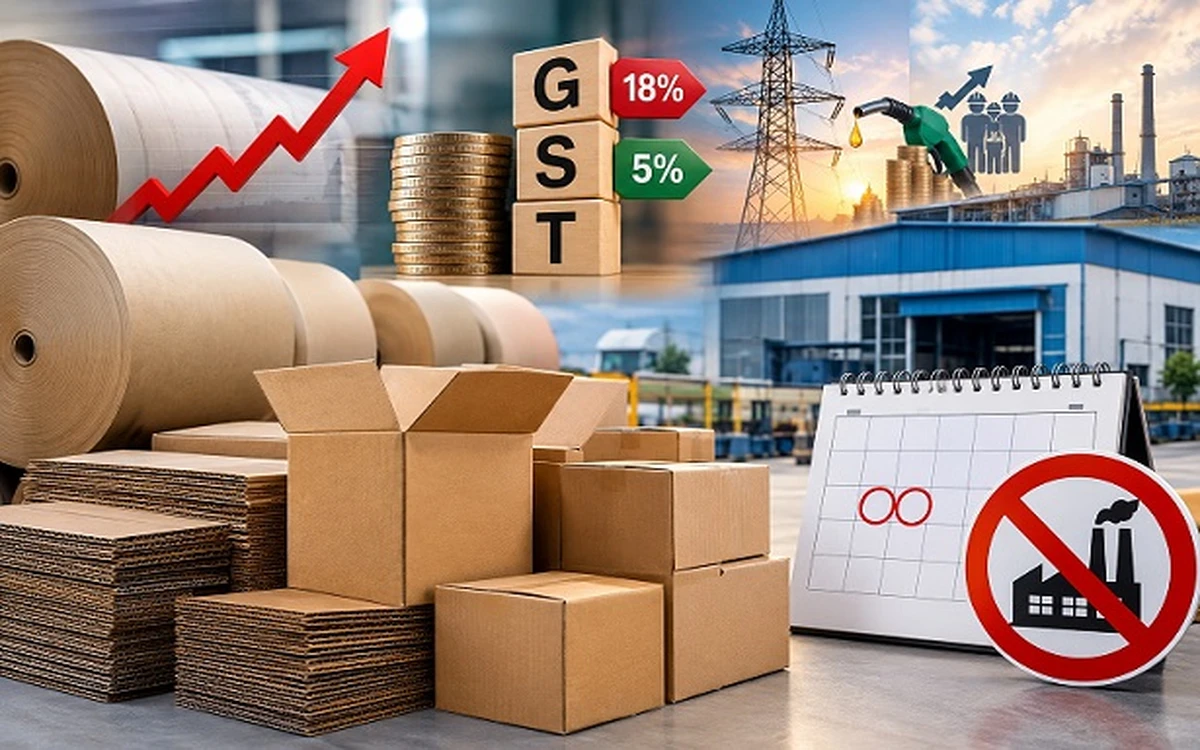
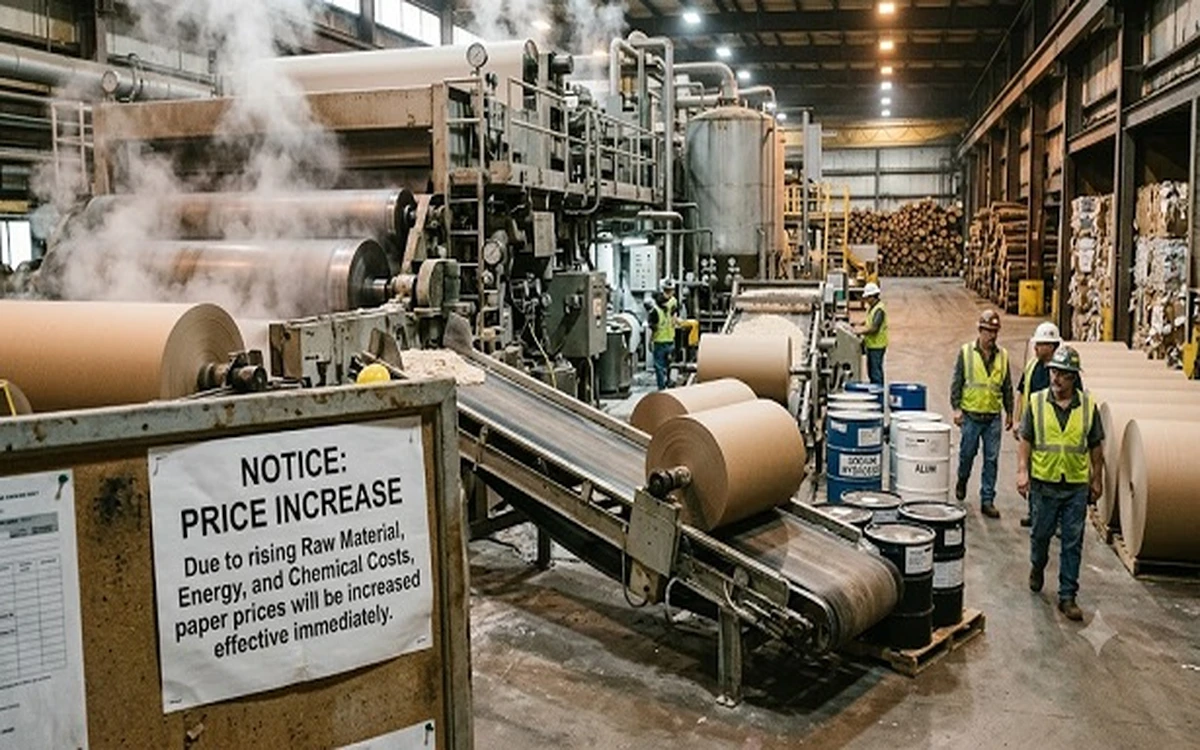
Overall Increase in Kraft Paper Prices Could Reach 35%; Industry Calls for 20% Box Price Increase, Voluntary Shutdown Proposed
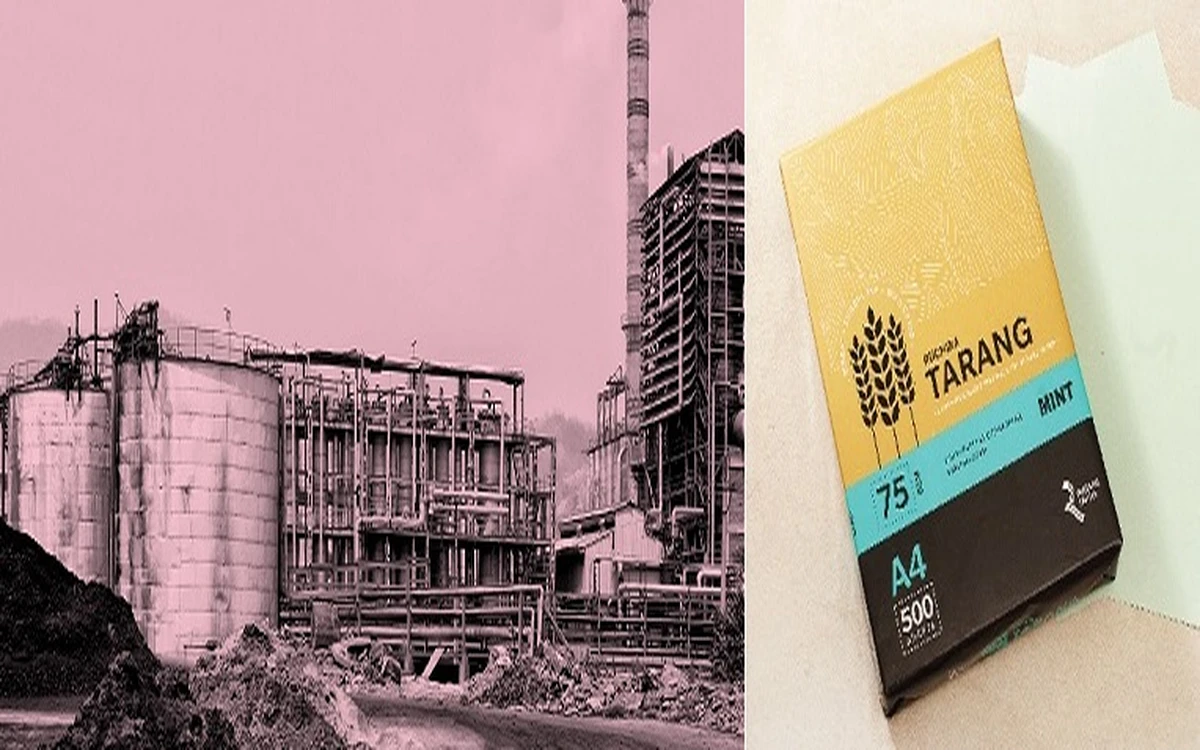
Ruchira Papers Invests a Sizeable Capex of Rs. 235–240 Crore Towards Writing & Printing Paper Capacity Expansion
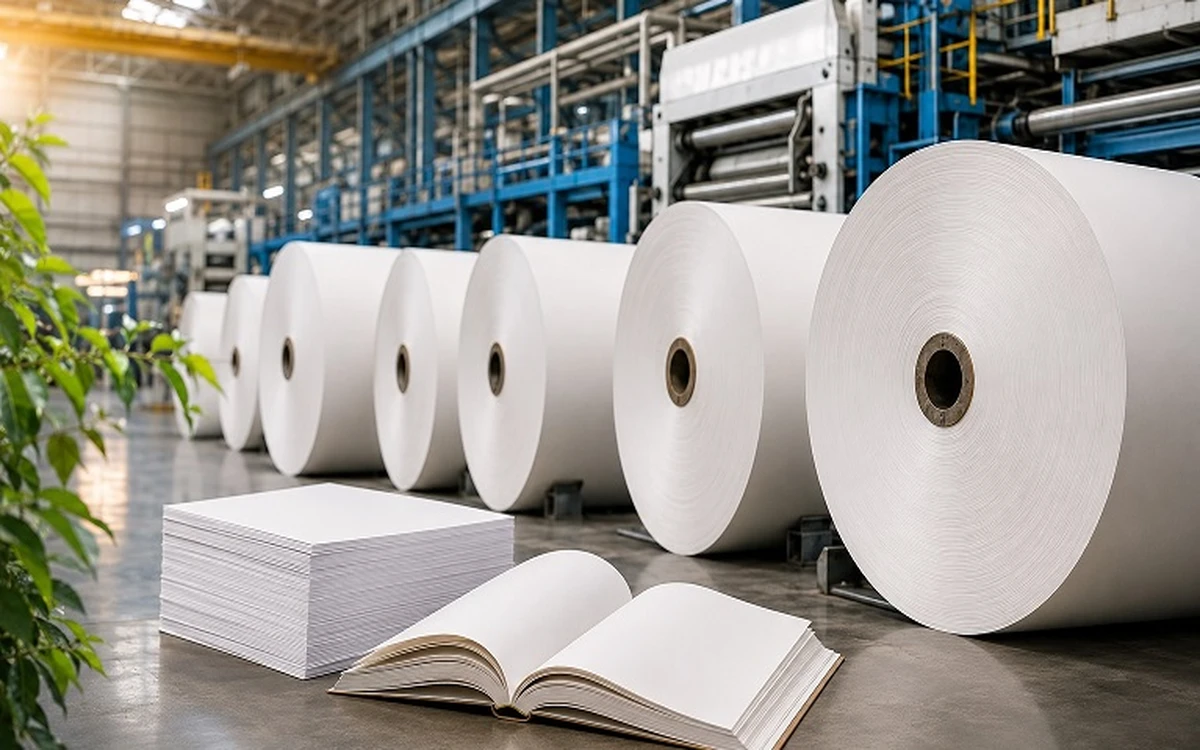
Paper mills inflated the basic ex-mill price of paper post GST 2.0, AINMA seeks action against Anti-Profiteering
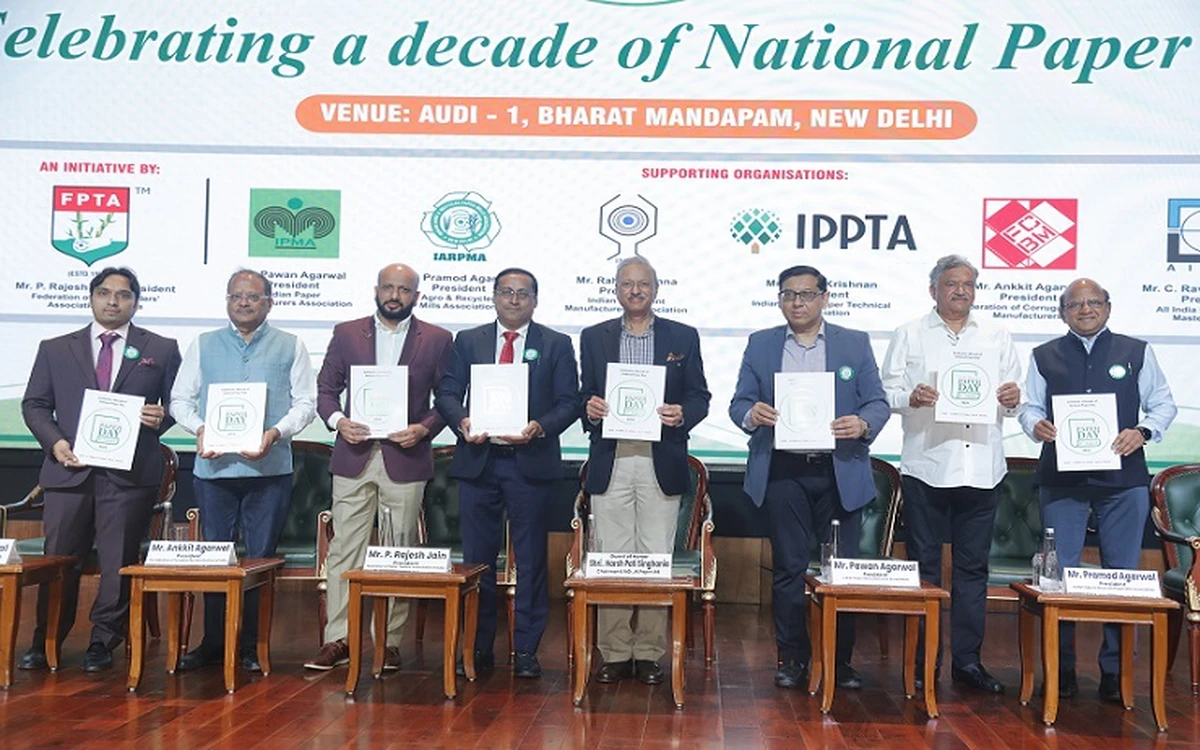
Seven Leading Associations Unite to Celebrate National Paper Day, Highlighting Paper's Sustainability and Circular Economy Advantage
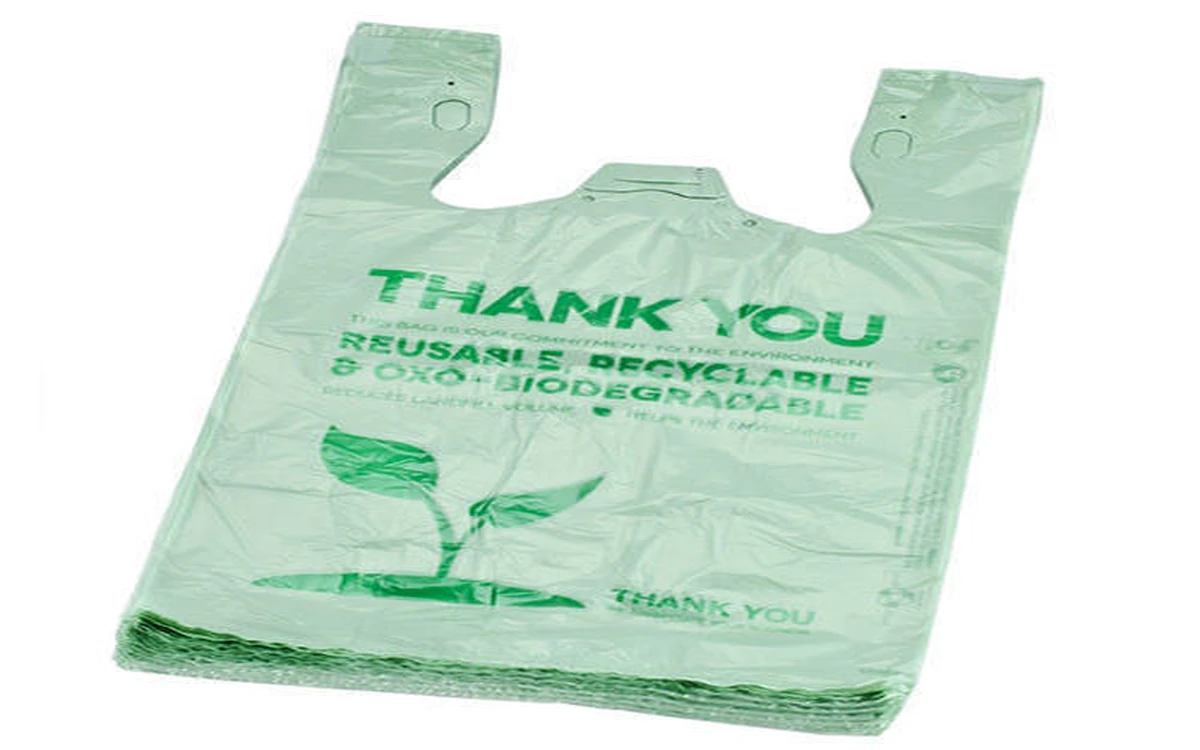
Scientists from IIT-Guwahati develop India's first biodegradable plastic
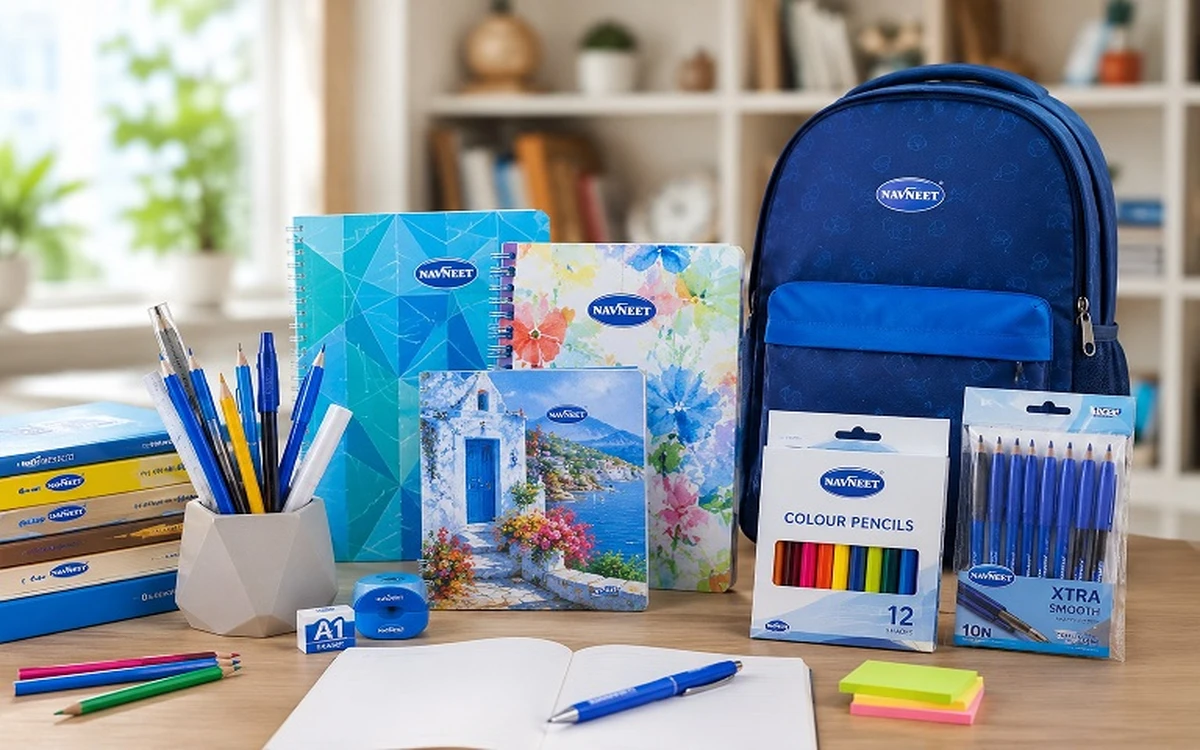
Navneet Education focuses on brand building, curriculum-led growth, and export recovery; expects stationery margins to improve in FY27

It is estimated that USD10B to USD20B worth of single-use plastic packaging will convert to molded fiber, ZUME
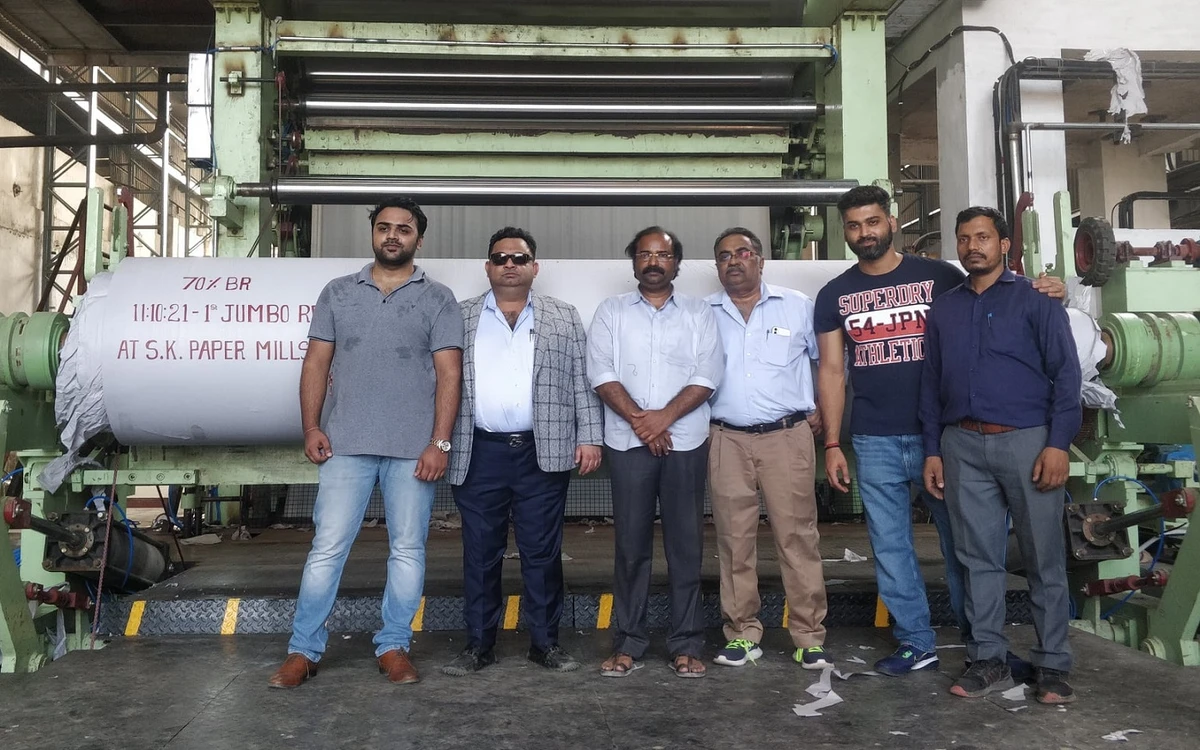
Muzaffarnagar gets a new capacity of Tissue Paper and MG Poster paper

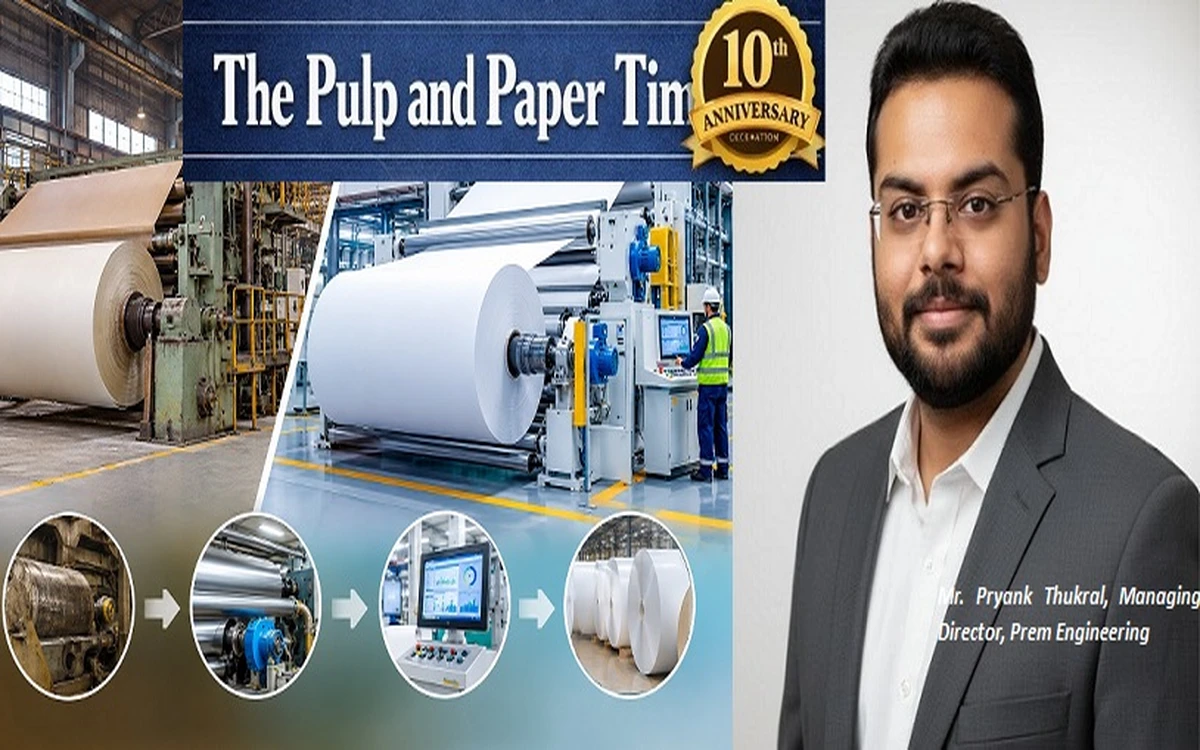
“The integration of digitalization, automation, and Artificial Intelligence (AI) is no longer a futuristic concept—it is the baseline for competitiveness in 2036” - Vinit Garg, Director, Vizen Solutions
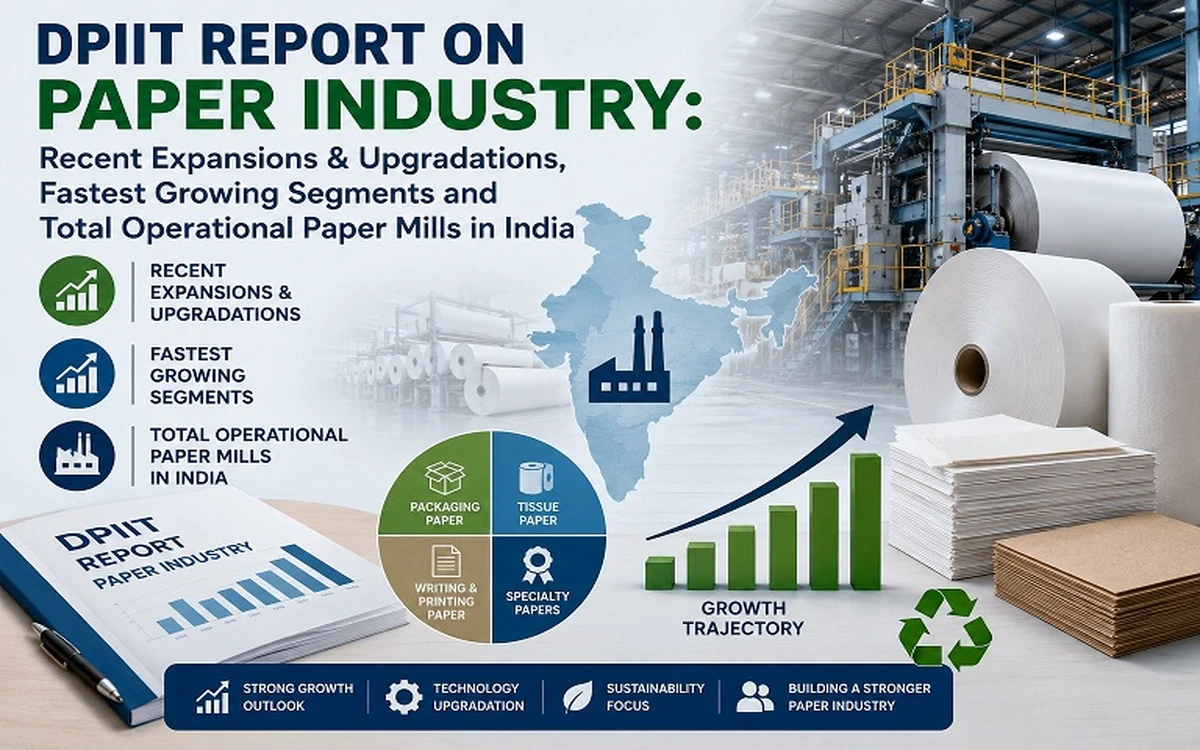
DPIIT Report on the Paper Industry: Recent Expansions & Upgrades, Fastest-Growing Segments, and Total Operational Paper Mills in India
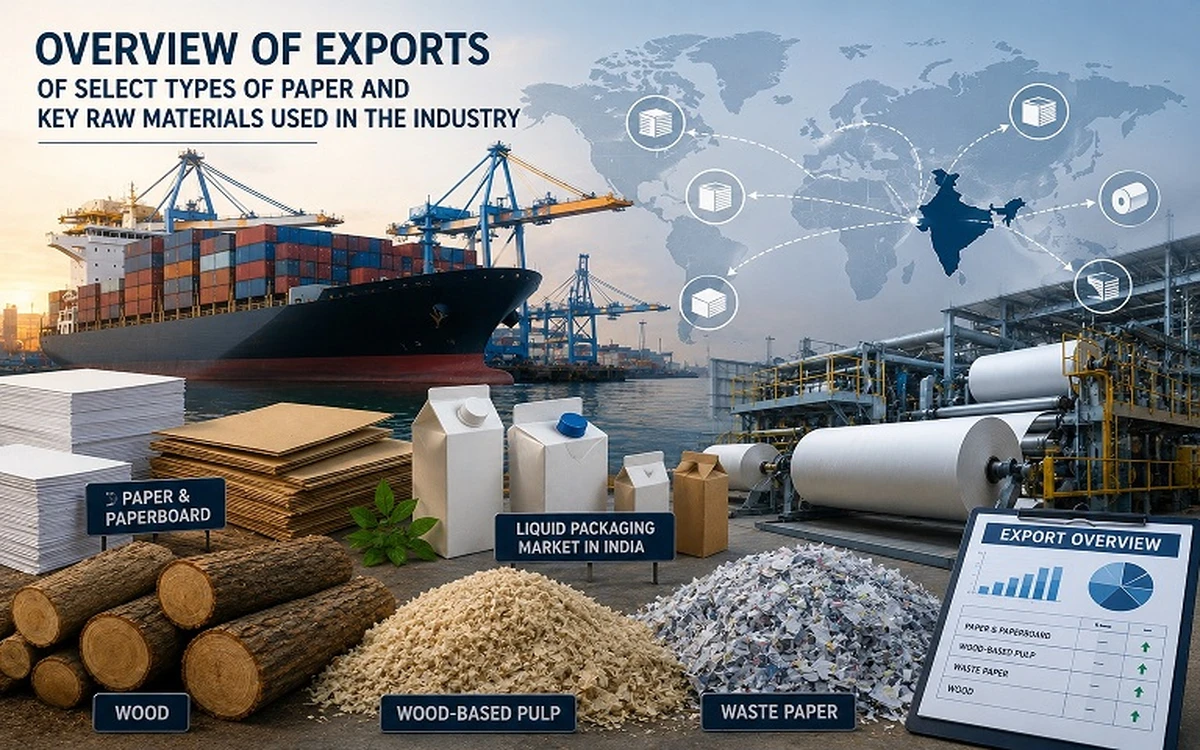
Overview of exports of select type of paper and key raw material used in the industry by Crisil Intelligence

Margin pressure pushes Pulp & Paper Packaging sector toward AI-Driven cost optimization, Cutting costs by 8–20%
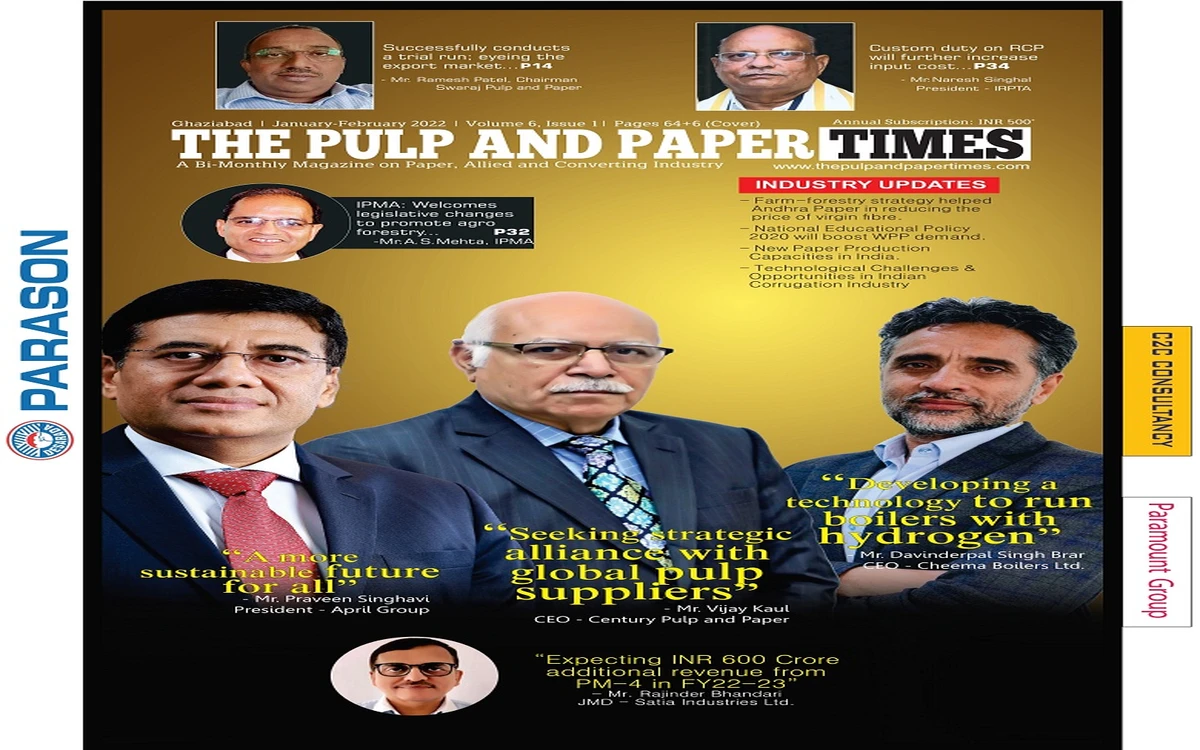
The Pulp and Paper Times Magazine : Volume 6, Issue 1
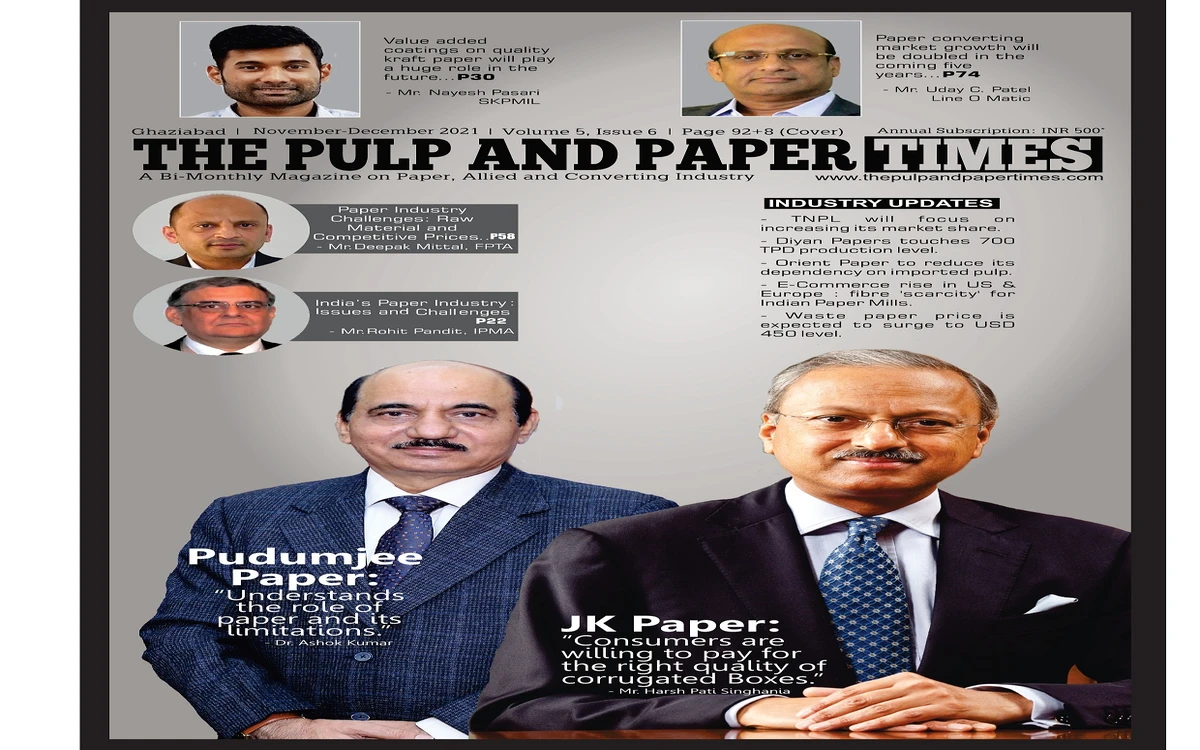
The Pulp and Paper Times Magazine : Volume 5, Issue 6
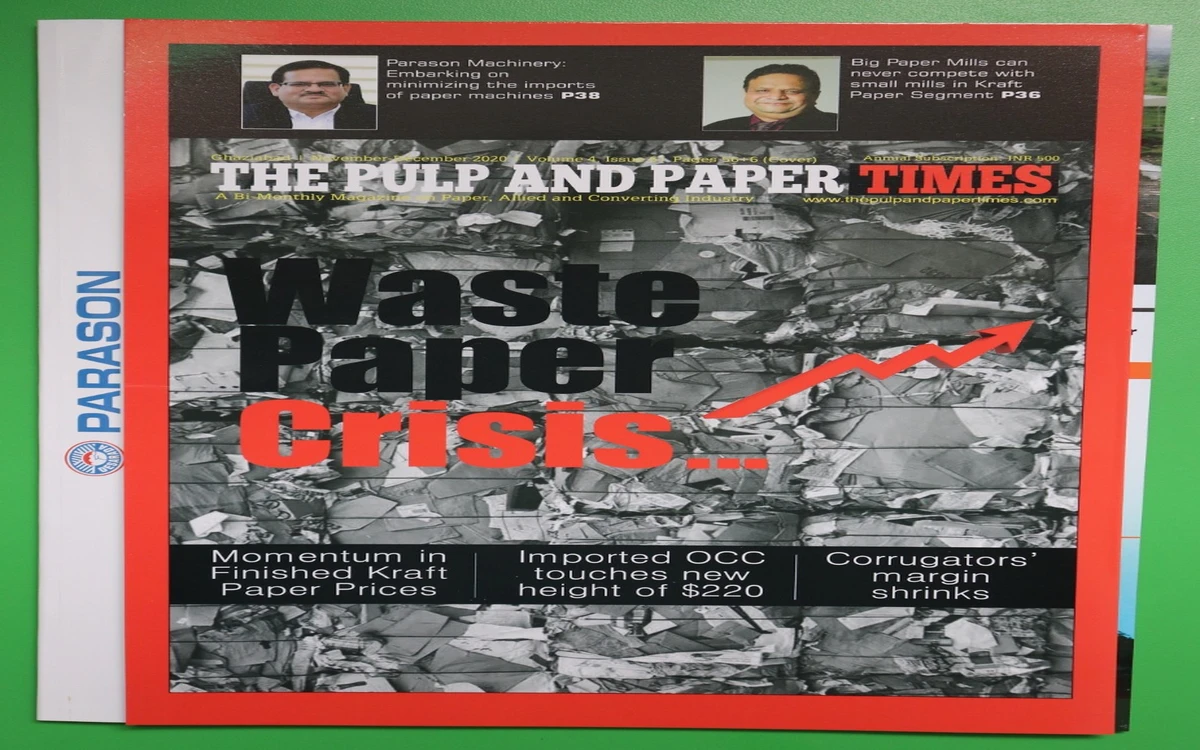
The Pulp and Paper Times: Volume 4, Issue 6
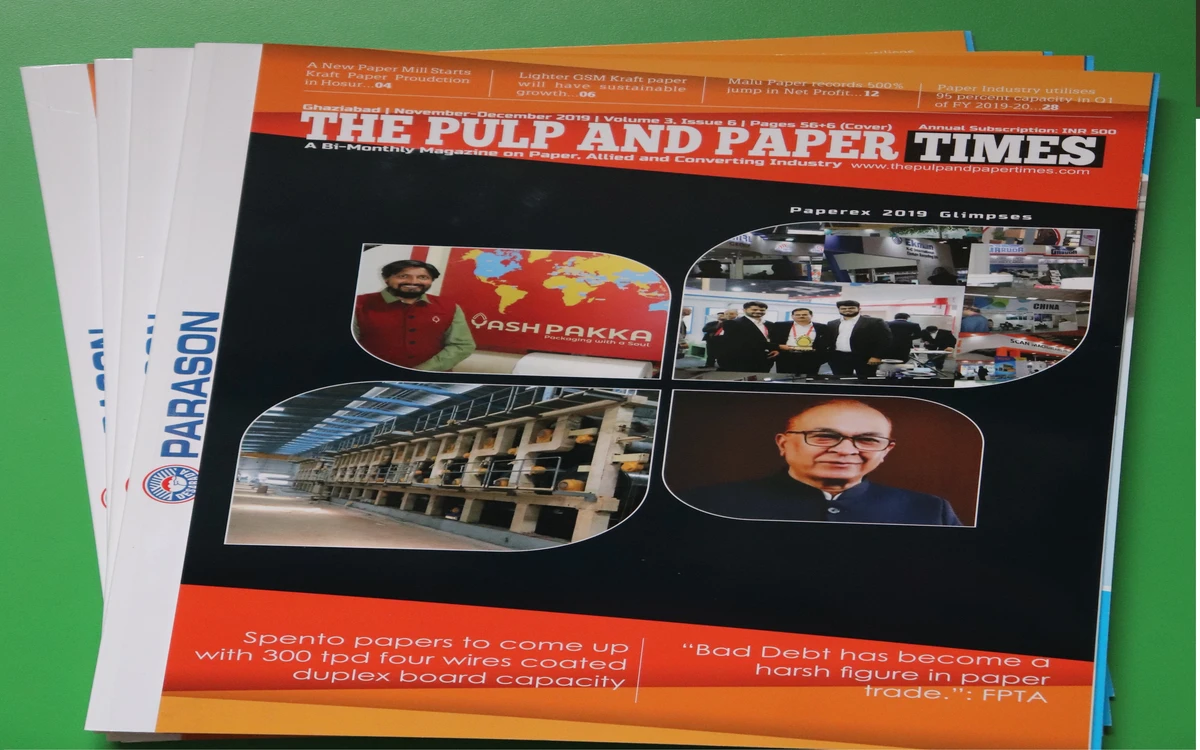
The Pulp and Paper Times : Volume 3, Issue 6
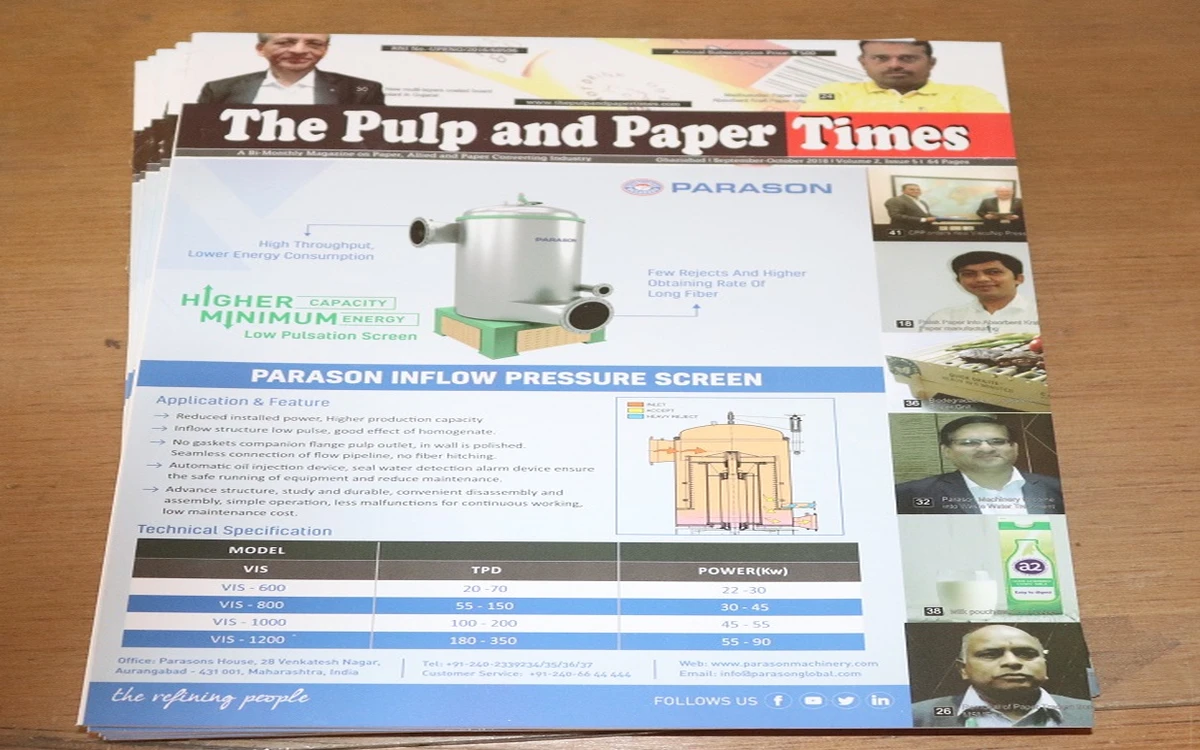
The Pulp and Paper Times: Volume 2 Issue 5
The Pulp and Paper Times, Volume 1, Issue 3
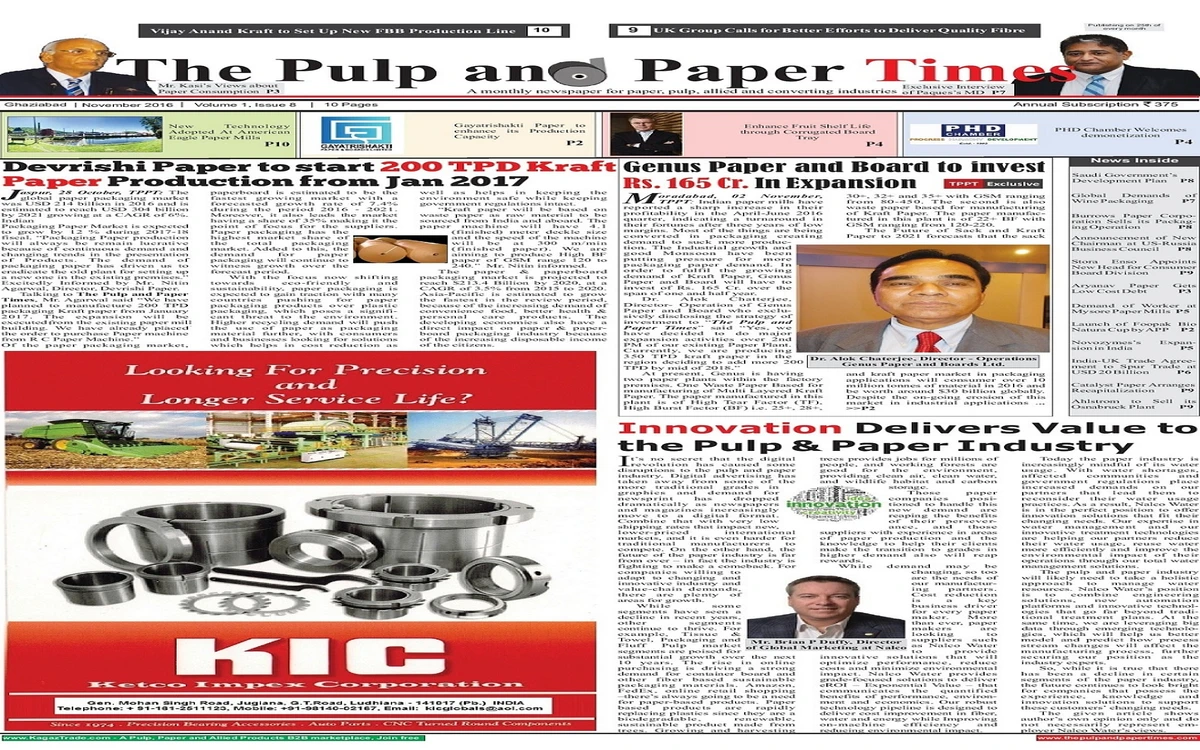
The Pulp and Paper Times, November 2016 Issue

1 million TPA by 2030: TNPL is focused on becoming the customers’ first choice by delivering high-quality products at the most affordable and competitive prices
Key points from the speech of Dr. Sandeep Saxena, I.A.S., CMD, Tamil Nadu Newsprint and Papers Limited, during the 45th AGM
- Exploring new segment to forward integrate in value-added products using paper and boards as a raw material
- It is expected that demand can be better in the coming season from November onwards and Qrtr – 4 to be better in terms of Sale and realization
- Introducing many Products in PWP grade with improved bulk, Opacity & brightness which is expected to have better response from the market
The Pulp and Paper Times
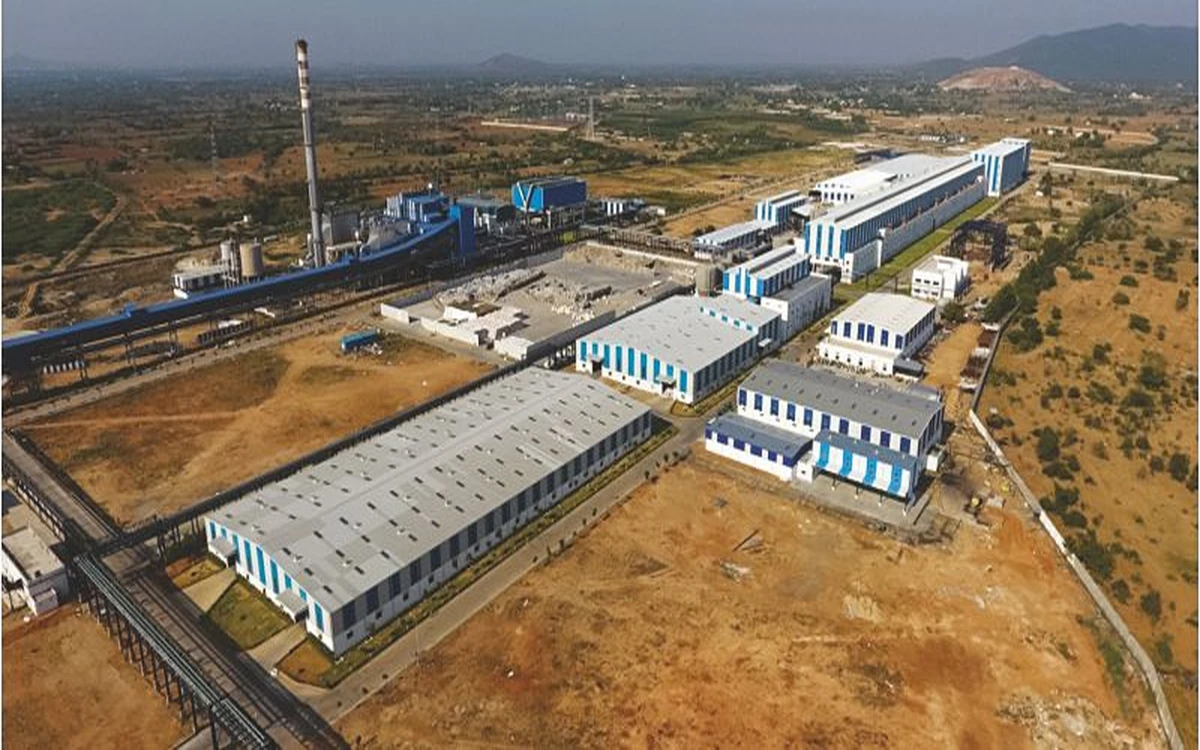
TNPL, in the quest of becoming the world leader in the pulp and paper industry, a Paperboard project was conceived by TNPL, paving the way for the emergence of Unit II. Spanning over an area of 874 acres in Mondipatti, Trichy district, TNPL Unit II was designed to produce 2,00,000 MT high-grade paperboard per annum. With a record of completing the whole project in a span of just 22 months, Unit II currently produces just over 1,80,000 MT per annum. The new hard wood pulp plant commissioned at Unit II with a capacity of 1,40,000 Mt per annum is working well and quality pulp is being supplied for Board production and also excess pupl available is used at Unit I.The total pulping capacity available as on date amounts to 1,580 tonnes per day which was started with 300 tonnes per day (TPD) in 1984.
VISION AND MISSION:
TNPL has been operating with a Vision to adopt state-of-the-art contemporary technology and be the world’s most sustainable brand to manufacture eco-friendly paper and paperboards. We also strive to create an inclusive work environment, become the best place to work at, and grow in favourable opportunities.
In line with the above Vision, the company’s Mission has been to manufacture paper and paperboards of topnotch quality and achieve over 1 million tons per annum by the end of 2030. Besides that, we also focus on becoming the number one choice for our customers and provide our products at the most affordable and competitive prices, meet our financial goals and create a culture of safety and sustainability.

We are exploring new segment to forward integrate in value-added products using paper and boards as a raw material and are in active discussions with paper machine manufacturers to get into newer categories of value-added papers.
OPERATIONAL AND FINANCIAL OVERVIEW:
During the year, TNPL has produced 4.25 lakh MTs of Paper and sold 4.32 lakh MTs of Paper. In Packaging Board Plant, the Company has produced 1.89 lakh MTs of Packaging Board and sold 1.83 lakh MTs of Packaging Board.
During the year your Company has produced 3.01 lakh MTs of total pulp comprising of Hardwood Pulp (HWP), Chemical Bagasse Pulp (CBP) and Deinked Pulp (DIP) in Unit I and 1.28 lakh MTs of Hardwood Pulp (HWP) in Unit II. The total Pulp Production during the year was 4.29 lakh MTs.
During the year 2024-25, the Paper industry faced price corrections in packaging, printing and specialty papers segments due to fluctuating raw material costs and raising imports. There was also a hike in domestic wood prices due to heightened demand from other wood-based industries and lower plantation during Covid, this led to severe price pressure on domestic mills, resulting in reduction in sales realization. The combination of these two factors has severely impacted the profit margins and affected the profitability of the company during the year. However, the company has maintained capacity utilization and sold higher quantity of paper as compared to previous year. The company has earned a Profit before tax (PBT) of Rs. 5.29 crore and Profit after tax (PAT) of Rs. 3.72 crore for the financial year 2024- 25.

MARKET OUTLOOK:
During FY 2025-26, TNPL continued to witness a significant increase in imports of Packaging grades and Writing papers from last FY. The rise in imports was attributed to very competitive pricing and consistent supplies from overseas suppliers. Imports have intensified competition in the Indian market, resulting in pressure on domestic manufacturers, including TNPL, to maintain market share and price competitiveness.
The domestic market continues to reel under sluggish demand in Writing Paper segment. This is partly due to the ongoing digital transformation, which has led to a decline in traditional paper usage, economic uncertainties, shift in consumer behavior. The domestic market is also on high downward price pressure due to the influx of imports. While this may benefit customers and industries, local manufacturers had to face many challenges like fluctuations in raw material costs impacting production costs and margins.
It is expected that demand can be better in the coming season from November onwards and Qrtr – 4 to be better in terms of Sale and realization.
We are in the phase of introducing many Products In PWP grade with improved bulk, Opacity & brightness which is expected to have better response from the Market. We are also introducing copier grades with improved bulk. These steps are also expected to result in improved sale and Market share in the coming months.
The Company has also taken many initiatives to improve the efficiency of plant operations at both Unit I and II 10 resulting in variable cost reduction. Purchase Department has also embarked on various cost reduction initiatives including vendor base development which has improved the competitiveness and reduction of input prices on a sustainable basis.
As far as Packaging is concerned, demand and realization was good in the FY in Q-1. Due to heavy imports at a very low price (with difference of Rs.6000/MT between Domestic and Imports), Domestic mills were forced to lower the prices in all grades in Q-2. Introduction of MIP from 22nd August onwards will allow Domestic Mills to be more competitive to Imports. However, we expect the demand to further improve from November onwards as by then the festivals will be over and demand from all segments including Publishing to be stable till end of FY. Sales realization is expected to be better in Q-3 & 4 and for the FY.

The latest amendment in GST rate of paper has caused anxiety in the market on the one hand the increase in GST from 12% to 18% has made the landed cost of paper dearer and also the IGST nil rate on imported paper for notebook makes imports relatively cheaper.
Also loss of input credit on paper supplied for notebook will cost price increase for the segment. However overall the latest GST changes has caused some negative sentiments in the market. The company is closely monitoring and will take adequate steps to manage the situation.
ON GOING PROJECTS: Tissue paper Machine in Unit - II:
Considering the market potential for Tissue paper, a 100 TPD capacity, state-of-the art Tissue Paper Machine along with its auxiliaries is proposed to be installed at Unit-II at an estimated project cost of Rs. 340 crores. The machine shall have facilities to produce different grades of tissue paper ranging from 13 GSM to 40 GSM, mostly made from high quality in-house Hard Wood Pulp. Order has been placed for Tissue Paper Machine and the manufacturing is in progress. The Tissue Paper Machine is expected to be commissioned by March, 2026.
Revamp of Steam and Power System in Unit - I:
The revamping of the existing steam and power system in Unit-I is taken up in phases to retire and replace the old low-pressure boilers installed since the mill’s inception in 1985. Hence, in order to have reliable supply of utilities like steam and power for the mill operations, the installation of two high pressure boilers with steam generation of 125 TPH each, at 105 ATA, 525°C, along with a TG of 42 MW are being planned in phases. As part of Phase#1, order has been placed for a high-pressure boiler of 125 TPH capacity and the manufacturing is in progress. The high-pressure boiler is expected to be commissioned by March, 2026.

TNPL has always been the torch-bearer of innovations, and thus all the operations are optimized with the adoption of futuristic and relevant technologies from all over the world. We always strive for excellence in all our activities and pool-in industry-best practices from across the globe and ensure that we set a benchmark of our own products of top-notch quality.
With our vision set to become the world market leader to not just manufacture the most eco-friendly products, but also implement sustainability across all our operations, we are constantly upgrading ourselves with the latest and forward-looking technology available in the market.
Started in 2004, TNPL’s Plantation programme stems from our goal to achieve self-reliance in pulpwood. Covering 2,82,321 acres of plantation involving 58,077 farmers over the past 21 years, this initiative is dedicated to source pulpwood which is economically viable, socially acceptable and environmentally compatible with an objective to develop renewable and sustainable plantations in barren and degraded lands, thereby increasing the tree cover outside the natural forest.
Our Farm Forestry and Captive plantations are certified by the Forest Stewardship Council as FSC FM Plantation with non-High Conservation Value lands. By avoiding planting near water catchment area or any other culturally significant area for indigenous communities and ethnic groups, TNPL negates any chance of damage either to livelihoods or the ecosystem.
-During the year, the company established high yielding Clonal Pulpwood Plantations in an extent of 25,564 acres involving 6,401 farmers.
-Your company is the only paper company with a cement plant and has converted lime sludge and fly ash into 1,77,256 MT of high-grade cement in 2024- 25.
DIGITAL TRANSFORMATION:
Your company has a robust methodology to understand the consumption & production details, and compare the actual performance and the Annual Operating Plan in terms of production output, raw materials and variable costs through our Enterprise Resource Planning system. Sophisticated software is also installed to closely monitor treated effluents, emissions and ambient air.
Further, in future, we plan to adopt variable cost control by optimized use of raw materials, optimize output quality through ERP-Control System integration, and put big data to use.

1 days ago
Total Views : 1509
5 days ago
Total Views : 2746
6 days ago
Total Views : 2543
last week
Total Views : 765
last week
Total Views : 1331
2 weeks ago
Total Views : 3879
2 weeks ago
Total Views : 2783
2 weeks ago
Total Views : 811
2 weeks ago
Total Views : 3633
2 weeks ago
Total Views : 3790