Join Groups & Channels, No Spamming









Morbi paper mills see full-capacity operations as ceramic industry revives; Kraft paper exports to China spike, Prices strengthen; Janmashtami shutdown ahead

The BE and caustic soda plant marks a key milestone for Mohit Paper Mills, enabling full utilization of installed capacity and enhancing overall production efficiency
Expert Views on the paper market scenario, How the West Asia Crisis Helped the Industry, MIP for WPP, Anti-Subsidy implementation, and paper price trends
Pudumjee Paper intends to develop new varieties addressing applications for stronger paper bags and cupcakes; Plans 68,000 MT Mahad Specialty Paper Facility within 5 years
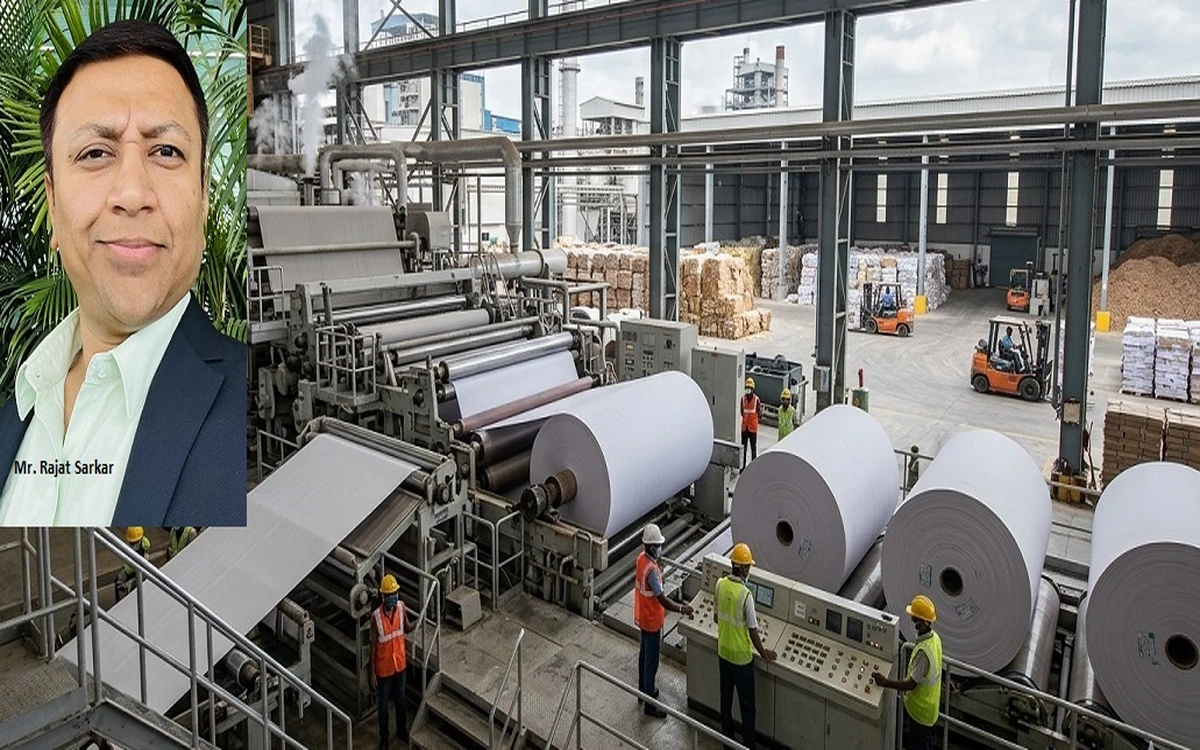
India Paper Industry at an Inflection Point: War, Costs, and Capacity; Demand growth expected at 5–7% in FY26
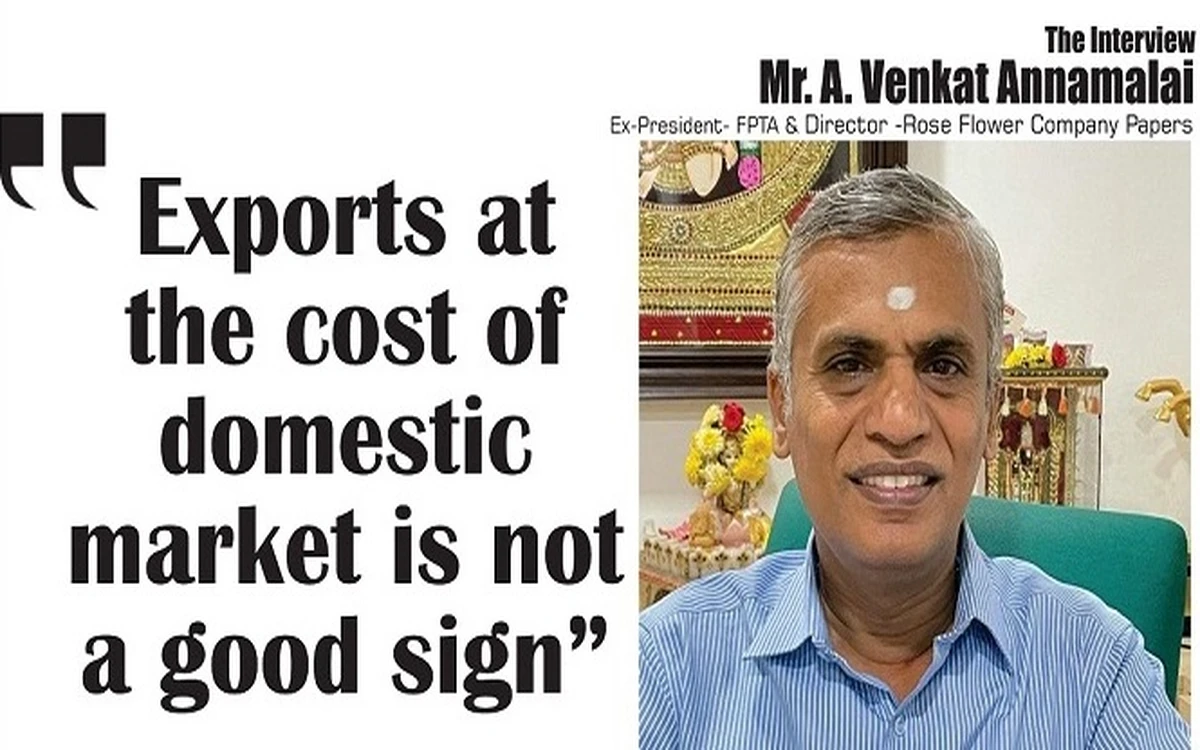
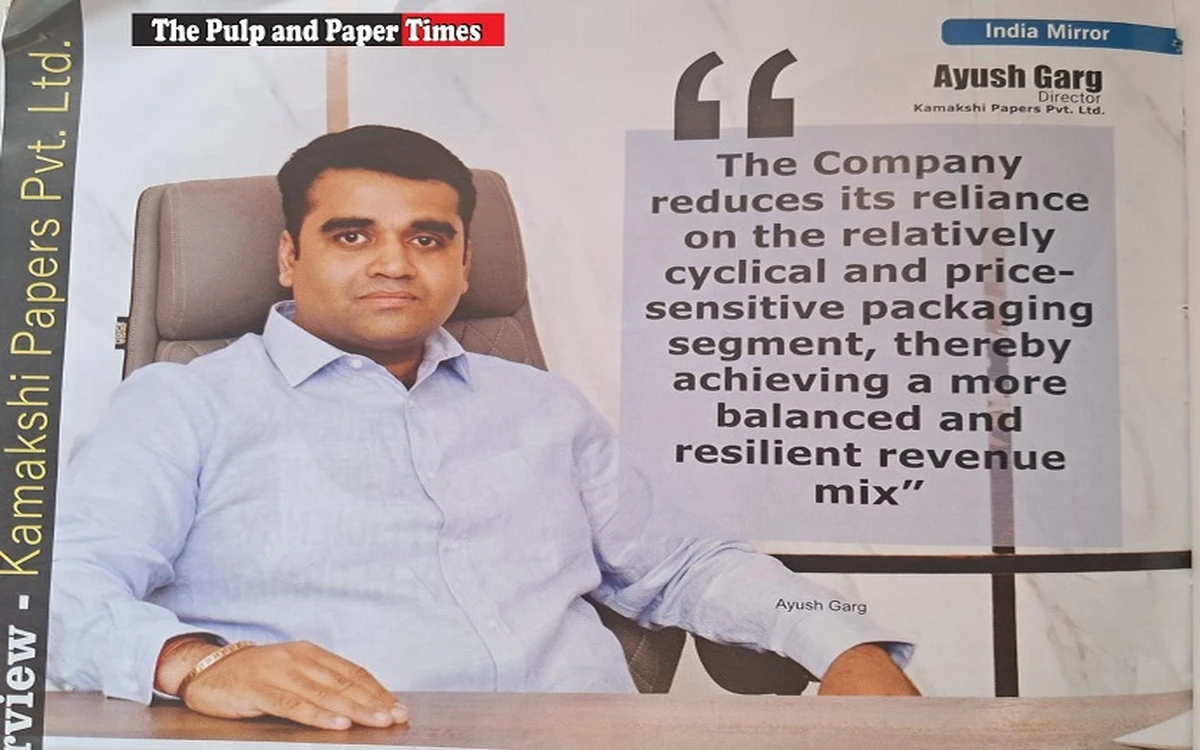
“Surging exports of paper will most certainly keep the domestic prices quite high”: Mr. A. Annamalai, Director – RFC
The Status of the Global Container board Industry, Recycled Paper Demand and Supply and its impact on the Indian Industry

Akshay Jain, director of Silverton Pulp & Paper, says it's time to promote agro residue as a raw material to lessen the scarcity of fibre
Advantageously located, a new paper mill is all set to roll kraft paper in Madhya Pradesh
Several agile interventions helped ITC-PSPD fortify its clear leadership of the Value Added Paperboards (VAP) segment
Indian paper industry is entering a sensitive phase, with coal and starch availability emerging as critical concerns; Price Hikes Indicated
Paper and Packaging Board Market May Face Cost Pressures Through March 2027; FPTA Advises Traders
Overall Increase in Kraft Paper Prices Could Reach 35%; Industry Calls for 20% Box Price Increase, Voluntary Shutdown Proposed

Ruchira Papers Invests a Sizeable Capex of Rs. 235–240 Crore Towards Writing & Printing Paper Capacity Expansion
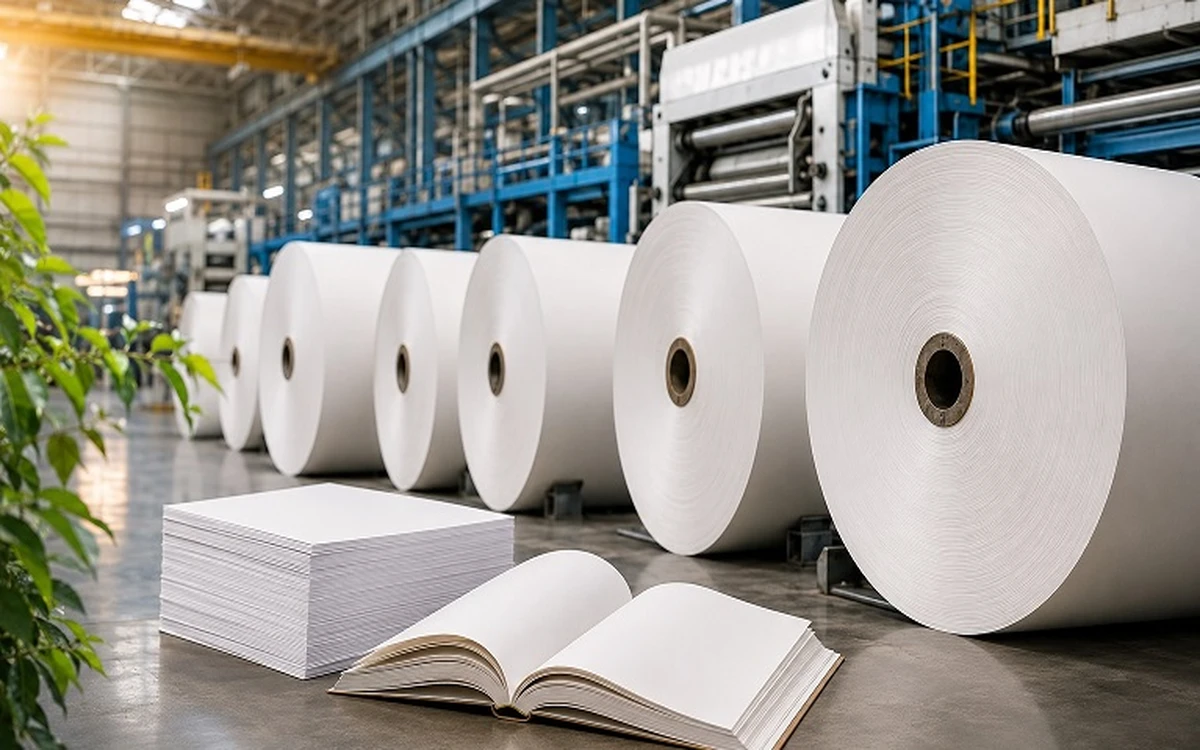
Paper mills inflated the basic ex-mill price of paper post GST 2.0, AINMA seeks action against Anti-Profiteering
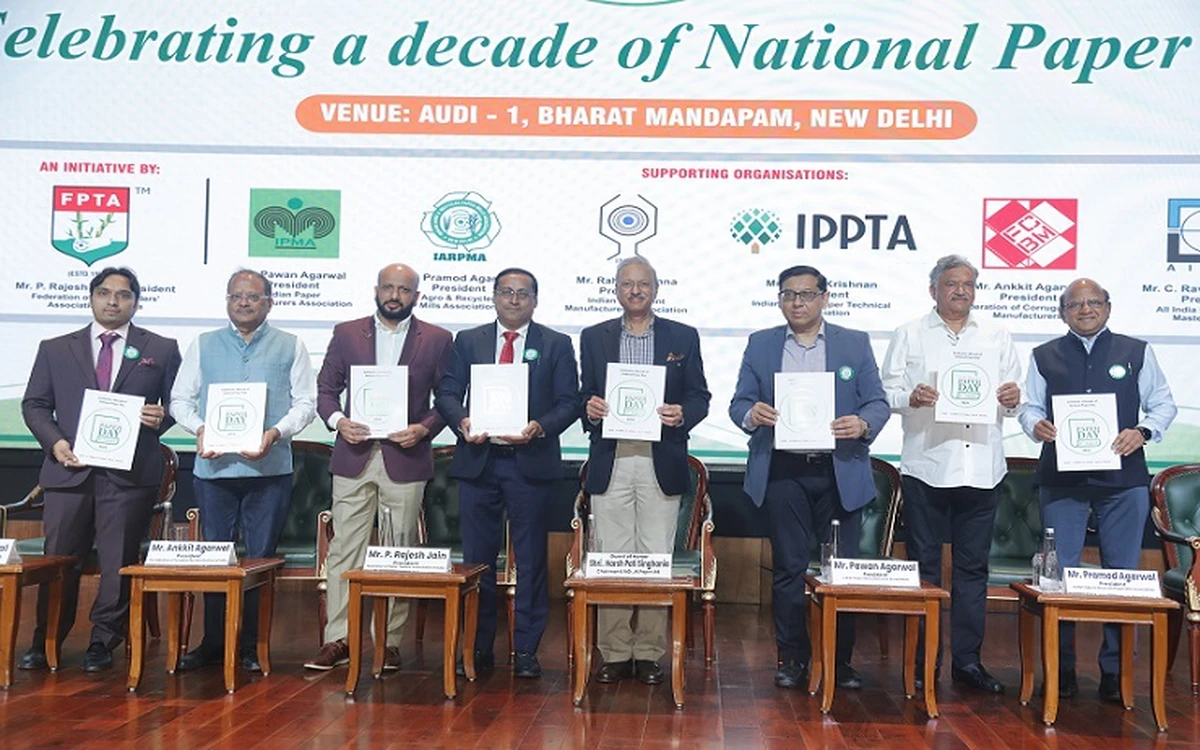
Seven Leading Associations Unite to Celebrate National Paper Day, Highlighting Paper's Sustainability and Circular Economy Advantage

Scientists from IIT-Guwahati develop India's first biodegradable plastic

Navneet Education focuses on brand building, curriculum-led growth, and export recovery; expects stationery margins to improve in FY27

It is estimated that USD10B to USD20B worth of single-use plastic packaging will convert to molded fiber, ZUME
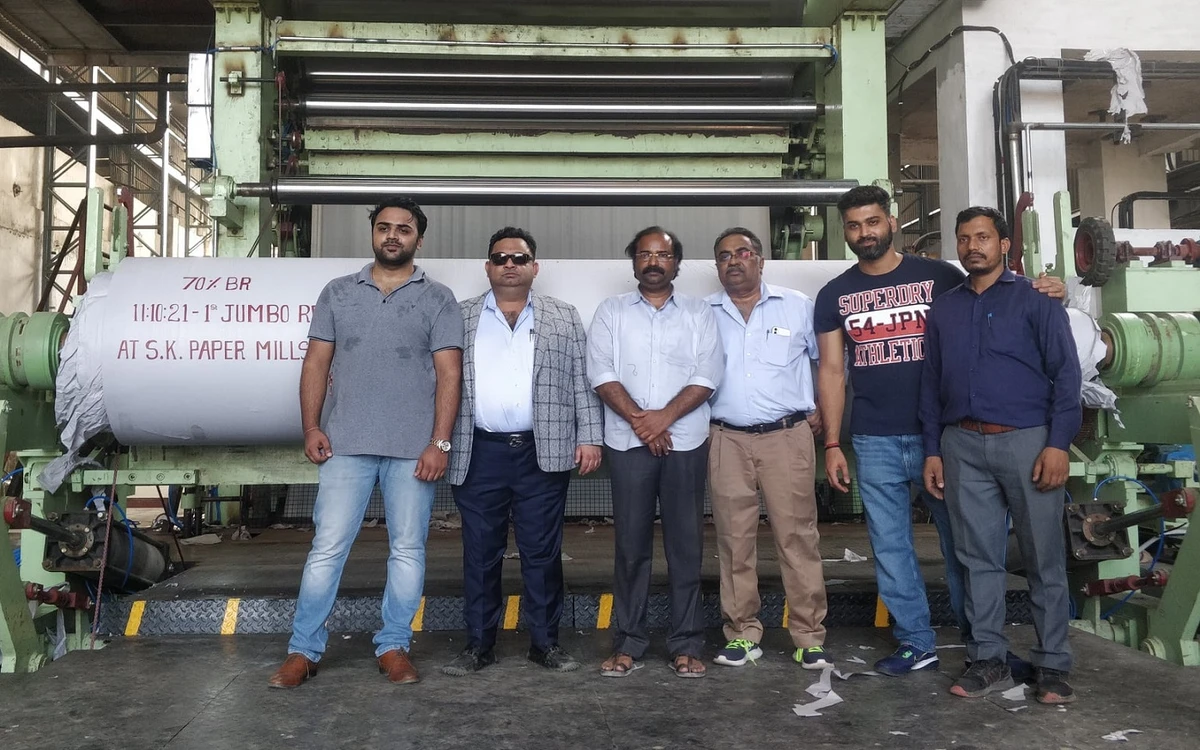
Muzaffarnagar gets a new capacity of Tissue Paper and MG Poster paper

“The integration of digitalization, automation, and Artificial Intelligence (AI) is no longer a futuristic concept—it is the baseline for competitiveness in 2036” - Vinit Garg, Director, Vizen Solutions
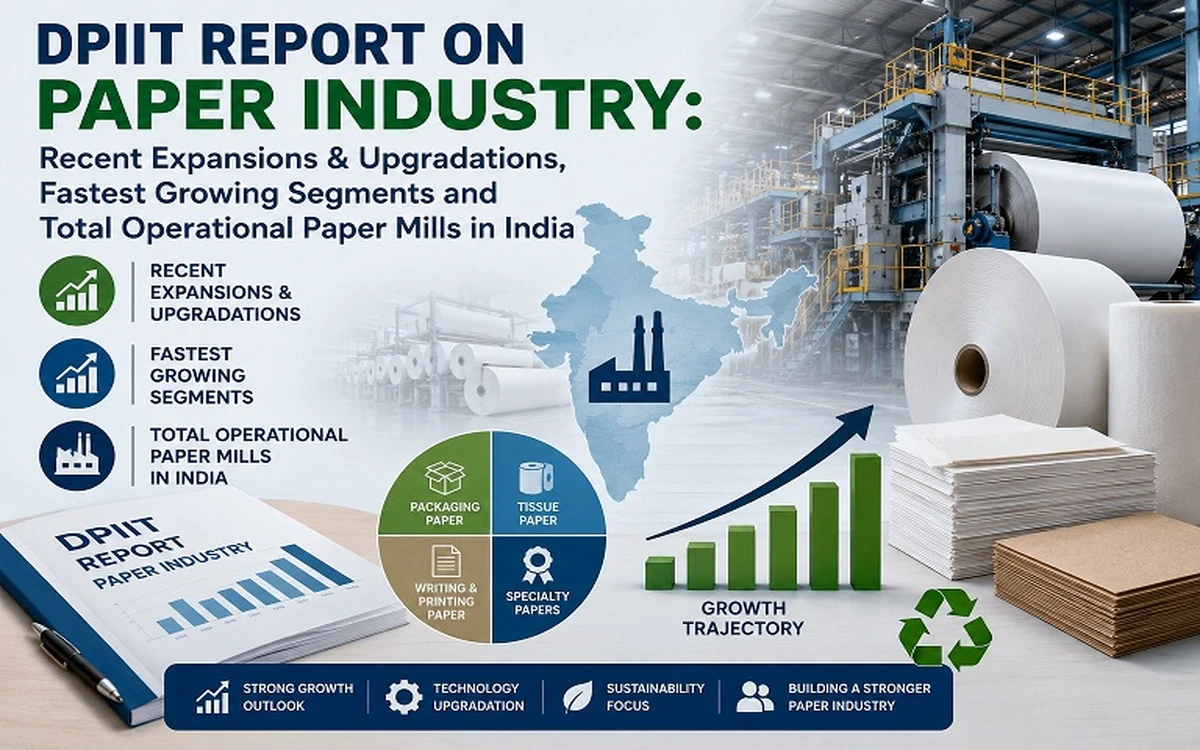
DPIIT Report on the Paper Industry: Recent Expansions & Upgrades, Fastest-Growing Segments, and Total Operational Paper Mills in India
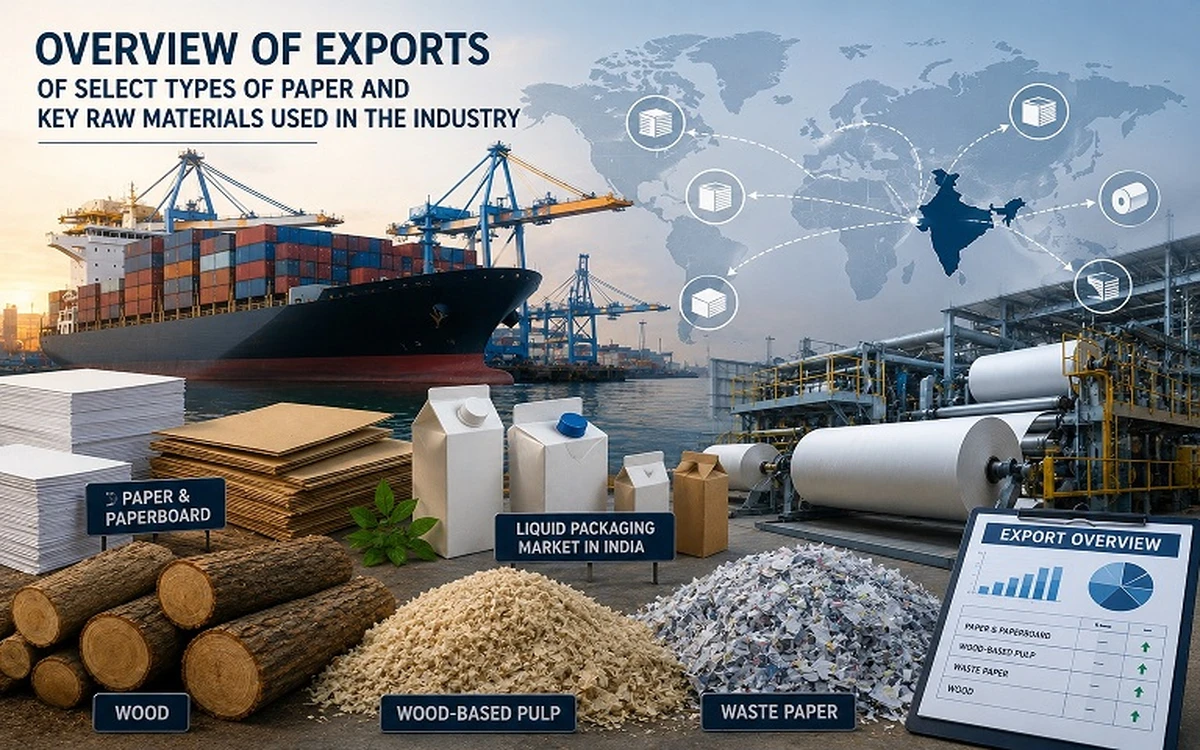
Overview of exports of select type of paper and key raw material used in the industry by Crisil Intelligence

Margin pressure pushes Pulp & Paper Packaging sector toward AI-Driven cost optimization, Cutting costs by 8–20%
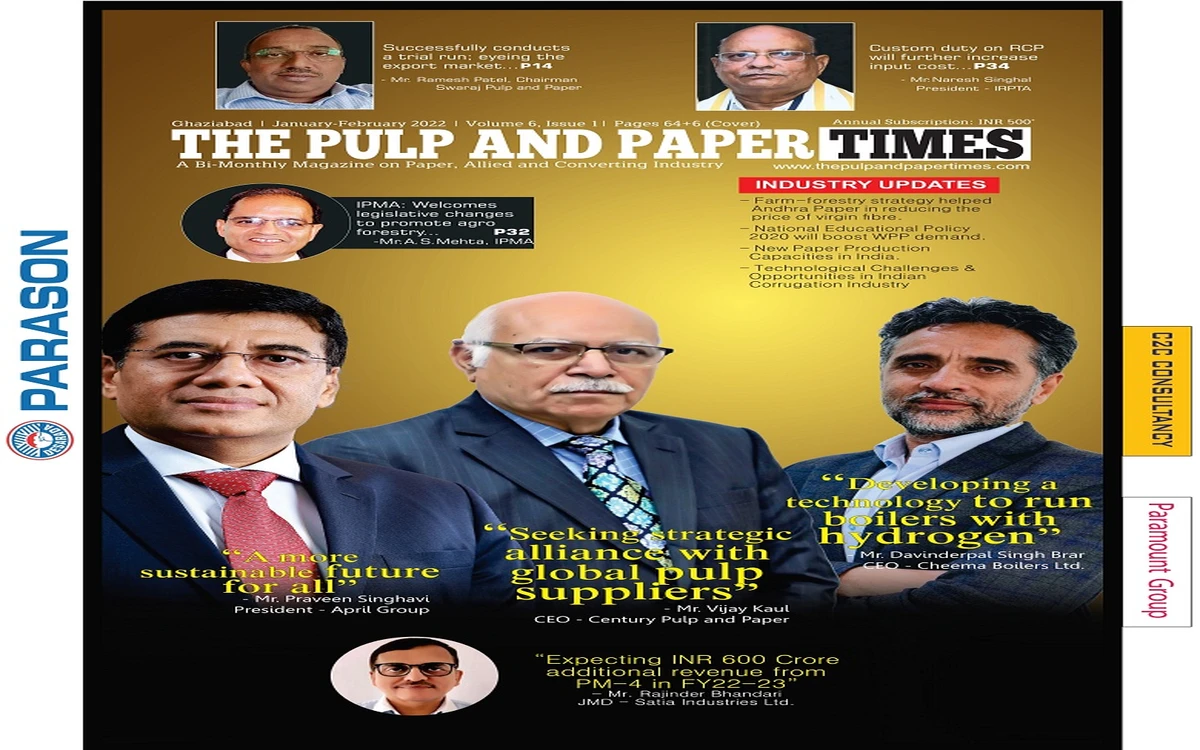
The Pulp and Paper Times Magazine : Volume 6, Issue 1
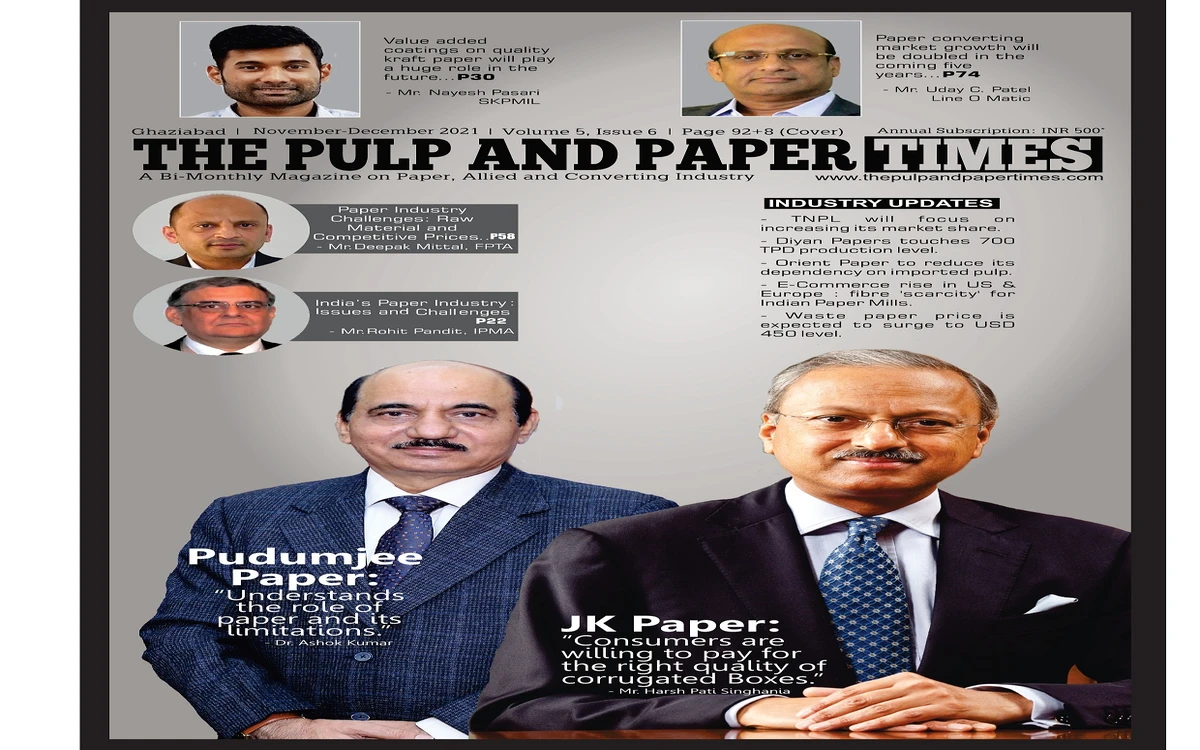
The Pulp and Paper Times Magazine : Volume 5, Issue 6
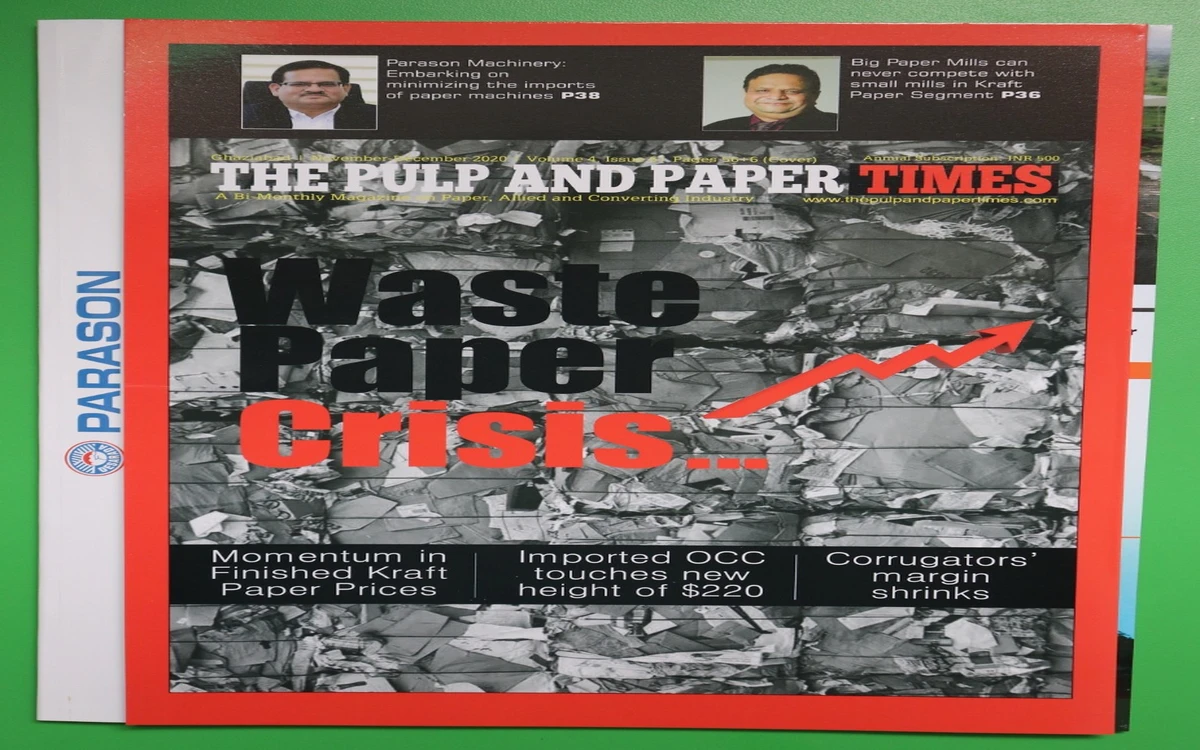
The Pulp and Paper Times: Volume 4, Issue 6
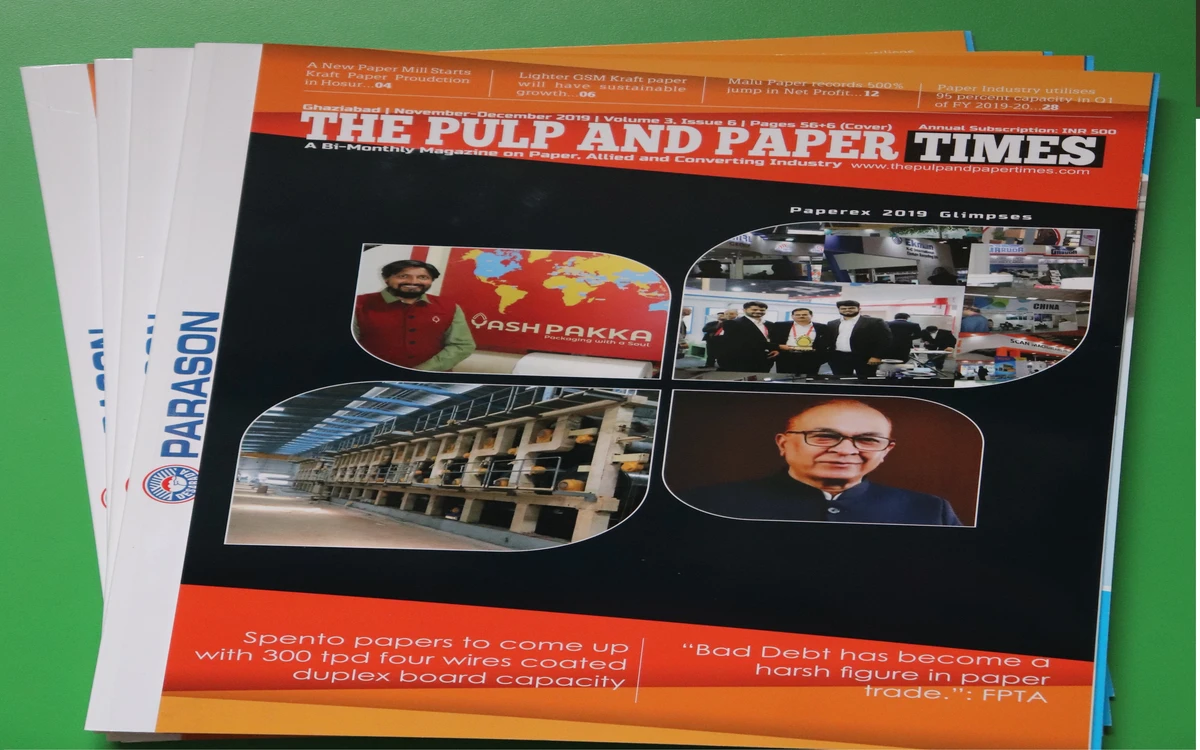
The Pulp and Paper Times : Volume 3, Issue 6
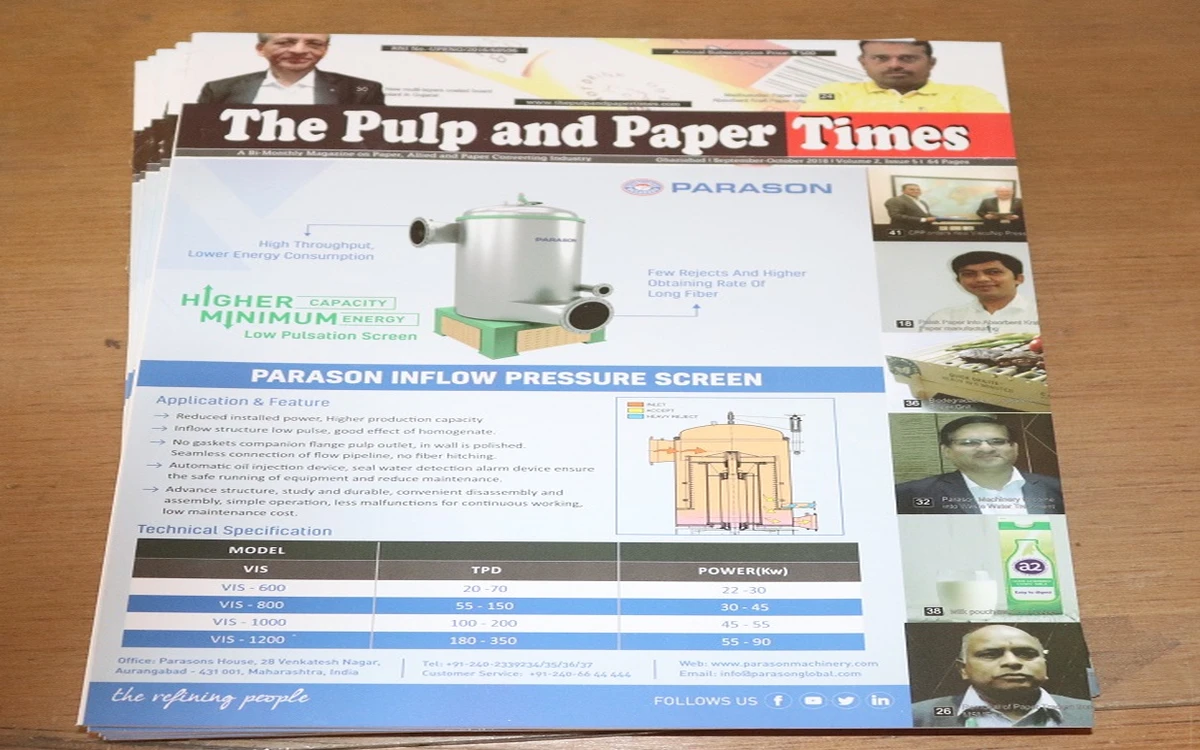
The Pulp and Paper Times: Volume 2 Issue 5
The Pulp and Paper Times, Volume 1, Issue 3
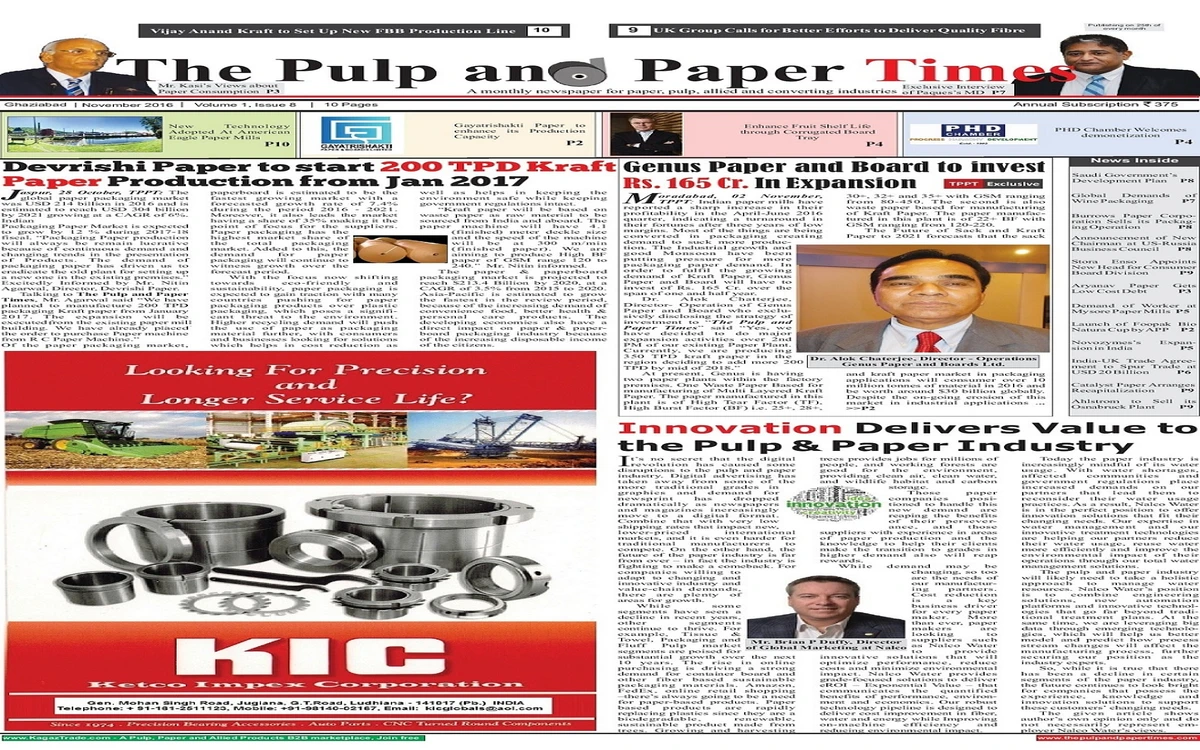
The Pulp and Paper Times, November 2016 Issue

India Paper Industry at an Inflection Point: War, Costs, and Capacity; Demand growth expected at 5–7% in FY26
-Overall, production costs have increased by an estimated 20–30%, placing significant pressure on margins.
The below article is written by Rajat Sarkar, who is currently working as Director of Research at ResourceWise, a leading business intelligence consulting firm that supports the industry's best practices with a unique combination of rich marketplace data, powerful analytics, and expert consulting. Here are his views on the current market scenario for the Indian paper industry:
The Pulp and Paper Times

The escalation of the US–Iran conflict in early 2026 has introduced a new layer of volatility into global trade. With disruptions across the Red Sea and Strait of Hormuz, two of the most critical maritime routes, the pulp and paper industry is now facing sustained pressure on costs, supply chains, and trade flows.
For India, the impact is particularly pronounced. The industry is navigating a complex environment defined by inflation in input costs, shifting demand dynamics, policy uncertainty, and a new wave of capacity expansion.
Input Cost Shock: A Structural Challenge
The most immediate fallout of the conflict has been on logistics and energy, both of which are critical to paper manufacturing.
Shipping disruptions have:
• Increased transit times by 10–14 days due to rerouting
• Driven freight costs up by 15–50% across key routes
At the same time, energy markets have tightened:
• Coal and LNG prices have risen sharply
• Fuel-linked logistics costs have increased across the value chain
For Indian paper mills, this has translated into a broad-based escalation in input costs:
• Recovered paper: Supply shortages due to delayed imports from the US and Europe
• Wood pulp: Price volatility due to shipment delays from global suppliers
• Chemicals (bleaching agents, binders): Disruptions from West Asia supply routes

Overall, production costs have increased by an estimated 20–30%, placing significant pressure on margins.
Assessment:
This is not a temporary spike. The industry is dealing with a structural reset in cost economics, especially for import-dependent mills.
Demand in India: Stable Core, Slower Growth
India continues to be a fundamentally strong demand market, but the pace of growth is moderating.
Domestic Demand
• Packaging paper remains the backbone, accounting for 60–70% of total production
• Demand is supported by FMCG, e-commerce, and food sectors
Export Demand
• West Asia accounts for ~30% of India’s paper exports
• Ongoing disruptions have significantly reduced export volumes
Industrial Linkages

• Slowdown in manufacturing-linked sectors is indirectly impacting paper demand
• Cost inflation is beginning to affect downstream consumption
Outlook:
• Demand growth expected at 5–7% in FY26, compared to 8–10% historically
Assessment:
Domestic demand is acting as a stabiliser, but India is clearly shifting toward a domestic-led demand model with moderated growth.
Price Restructuring: Controlled Pass-Through
Paper mills have responded to rising costs with calibrated price increases.
Recent trends indicate:

• Packaging grades: Increase of ₹2–3 per kg
• Writing & printing paper: Increase of 5–7%
• Overall price adjustments: In the range of 8–12%
However, pricing power remains constrained due to:
• Competitive pressure from imports
• Weak export markets
• Demand sensitivity across end-use industries
As a result:
• Margins remain compressed
• Mills are shifting toward short-cycle pricing strategies
Assessment:
Pricing actions are defensive, focused on cost recovery rather than profitability expansion.
MIP (Minimum Import Price): A Critical Policy Lever
The Minimum Import Price (MIP) on paperboard, valid until March 31, 2026, is now central to industry stability.
Current environment:
• Imports rising due to global supply diversion
• Domestic mills facing elevated costs
Likely Scenario:
• Extension of MIP into FY27, potentially with recalibration
Strategic Importance:
• Protect domestic capacity
• Prevent price undercutting from imports
• Support utilisation of new investments
Assessment:
MIP will remain a key policy buffer in a volatile and cost-intensive environment.
Capacity Expansion: Focused and Strategic
Despite near-term headwinds, the industry continues to invest with a long-term view.
Industry Outlook
• Total capacity addition: ~1.8–2.2 million tonnes
• Growth rate: 6–8% over FY26–FY27
• Peak commissioning expected at the start of 2027
Key Projects from Leading Mills
Established players are leading the expansion cycle with clearly defined strategies:
• TNPL: Tissue project with focus on efficiency and value-added grades
• Andhra Paper: Tissue project targeting premium segments
• Kuantum Papers: Aggressive brownfield expansion, scaling capacity significantly
• N.R. Agarwal: New project in recycled packaging board
• Pudumjee Paper: New Speciality Line expanding existing product capacity
• Ruchira Papers: Technology upgrades
These investments reflect a shift toward:
• Higher operational efficiency
• Improved product mix
• Stronger cost competitiveness
Assessment:
Capacity expansion is disciplined and strategic, not speculative.
Industry Structure: A Defining Shift
The current cycle is accelerating a structural divide:
Tier 1: Efficient, Integrated Players
• Stronger balance sheets
• Better cost control
• Focus on premium segments
Tier 2: Commodity Producers
• Cost-driven operations
• Higher exposure to margin pressure
Outcome:
• Premium segments remain relatively stable
• Commodity segments face sustained pricing pressure
Final Outlook
The Indian paper industry is transitioning through a complex phase shaped by geopolitics and structural change.
Key Themes:
• Sustained input cost pressure
• Demand growth stabilizing at 5–7%
• Continued pricing adjustments
• Capacity additions
• High likelihood of MIP continuation
Data-Led Decision Making
In an environment where costs are volatile, demand signals are shifting, and capacity is expanding unevenly, intuition is no longer sufficient for strategic decisions.
The margin for error has narrowed.
This is where platforms like FisherSolve become critical.
• It provides granular, mill-level cost benchmarking across regions
• Enables visibility into fiber mix, energy intensity, and cost competitiveness
• Tracks capacity additions, closures, and technology shifts globally
• Supports scenario analysis for pricing, sourcing, and investment decisions
In uncertain times, the competitive advantage shifts to those who can:
• Identify cost leaders vs laggards
• Anticipate market imbalances early
• Align strategy with data, not assumptions
FisherSolve enables exactly that.
As the industry moves into a phase defined by precision, efficiency, and strategic discipline, data-backed decision-making will separate market leaders from the rest.
The question is no longer whether disruption will continue.
The real question is who is equipped to navigate it intelligently.

2 days ago
Total Views : 4481
4 days ago
Total Views : 2015
last week
Total Views : 2912
last week
Total Views : 2646
last week
Total Views : 810
last week
Total Views : 1369
2 weeks ago
Total Views : 4001
2 weeks ago
Total Views : 2841
2 weeks ago
Total Views : 832
2 weeks ago
Total Views : 3728