Join Groups & Channels, No Spamming









Morbi paper mills see full-capacity operations as ceramic industry revives; Kraft paper exports to China spike, Prices strengthen; Janmashtami shutdown ahead
The BE and caustic soda plant marks a key milestone for Mohit Paper Mills, enabling full utilization of installed capacity and enhancing overall production efficiency
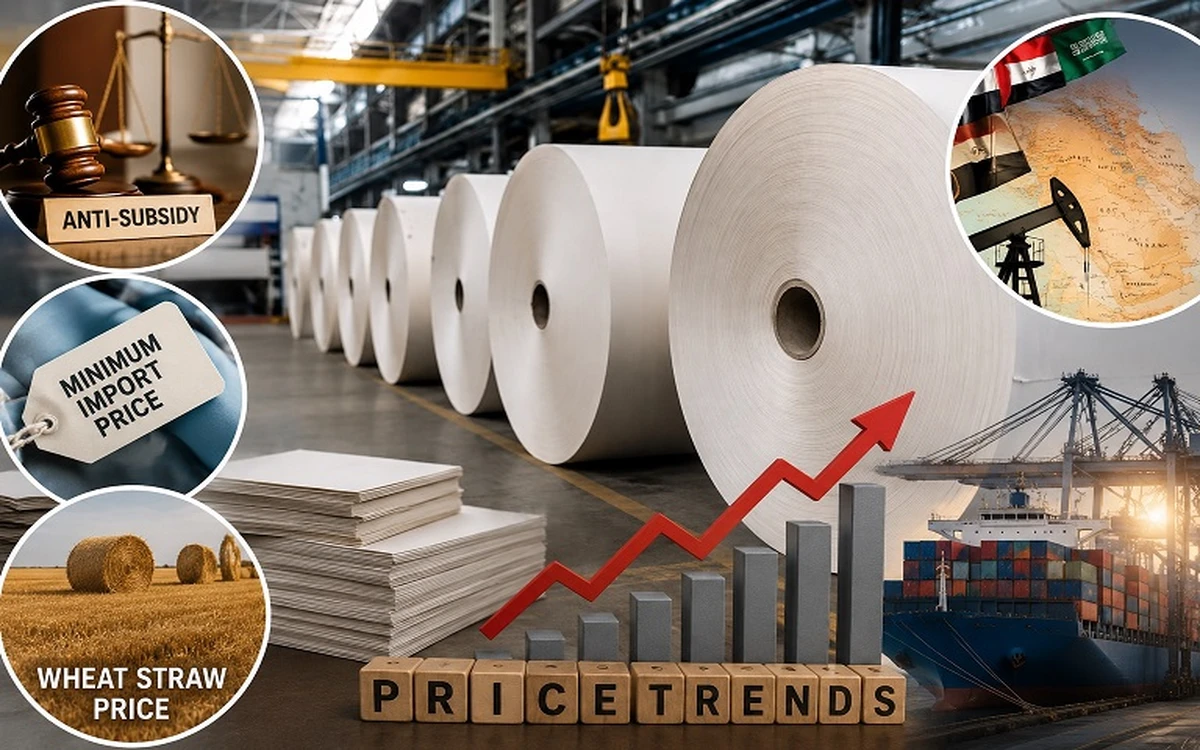
Expert Views on the paper market scenario, How the West Asia Crisis Helped the Industry, MIP for WPP, Anti-Subsidy implementation, and paper price trends
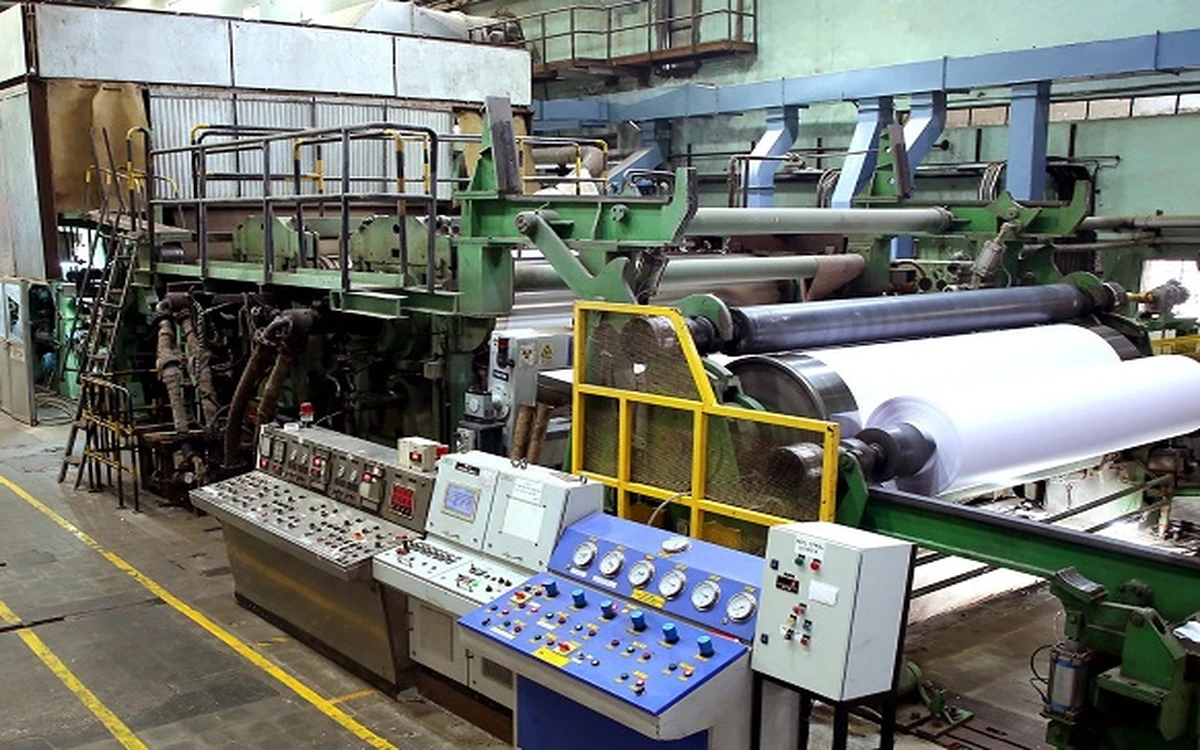
Pudumjee Paper intends to develop new varieties addressing applications for stronger paper bags and cupcakes; Plans 68,000 MT Mahad Specialty Paper Facility within 5 years
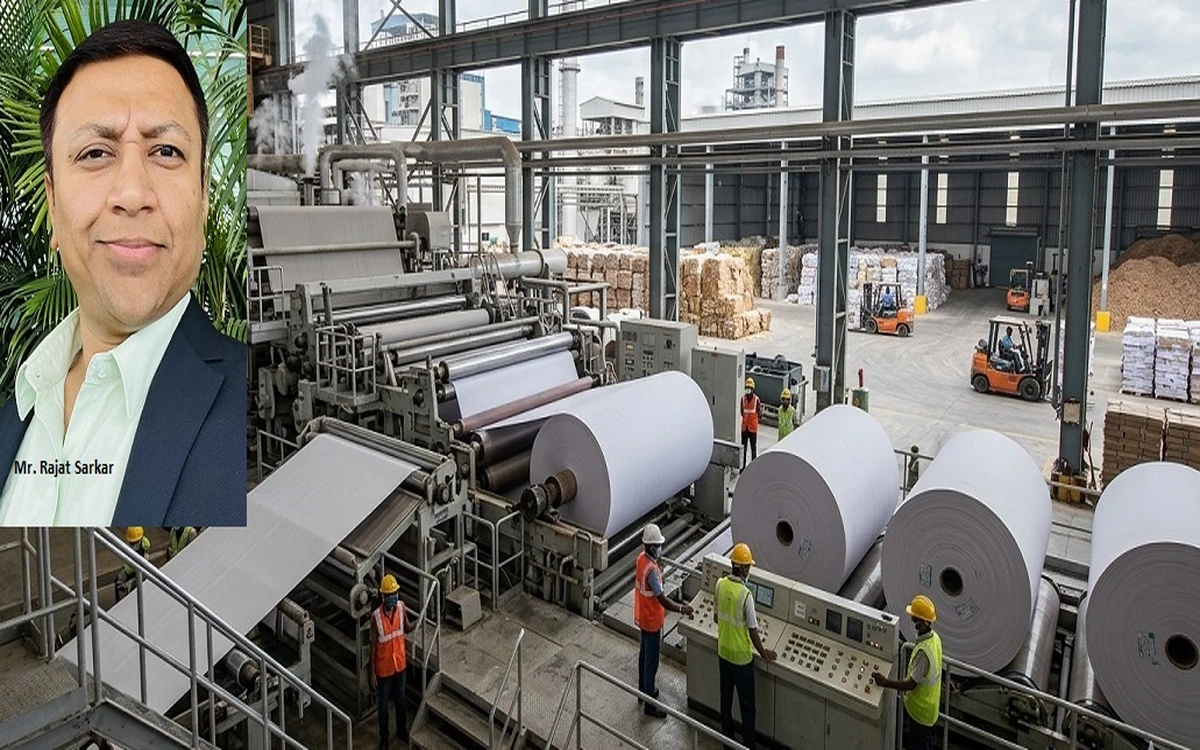
India Paper Industry at an Inflection Point: War, Costs, and Capacity; Demand growth expected at 5–7% in FY26
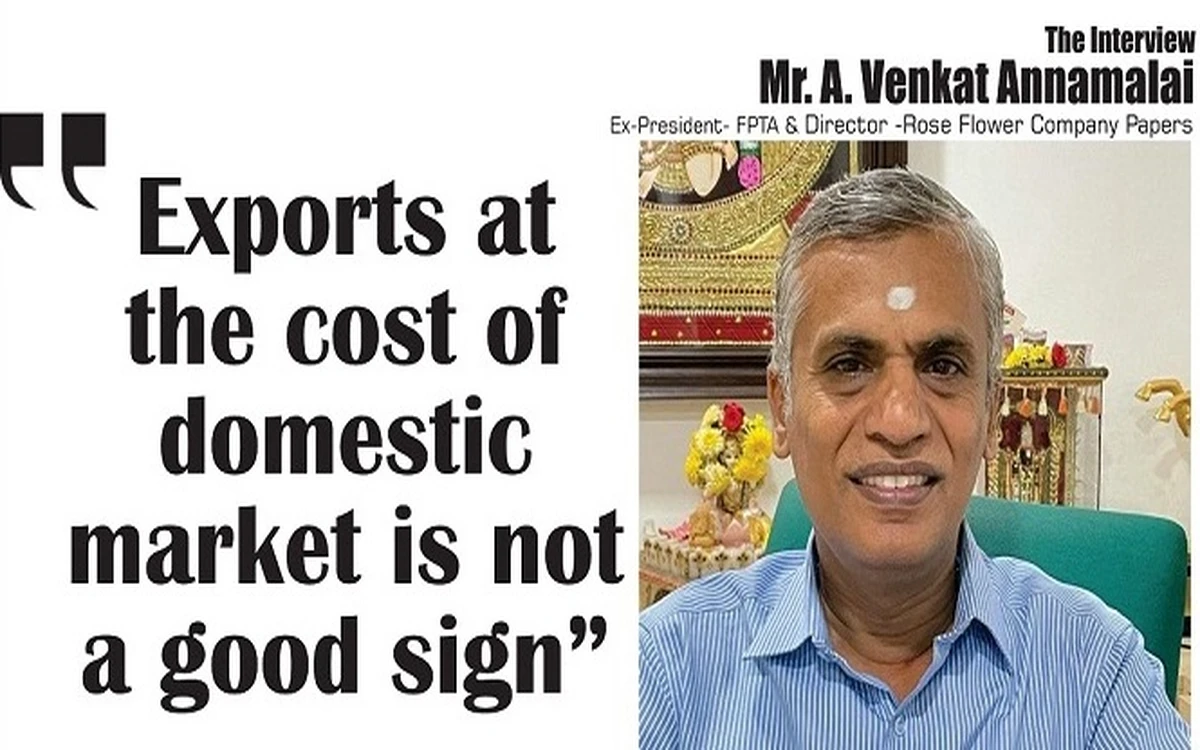
“Surging exports of paper will most certainly keep the domestic prices quite high”: Mr. A. Annamalai, Director – RFC
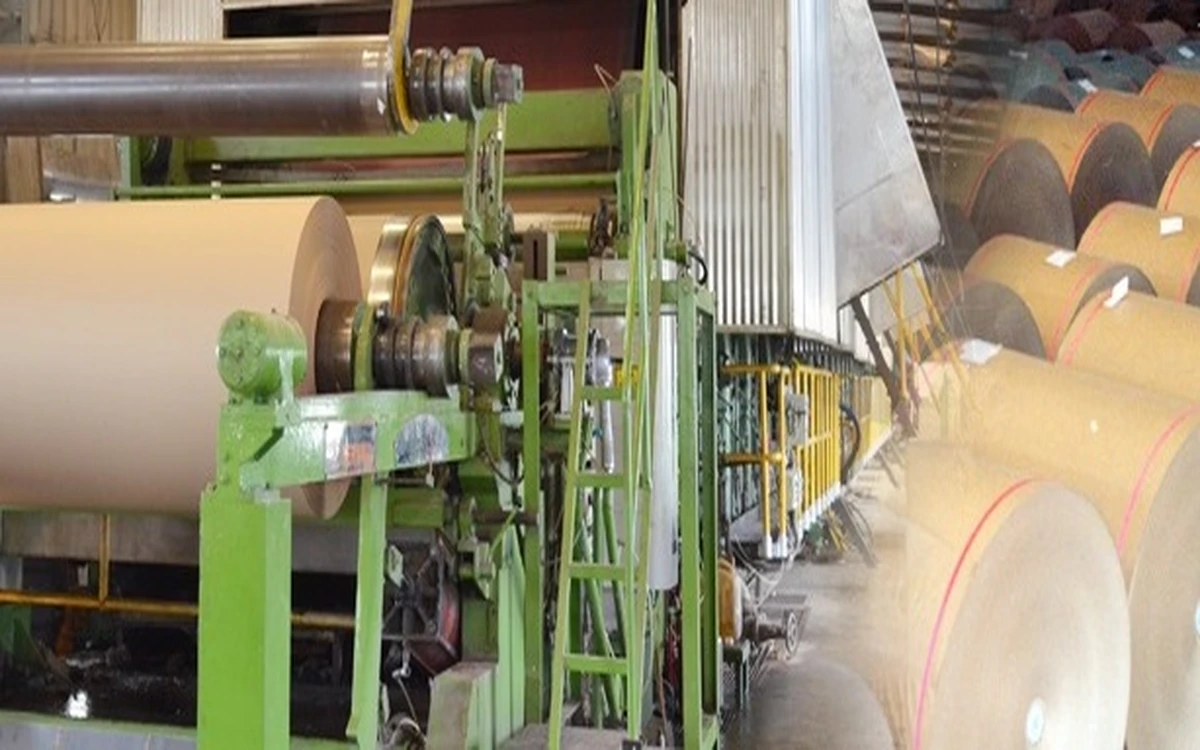
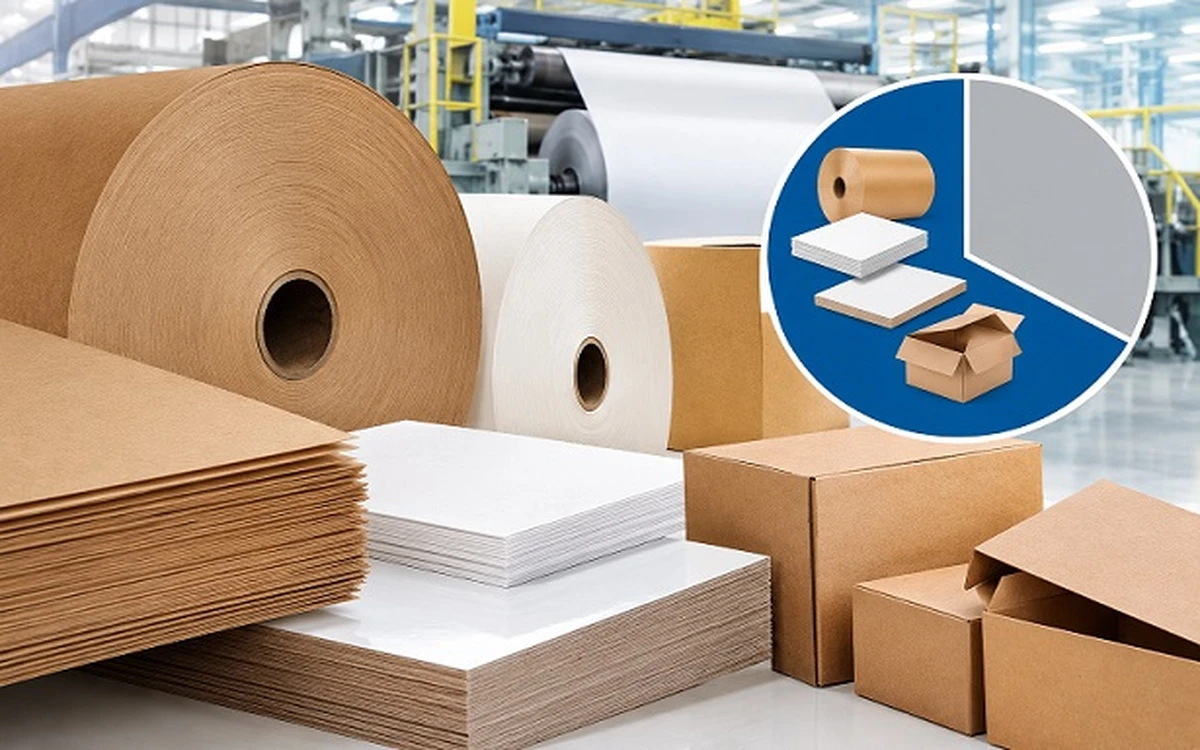
The Status of the Global Container board Industry, Recycled Paper Demand and Supply and its impact on the Indian Industry
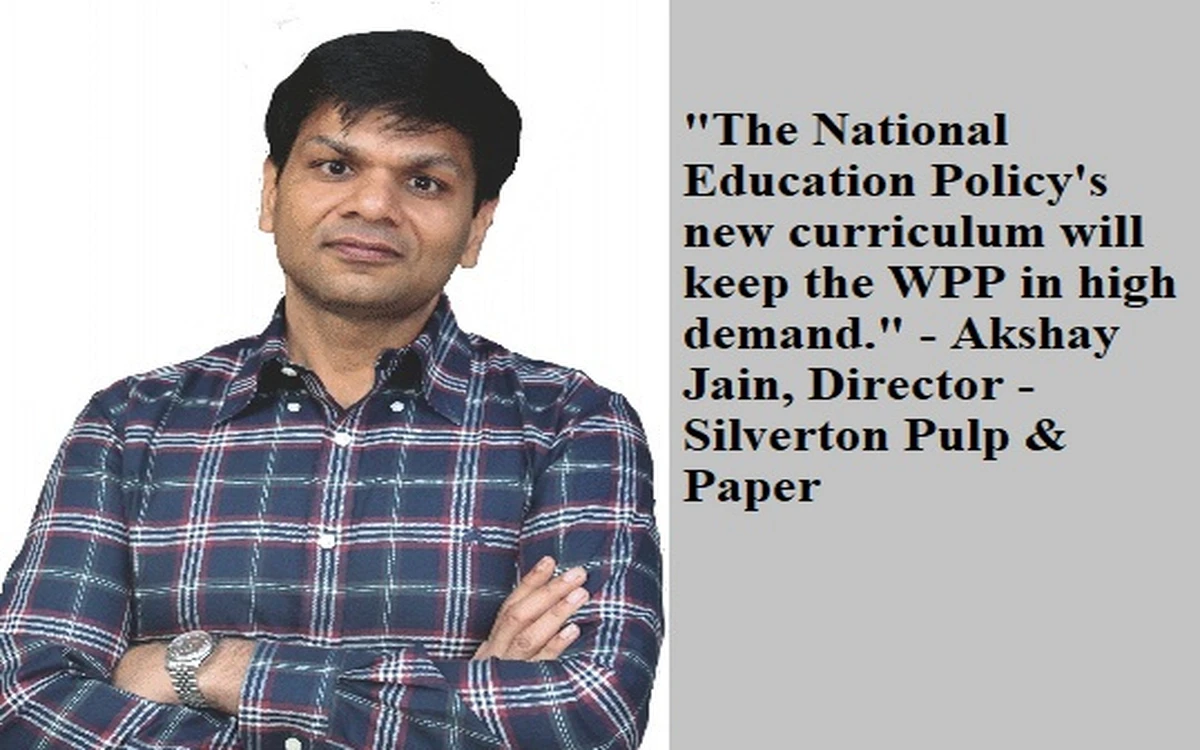
Akshay Jain, director of Silverton Pulp & Paper, says it's time to promote agro residue as a raw material to lessen the scarcity of fibre
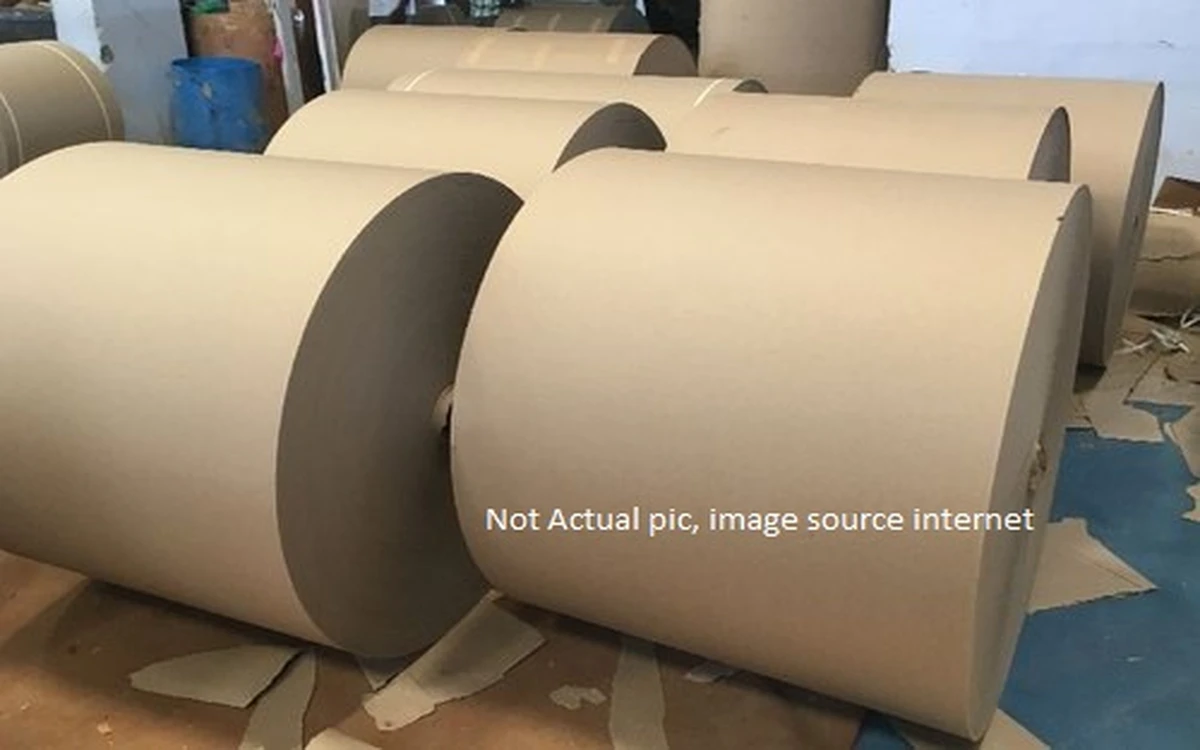
Advantageously located, a new paper mill is all set to roll kraft paper in Madhya Pradesh
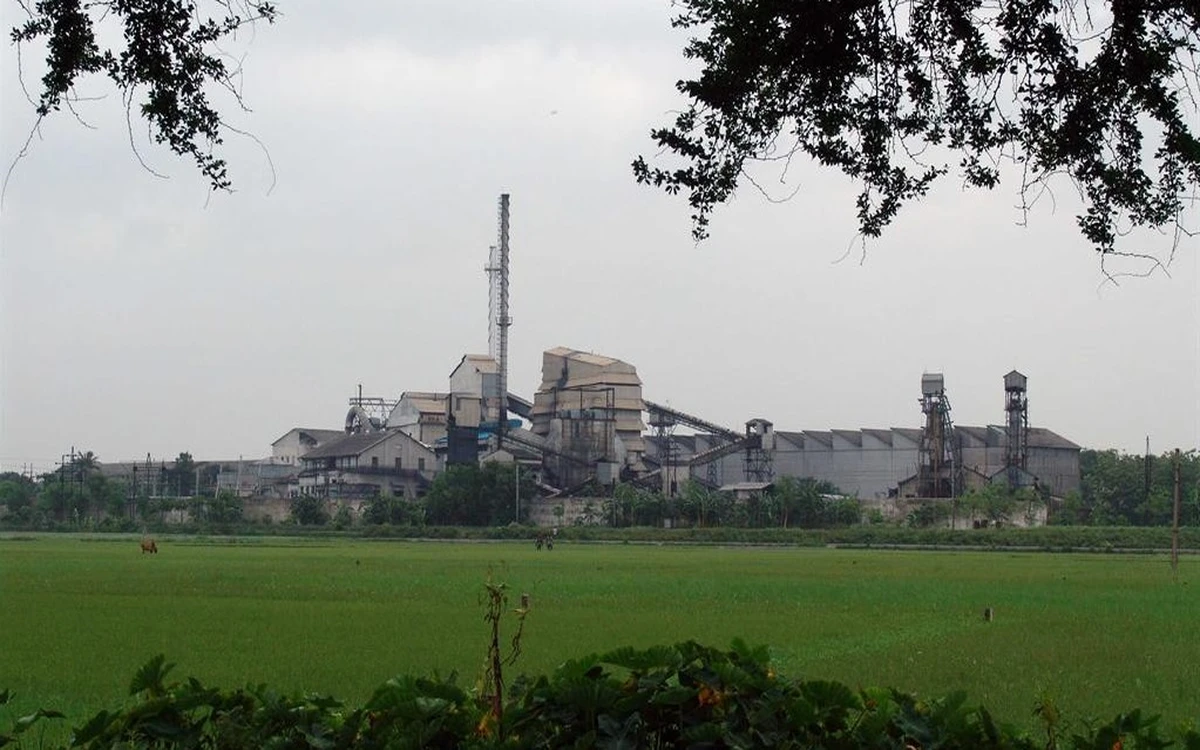
Several agile interventions helped ITC-PSPD fortify its clear leadership of the Value Added Paperboards (VAP) segment
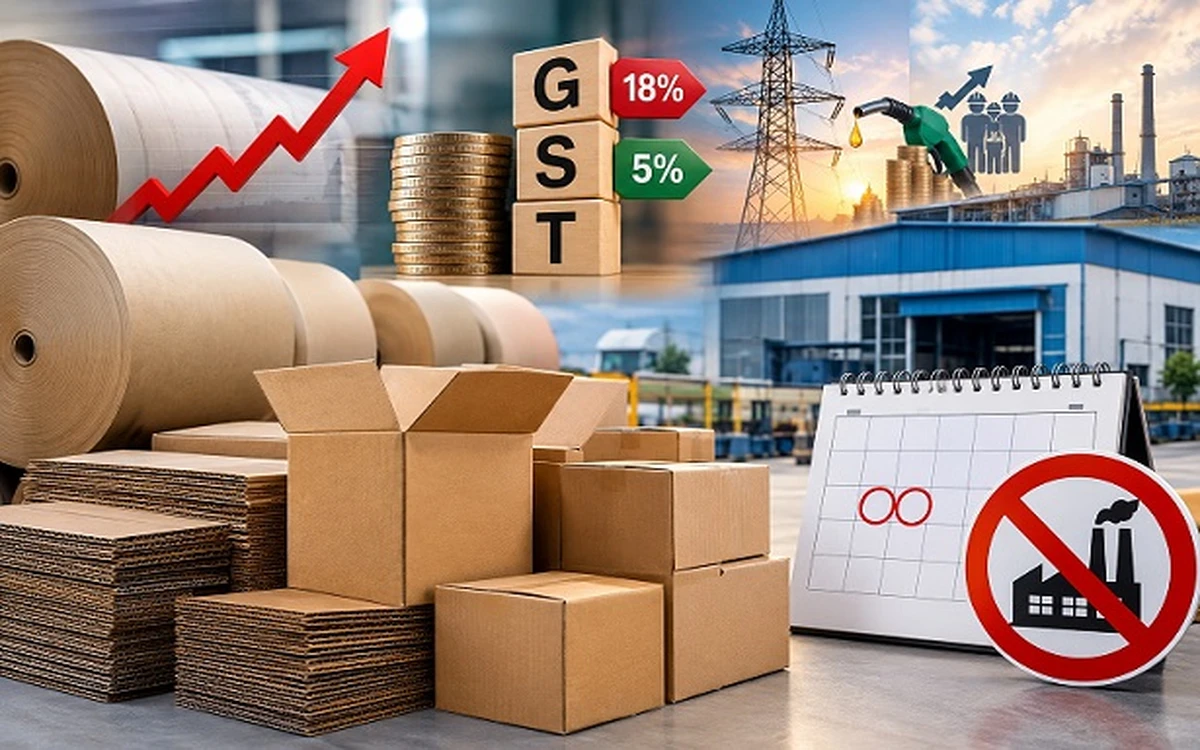
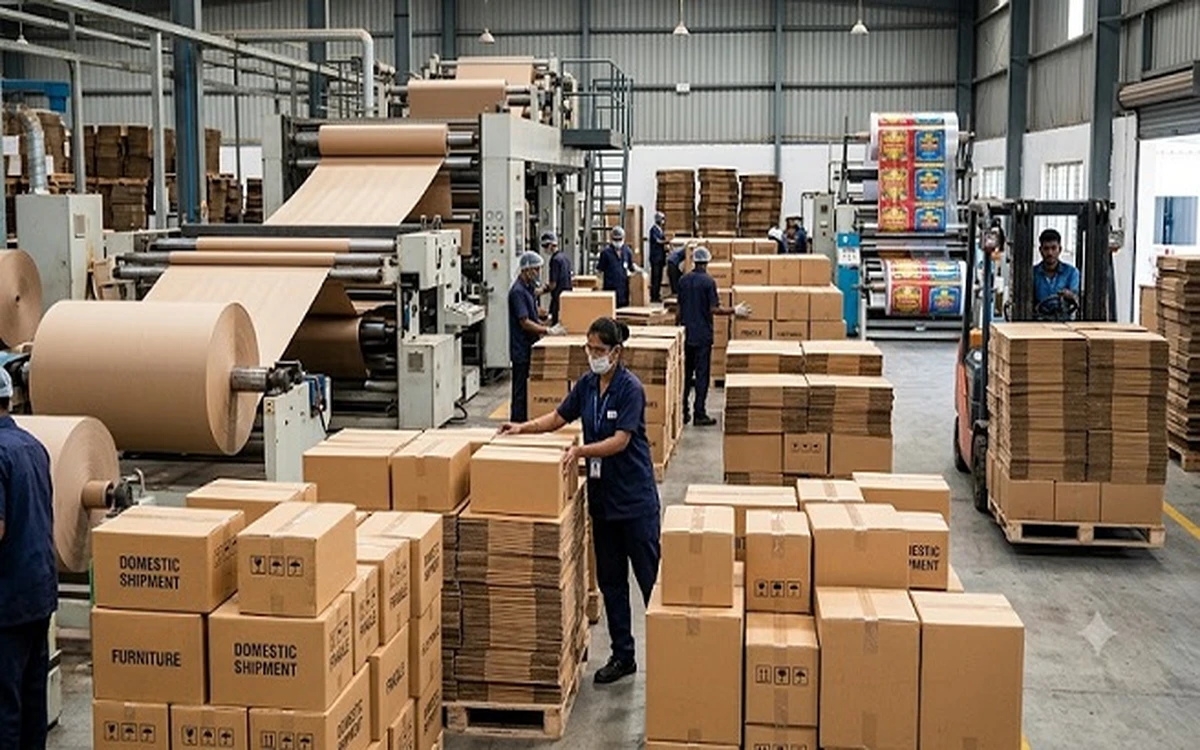
Overall Increase in Kraft Paper Prices Could Reach 35%; Industry Calls for 20% Box Price Increase, Voluntary Shutdown Proposed
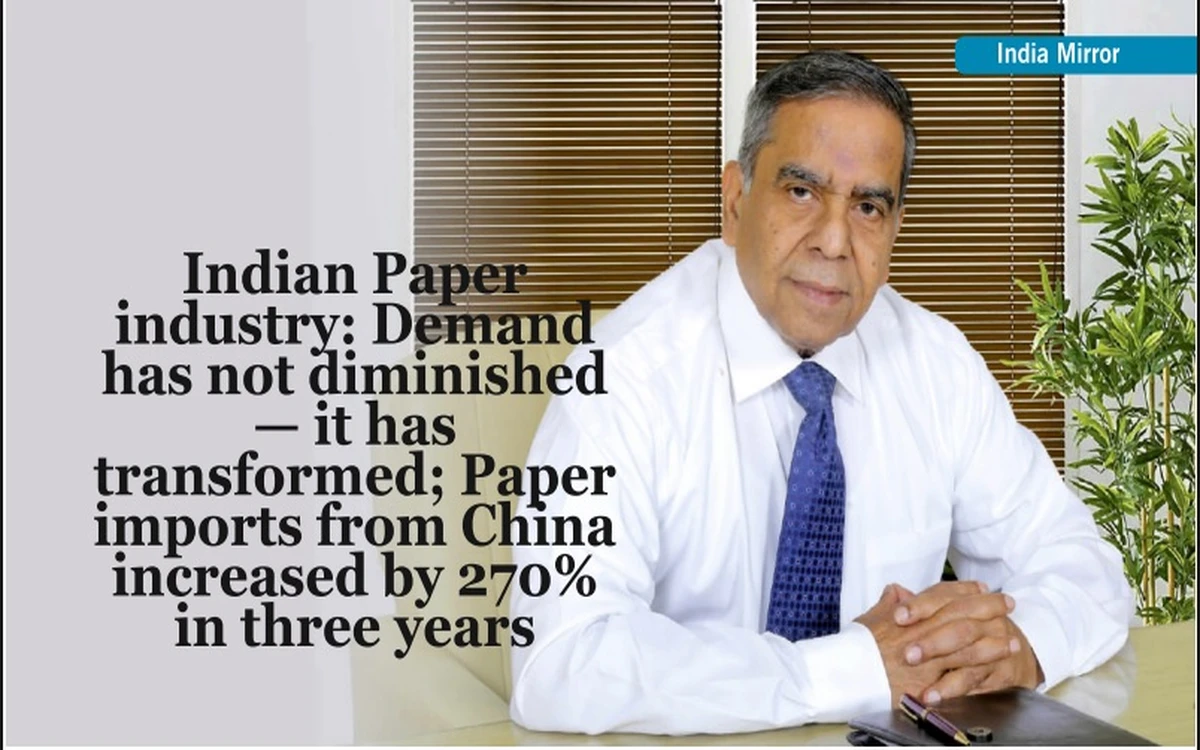
Indian Paper industry: Demand has not diminished — it has transformed; Paper imports from China increased by 270% in three years
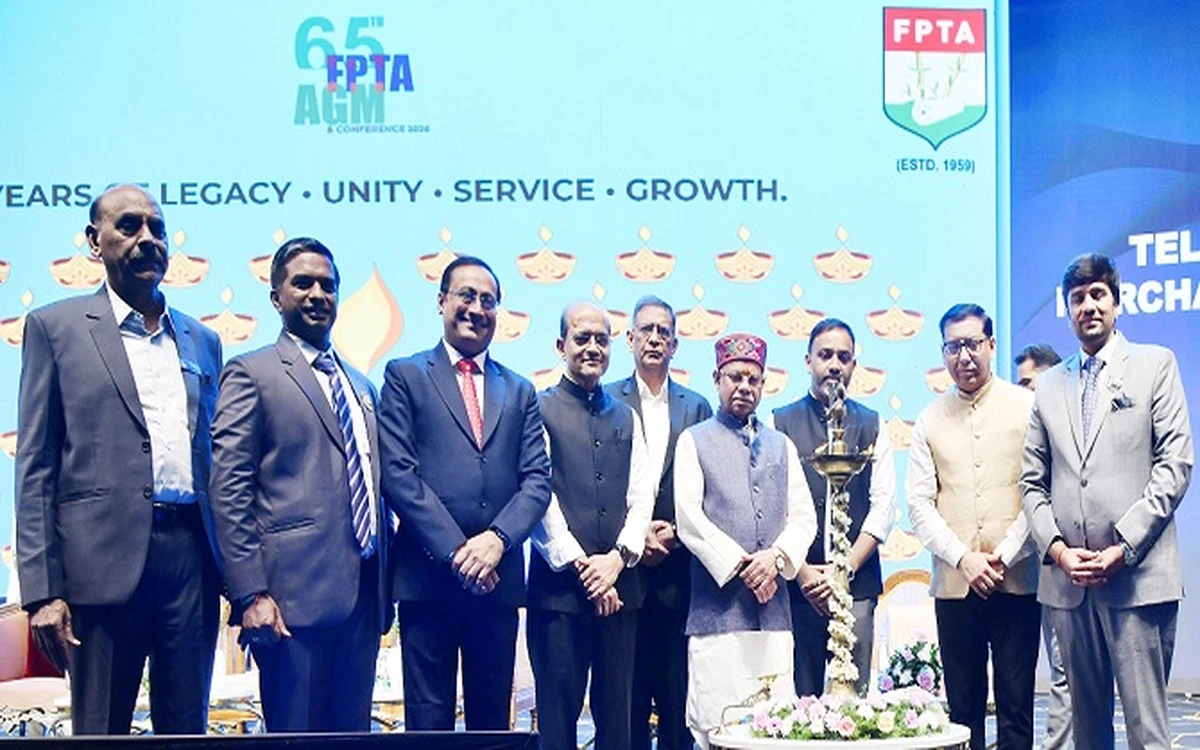
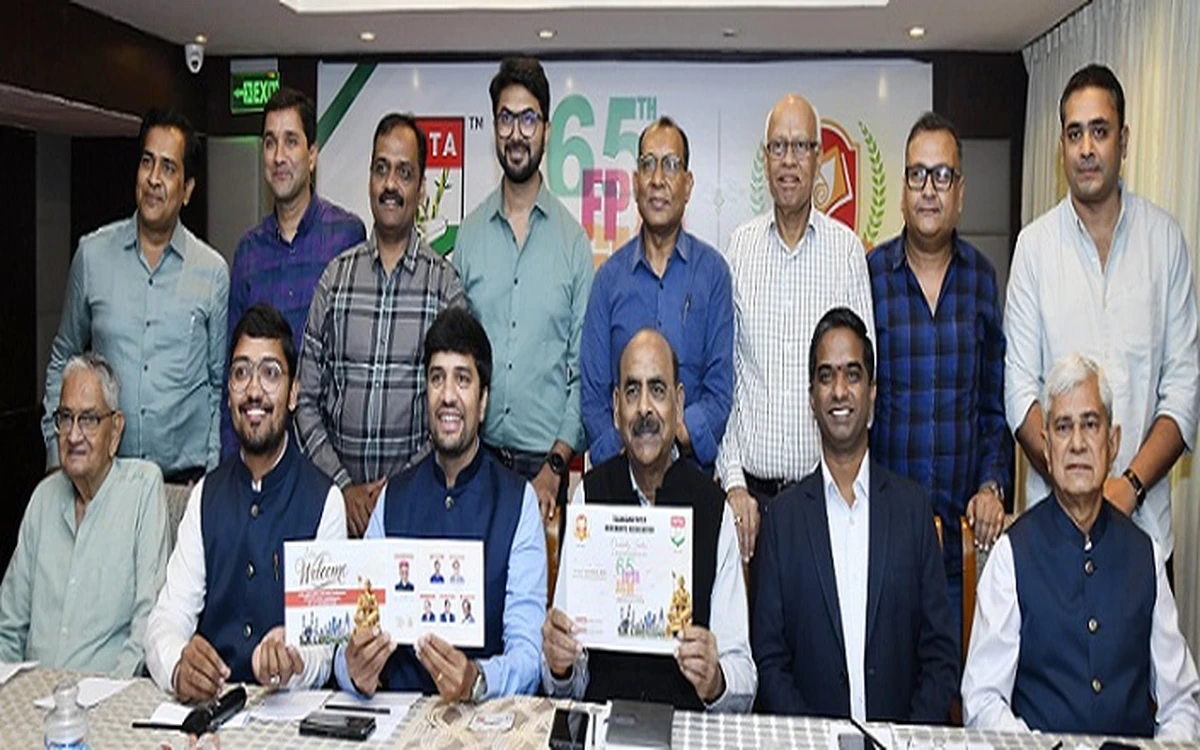
Paper Mills and Dealers Must Work Together to Create New Demand, Say Industry Leaders at FPTA’s 65th AGM

Ruchira Papers Invests a Sizeable Capex of Rs. 235–240 Crore Towards Writing & Printing Paper Capacity Expansion
Paper mills inflated the basic ex-mill price of paper post GST 2.0, AINMA seeks action against Anti-Profiteering
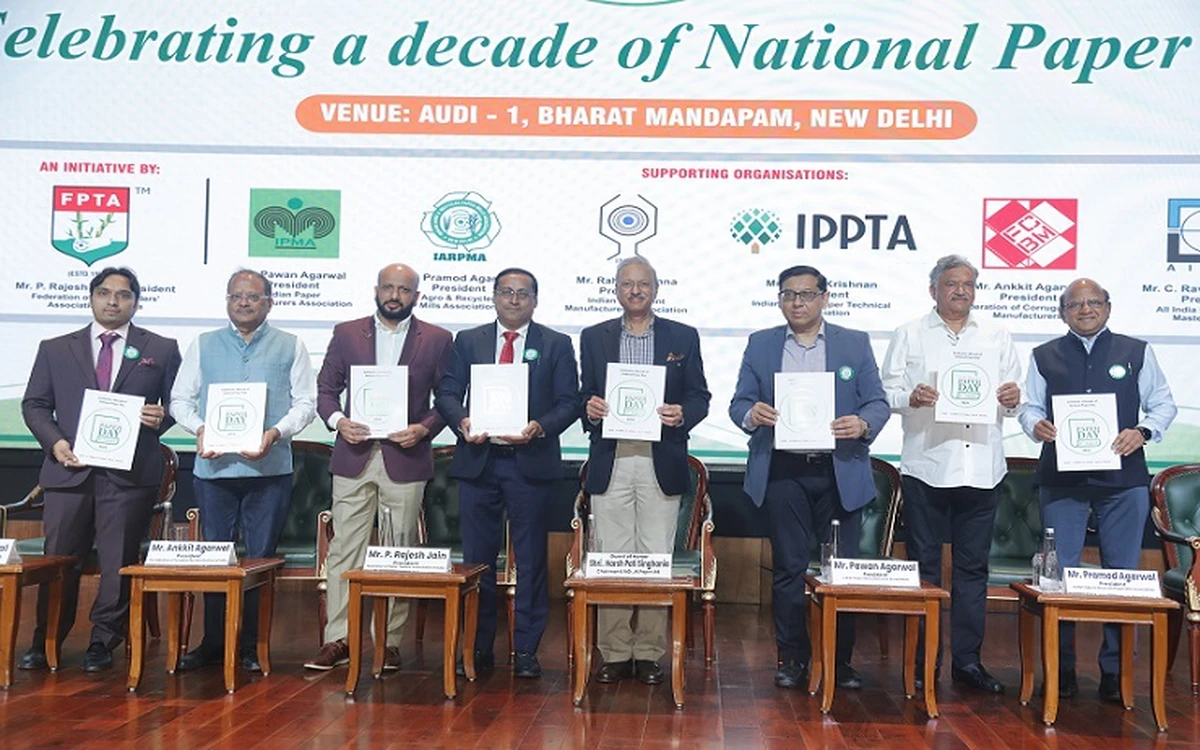
Seven Leading Associations Unite to Celebrate National Paper Day, Highlighting Paper's Sustainability and Circular Economy Advantage
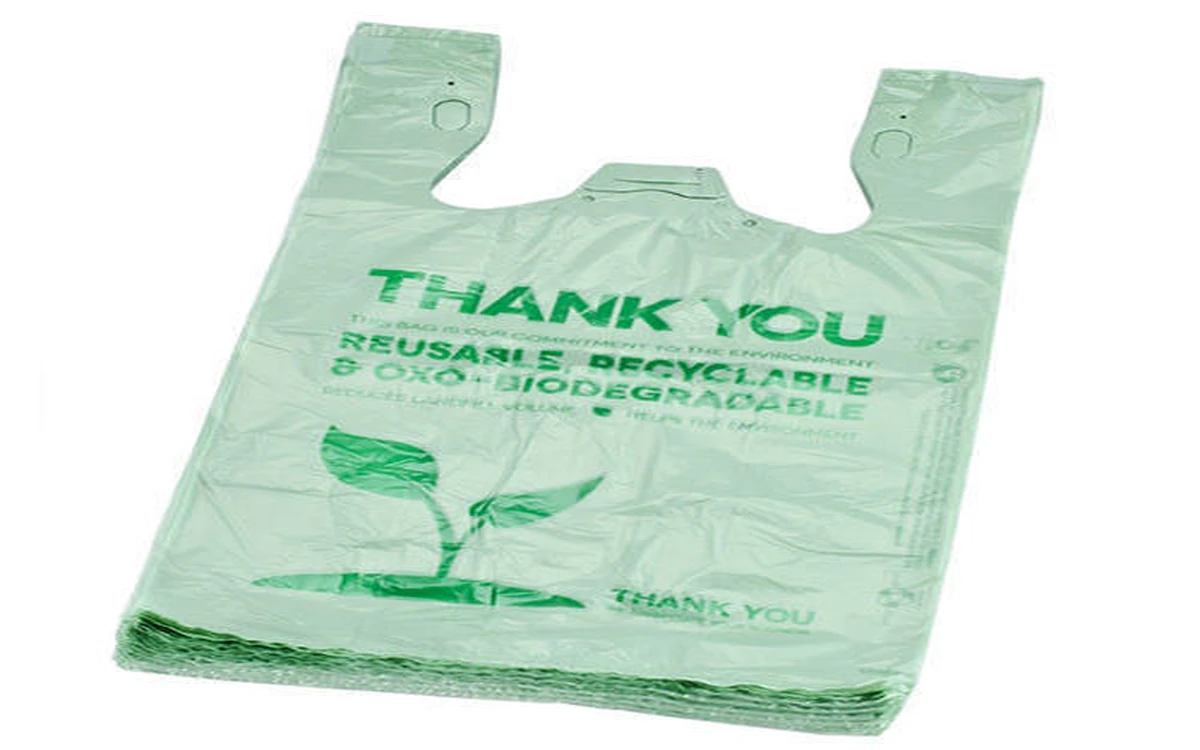
Scientists from IIT-Guwahati develop India's first biodegradable plastic

Navneet Education focuses on brand building, curriculum-led growth, and export recovery; expects stationery margins to improve in FY27

It is estimated that USD10B to USD20B worth of single-use plastic packaging will convert to molded fiber, ZUME
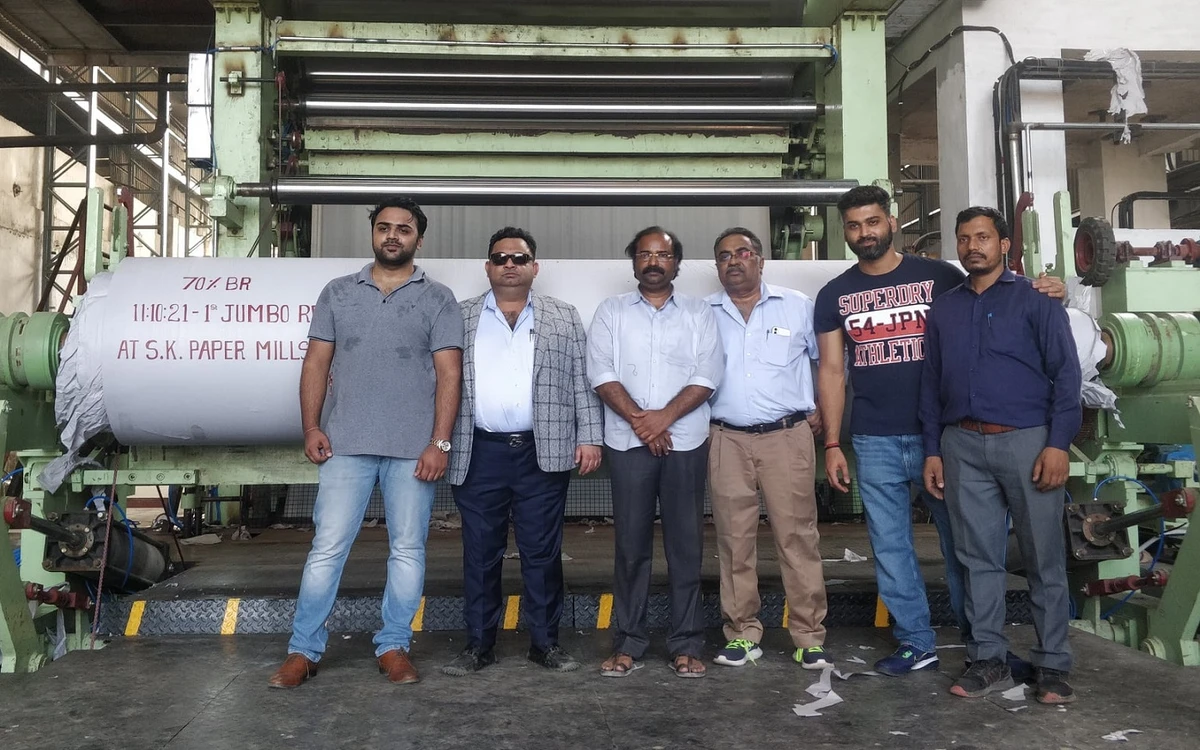
Muzaffarnagar gets a new capacity of Tissue Paper and MG Poster paper

“The integration of digitalization, automation, and Artificial Intelligence (AI) is no longer a futuristic concept—it is the baseline for competitiveness in 2036” - Vinit Garg, Director, Vizen Solutions
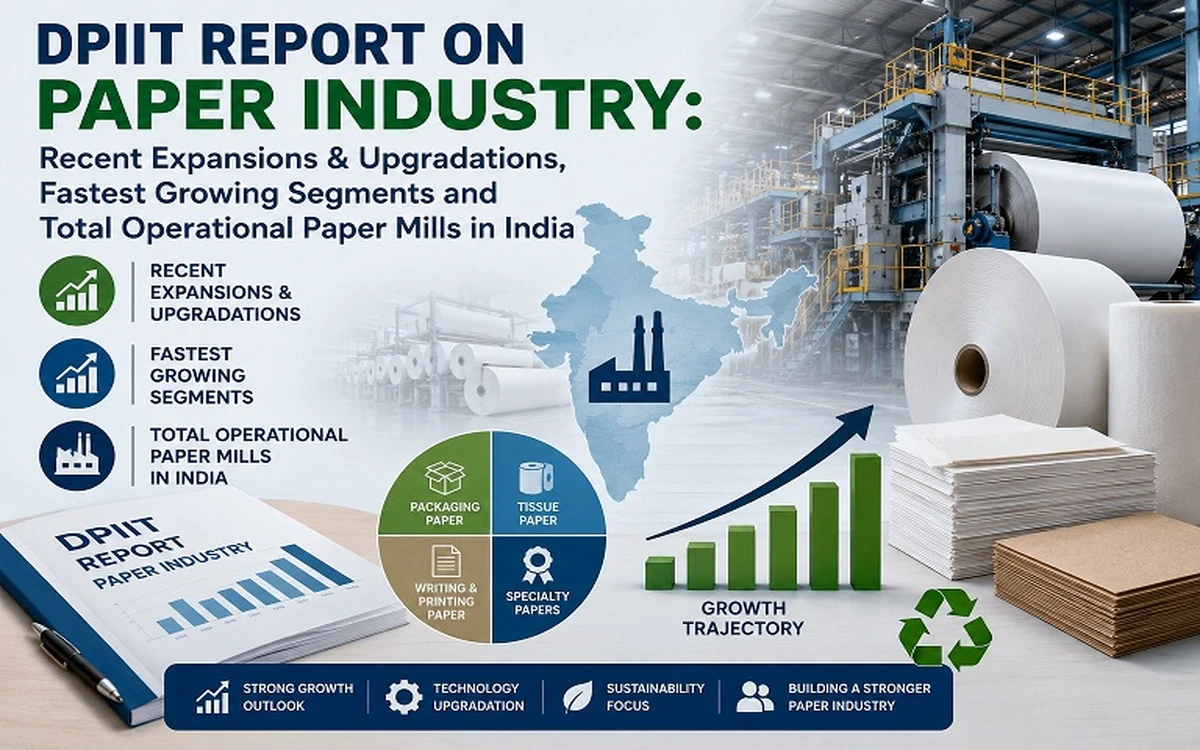
DPIIT Report on the Paper Industry: Recent Expansions & Upgrades, Fastest-Growing Segments, and Total Operational Paper Mills in India
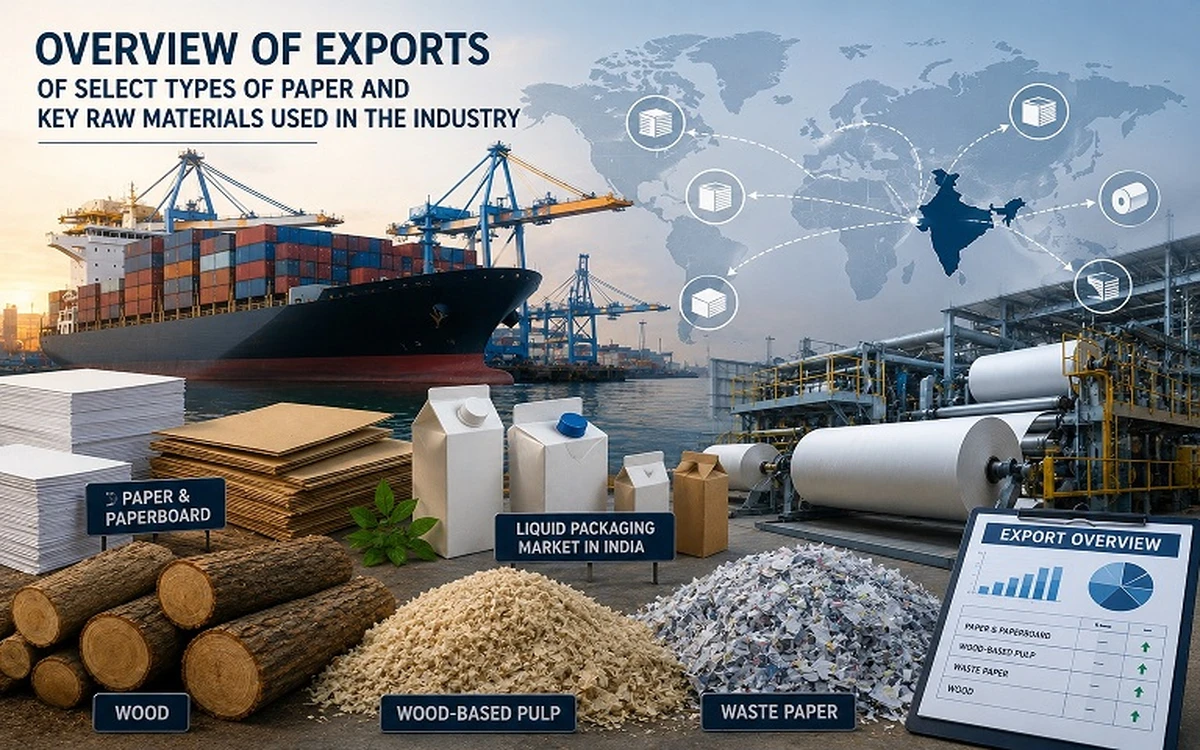
Overview of exports of select type of paper and key raw material used in the industry by Crisil Intelligence

Margin pressure pushes Pulp & Paper Packaging sector toward AI-Driven cost optimization, Cutting costs by 8–20%
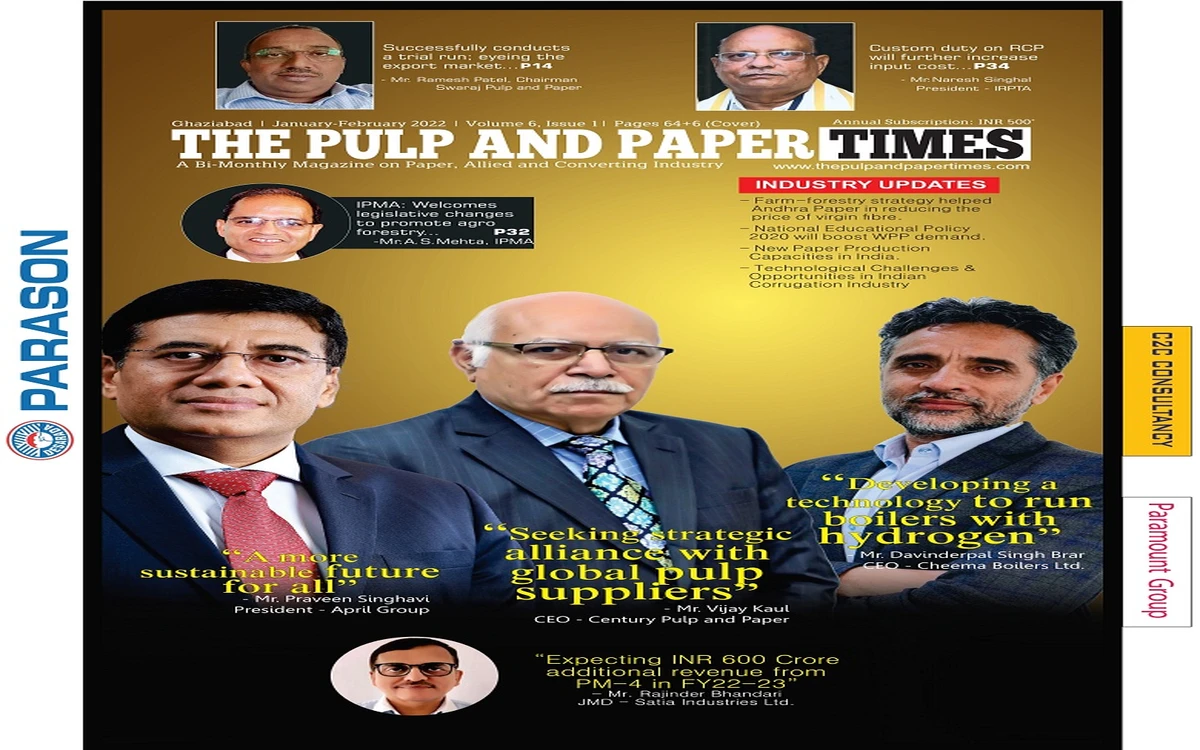
The Pulp and Paper Times Magazine : Volume 6, Issue 1
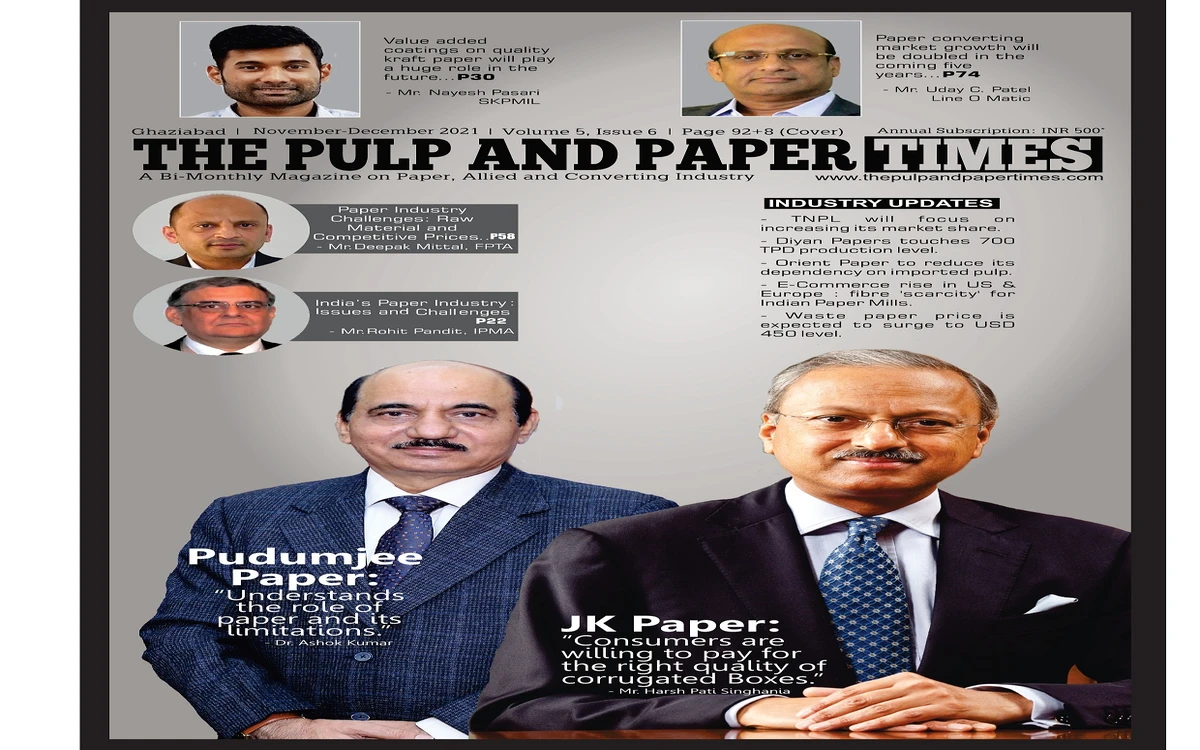
The Pulp and Paper Times Magazine : Volume 5, Issue 6
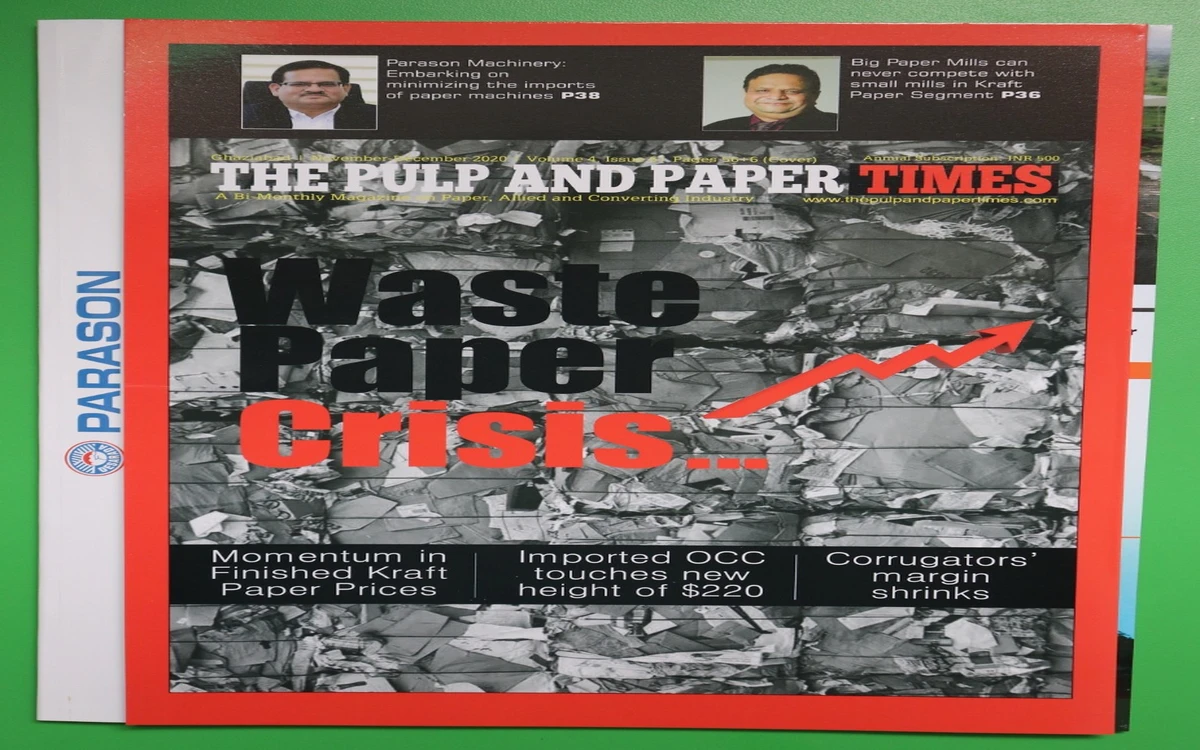
The Pulp and Paper Times: Volume 4, Issue 6
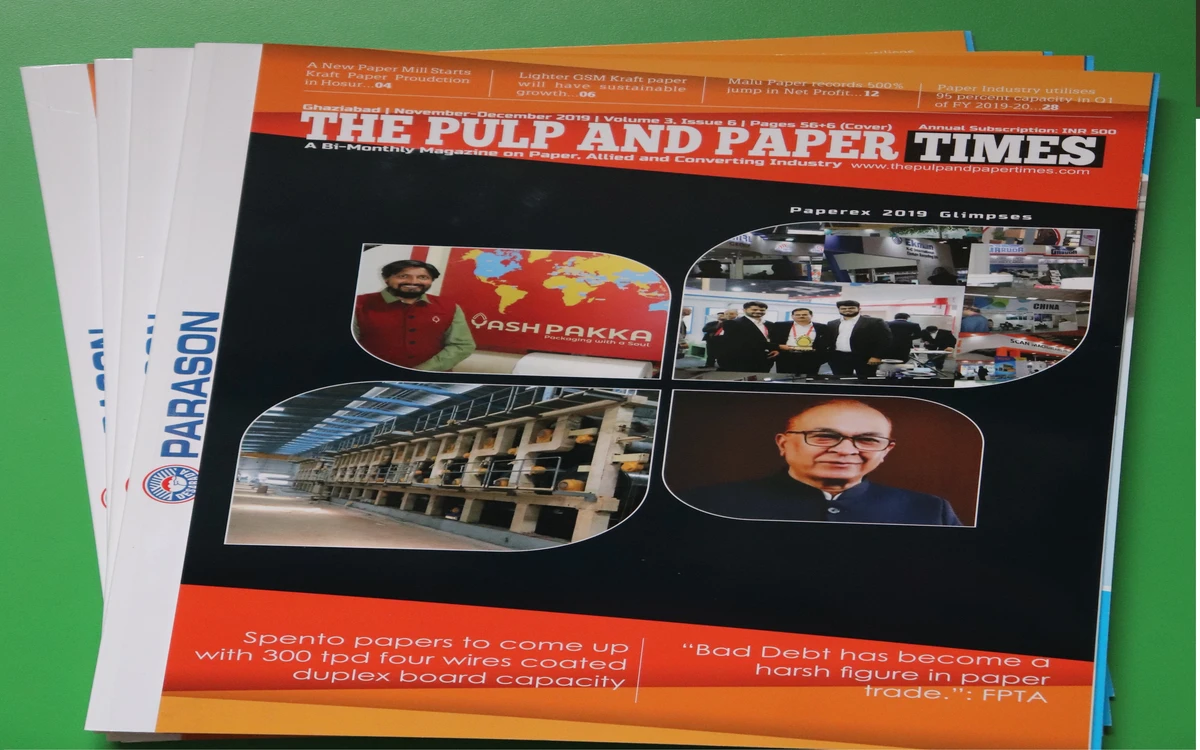
The Pulp and Paper Times : Volume 3, Issue 6
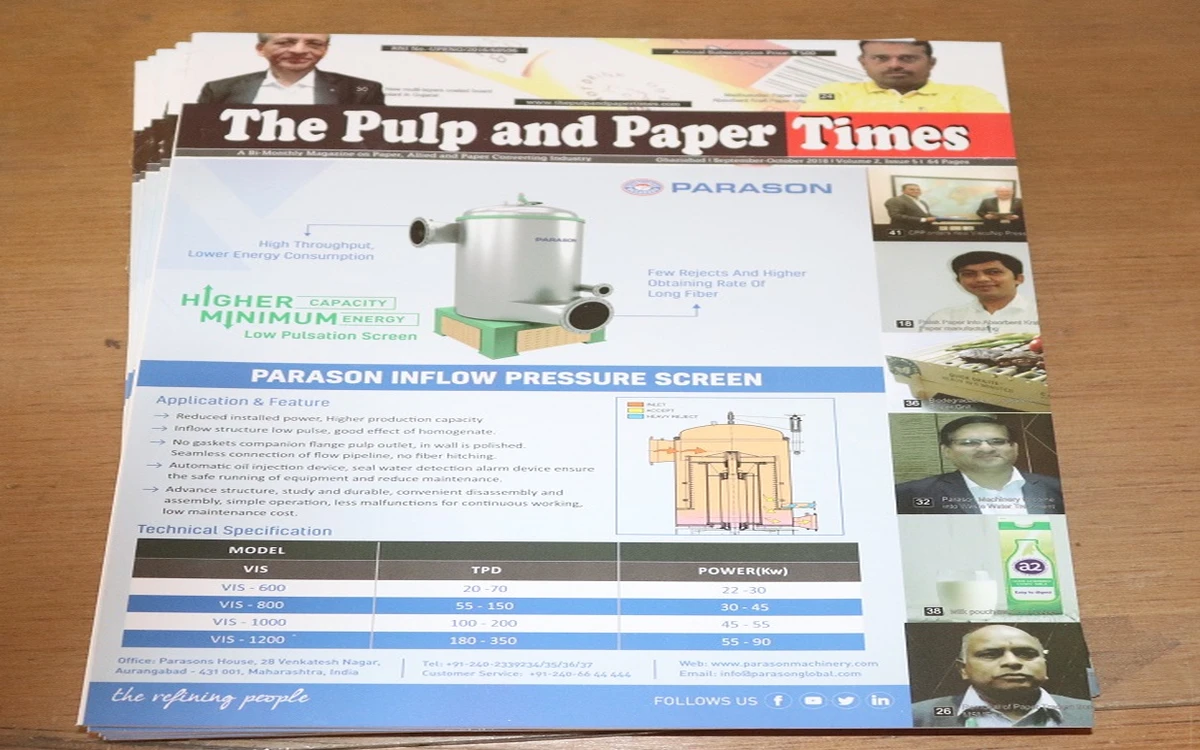
The Pulp and Paper Times: Volume 2 Issue 5
The Pulp and Paper Times, Volume 1, Issue 3
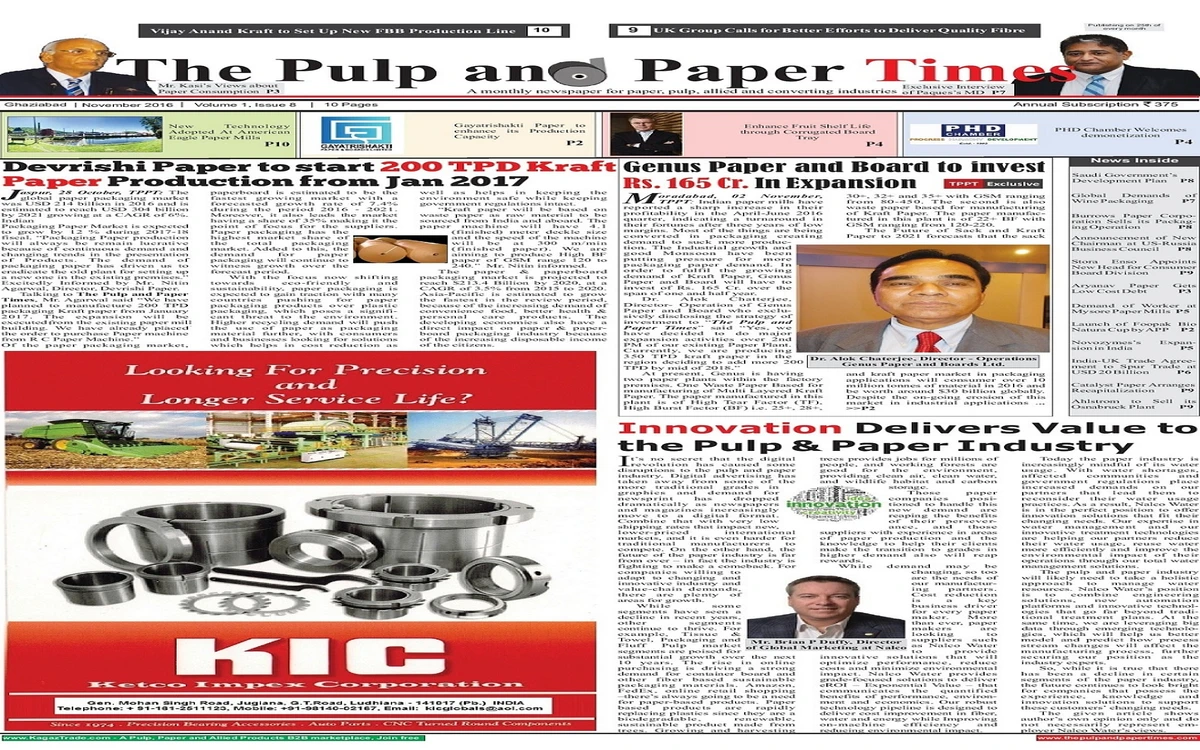
The Pulp and Paper Times, November 2016 Issue

India’s Paper Industry Poised to Lead Global Sustainable Materials Revolution
The Pulp and Paper Times | New Delhi:
Mr. Pavan Khaitan, VCMD of Kuantum Papers Limited, addressed global delegates at the Paperex 2025 inaugural session, delivering a powerful and forward-looking perspective on India’s role in the rising sustainable materials economy. Opening his address, he said, “A very good morning to you all. Welcome to Paperex 2025. Dignitaries on the dais, captains of industry, some of them legends, distinguished colleagues, international partners and delegates from across the value chain, it's truly a privilege to speak at Paperex 2025, the world's largest paper show.”

Khaitan praised the platform for its scale and global relevance: “No other global platform brings together mills, technology partners, suppliers, brand owners and researchers at this scale.” He noted that the world is at a moment of profound change—“not all of decline, but of reinvention”—where paper, “amongst the oldest circular material known to humanity,” is assuming a new central role in sustainable development.
He emphasised that “Paper is in transition. This is India's most moment, glorious moment in a changing global materials economy. So, in this context, a materials revolution is actually taking shape here.”
Khaitan outlined how industries across the world are rethinking materials, from packaging to mobility, retail, e-commerce and hygiene. He said “there are three global forces that are reshaping our paper consumption,” beginning with “Decarbonization and circularity.” Nations and brands, he noted, are redesigning supply chains around low-carbon, renewable and recyclable materials, with paper and fiber-based packaging at the center of these solutions.

The second force is the surge in e-commerce and omni-channel retail: “Every parcel shipped anywhere in the world has strengthened the demand for packaging board, corrugated boxes, protective papers and speciality grades.” The third is hygiene, health and urban lifestyles—“a boon of COVID for us”—with tissue and absorbent products among the fastest-growing global segments.
Khaitan explained that these forces have transformed the global paper industry “from volume-driven commodity sector into a technology-enabled, sustainability-driven materials industry.”
India’s Unique Opportunity
He highlighted India’s powerful position in this landscape: “India stands out as one powerful reason. Our consumption is still in its early growth curve.” With India moving towards a $4 trillion economy and a Q2 GDP growth rate of 8.2%—the highest in six quarters—Khaitan noted that the paper sector stands to benefit significantly.
He observed that India operates at a relatively low per capita consumption of paper, making it one of the few major economies where education, packaging and tissue segments still have strong growth potential. At the same time, Indian mills are “showing remarkable agility, modernizing, integrating backward, improving fiber efficiency and investing in energy optimization.”
As a result, he said, “India's paper industry today is not simply catching up. It is poised to lead,” particularly in recycled fiber technology, affordable packaging solutions and energy-efficient operations.
Emerging Domestic Trends
He identified key demand drivers shaping India’s paper future.
First, “packaging is taking center stage,” with the fastest growth in paperboard, corrugation and specialty packaging. Rising e-commerce, quick commerce, FMCG premiumization, food delivery, and organized retail are all accelerating demand.
Khaitan noted that “the sustainability pivot prevails,” as consumers, regulators and global brands increasingly prefer recyclable fiber-based packaging. India’s relatively strong recycling rates and a well-evolved waste paper ecosystem offer a competitive advantage.
He emphasized that tissue and hygiene products are on an “upward curve.” Meanwhile, writing and printing paper, though impacted by digitalization, maintains demand due to India’s large education sector. A shift toward premium and specialty grades is adding fresh value to this segment.

Technology as the Foundation of Future Mills
Khaitan stressed that technology innovation is becoming a defining force:
“As global suppliers and technology partners gather here at this Paperex, one message is clear. The future will reward mills that innovate boldly.”
He highlighted advancements such as high fiber efficiency, fiber diversification, energy-efficient systems, water optimization, chemical optimization, new barrier coatings, and sustainable plastic alternatives driven by single-use plastic bans.
Digital transformation will be pivotal:
“Digital mills powered by automation and AI-driven quality control and predictive maintenance is going to be a game-changer.”
He stated that “AI adoption will bolster and propel the industry forward… its earlier adoption is quite essential.”
India’s Role in the Global Dialogue
Khaitan asserted that India is shifting “from being a participant to a shaper of global economy.” He said the nation is increasingly seen as:
• a major market for packaging and education,
• a future hub for recycled fiber-based innovation,
• a key buyer of global technology,
• and “a proven champion of circularity.”
He emphasized that global brands now view India not just as a market but as a partner in building responsible circular supply chains. “This is India's moment to define global standards in sustainable paper, transparency and material-like packaging.”
Call to Action for the Next Decade
Khaitan delivered a clear roadmap:
“We need to consider three priorities for the coming decade.”
1. Lead in sustainable packaging
— High-performance boards, recyclable coatings and right-size design will be key.
2. Invest in fiber security and circularity
— Strengthening recycled fiber logistics, improving recovery rates, expanding plantations and adopting alternative fibers.
3. Upgrade technology and talent
— Digitizing mills, modernizing machines, enhancing skills and embracing innovation.
A Historic Moment for India
He concluded with a powerful reflection: “Paper has always been more than a material. It is a symbol of knowledge, communication, learning and civilization itself.”
Today, he said, paper is also a symbol of sustainability and responsible growth. “As we inaugurate Paperex with participation from across the world, let us commit to shaping a future where India becomes a global benchmark for sustainable paper and packaging, where innovation meets responsibility and where growth meets circularity.”

3 days ago
Total Views : 2477
3 days ago
Total Views : 2156
4 days ago
Total Views : 651
5 days ago
Total Views : 3175
last week
Total Views : 2906
last week
Total Views : 6408

last week
Total Views : 938
last week
Total Views : 887
last week
Total Views : 801
2 weeks ago
Total Views : 3686